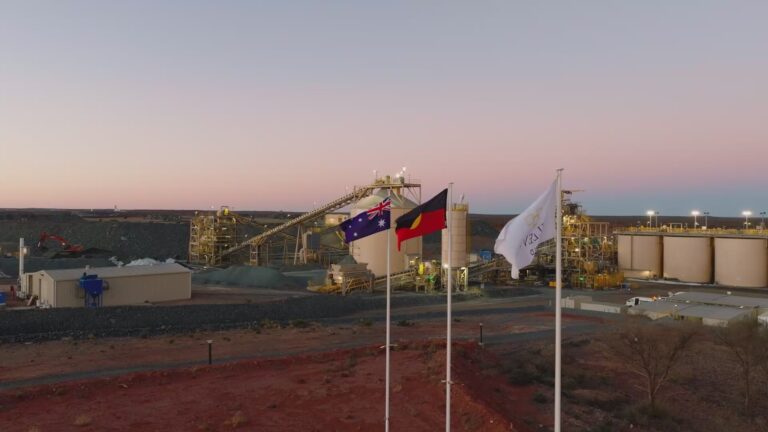


Anyone who begins looking more closely at gold quickly realizes that the subject is far more complex than the simple question of “good” or “bad” gold.
Gold is emotionally charged, economically significant, and deeply connected to major global challenges. These include environmental destruction, mercury contamination, lack of supply chain transparency, and problematic working conditions in parts of the global mining sector.
At the same time, a growing number of initiatives, standards, and projects around the world are working to make gold mining more responsible and gold trading more transparent. This is exactly where our work at Fairever is focused. Every day, we engage with the question of what traceable and more responsible gold supply chains can look like.
This article is intended to provide a well grounded introduction. Not as a complete academic bibliography, but as a curated overview:
- What are the major challenges in the gold sector?
- Which solutions currently exist?
- Which standards and initiatives are especially relevant?
- Which sources are useful for deeper research?
1. Why Gold Is a Sustainability Issue
Most people initially associate gold with jewelry, wealth preservation, or luxury. What is far less visible are the impacts that gold mining can create in many parts of the world.
Particularly important issues include:
- Environmental destruction caused by mining
- Mercury and cyanide use
- Lack of transparency
- Problematic working conditions
- Informal small scale mining without protection mechanisms
- Conflict affected and high risk regions
Anyone who wants to understand sustainable gold should first understand the fundamental challenges within the sector.
Foundational Resources
International Institute for Sustainable Development – Global Trends in Artisanal and Small Scale Mining
One of the most important foundational reports on small scale mining. It explains why millions of people worldwide depend on gold mining and outlines the major challenges within the ASM sector.
https://www.iisd.org/publications/report/global-trends-artisanal-and-small-scale-mining-asm-review-key-numbers-and
ILO – Child Labour in Mining and Global Supply Chains
Foundational resource on child labor and working conditions in mining.
https://www.ilo.org/publications/child-labour-mining-and-global-supply-chains
World Gold Council – How Much Gold Has Been Mined?
Data and statistics on global gold production and market size.
https://www.gold.org/goldhub/data/how-much-gold
World Gold Council – Demand and Supply Data
Market data on global gold demand and supply.
https://www.gold.org/goldhub/data#demand-and-supply
Recommended Reading
Earthworks – Environmental Impacts of Gold Mining
An excellent introduction to the environmental impacts of gold mining. Clear and accessible while still detailed enough to provide meaningful context.
https://earthworks.org/issues/environmental-impacts-of-gold-mining/
The New York Times – Gold Mining Is Poisoning the Planet With Mercury
A strong journalistic investigation into mercury use in gold mining and its global consequences.
https://www.nytimes.com/2023/09/22/world/americas/gold-mercury-mining-poison.html
Human Rights Watch – The Hidden Cost of Jewelry
Important research on human rights issues within gold and jewelry supply chains.
https://www.hrw.org/report/2018/02/08/hidden-cost-jewelry/human-rights-supply-chains-and-responsibility-jewelry
Greenpeace – Illegal Mining in the Amazon
A focused perspective on illegal gold mining in the Amazon and its impact on biodiversity and Indigenous communities.
https://www.greenpeace.org/international/story/59869/illlegal-mining-amazon-threat-biodiversity/
2. Which Solutions and Standards Matter Most Today
In recent years, a range of standards and initiatives have emerged that aim to make gold mining more responsible and supply chains more transparent.
We find approaches particularly relevant when they:
- Improve working conditions
- Define environmental standards
- Increase supply chain transparency
- Professionalize small scale mining
- Support long term partnerships
- Enable traceable origins
Fairmined
Fairmined is now one of the most important standards for responsible artisanal and small scale mining. Its goal is to support mines in building safer, more transparent, and socially fairer structures.
The standard combines:
- Environmental requirements
- Social standards
- Traceability
- Independent audits
- Financial premiums for certified mines
From our perspective, Fairmined is especially interesting because it aims to create tangible improvements for small scale mining communities while simultaneously strengthening transparency throughout the supply chain.
Foundational Resources
Fairmined – The Fairmined Standard
Official overview of the standard.
https://fairmined.org/the-fairmined-standard/
Fairmined – Fairmined Credits
Explanation of the Fairmined Credit system.
https://fairmined.org/fairmined-credits/
Fairmined – Public Summary of Audit Oro Puno
A practical example of an actual audit report from a Fairmined certified mine.
https://fairmined.org/wp-content/uploads/2022/02/Public-summary-of-audit_Oro-Puno_2021_ENG.pdf
Recommended Reading
Uribe Martínez, Sanchez Gonzalez & Pellegrini – The impact of the Fairmined certification on the well being of small scale miners
A compelling academic study examining the effects of Fairmined certification on small scale mining communities in Colombia and Peru.
https://pure.eur.nl/ws/portalfiles/portal/45878739/1_s2.0_
S2214790X21001684_main.pdf
Fairtrade Gold
Fairtrade Gold pursues similar goals and is among the best known standards for more responsible gold sourced from small scale mining structures.
Its core focus includes:
- Fairer trading conditions
- Social standards
- Additional financial premiums
- Long term economic perspectives for mines
Foundational Resources
Fairtrade International – Gold Standard and Associated Precious Metals Standard
Official foundation of the Fairtrade Gold standard.
https://www.fairtrade.net/en/why-fairtrade/how-we-do-it/standards/who-we-have-standards-for/gold-standard-and-associated-precious-metals-standard.html
Fairtrade International – Fairtrade Gold
An accessible introduction to the goals and structure of the system.
https://www.fairtrade.net/en/products/Fairtrade_products/gold.html
Recommended Reading
Ethical Jewelry – Fairmined vs Fairtrade Gold
A useful comparison of both systems.
https://ethicaljewelry.org/blog/fairmined-vs-fairtrade-gold-whats-the-difference
Ethical Making – Material Investigations: Fairtrade Gold
A deeper article on Fairtrade Gold and its role within the market.
https://ethicalmaking.org/news/material-investigations-fairtrade-gold
Single Mine Origin and Origin Transparency
Another highly interesting approach is traceability back to a specific mine.
Transparency is becoming increasingly important in the gold market because gold can easily be melted down and traded internationally. Single Mine Origin models therefore aim to place traceable origin and long term partnerships at the center of the supply chain.
Foundational Resources
Single Mine Origin – About Us
Introduction to the concept of Single Mine Origin gold.
https://singlemineorigin.com/pages/about-us
Single Mine Origin – Bellevue Mine
A practical example of transparently communicated origin.
https://singlemineorigin.com/pages/about-bellevue-mine
Bellevue Gold
The company behind the Bellevue SMO model. Useful for understanding the company’s positioning and ESG communication.
https://bellevuegold.com.au/
Other Interesting Approaches
Swiss Better Gold Association
An initiative promoting more responsible gold from artisanal and small scale mining structures.
https://www.swissbettergoldassociation.ch/about-us
PeaceGold
An approach connecting gold supply chains with peacebuilding efforts.
https://peacegold.org/about-peacegold/
Resolve – Salmon Gold
A project linking gold extraction with ecological restoration.
https://www.resolve.ngo/projects/salmon-gold
3. Understanding Transparency, Supply Chains, and Responsible Sourcing
Sustainability in the gold market ultimately depends on one central question: Where exactly does the gold come from?
This is why responsible sourcing standards, chain of custody systems, and due diligence processes are becoming increasingly important.
They help to:
- Make supply chains more traceable
- Identify risks more effectively
- Document origin more transparently
- Clearly define responsibilities across the supply chain
Foundational Resources
OECD – Due Diligence Guidance for Responsible Mineral Supply Chains
One of the most important international frameworks for responsible mineral supply chains.
https://www.oecd.org/en/publications/2016/04/oecd-due-diligence-guidance-for-responsible-supply-chains-of-minerals-from-conflict-affected-and-high-risk-areas_g1g65996.html
LBMA – Responsible Sourcing
A central framework for responsible sourcing in the international gold trade.
https://www.lbma.org.uk/responsible-sourcing
LBMA – Good Delivery Rules
Technical foundation for the professional gold market and Good Delivery bars.
https://www.lbma.org.uk/publications/good-delivery-rules
Responsible Jewellery Council – Chain of Custody Standard 2024
The current chain of custody standard for jewelry and precious metal supply chains.
https://www.responsiblejewellery.com/wp-content/uploads/RJC-2024-COC-Standard-24-12-10.pdf
Recommended Reading
SwissAid – On the Trail of African Gold
Highly relevant research on the origin of African gold and the challenges of global supply chains.
https://www.swissaid.ch/en/articles/on-the-trail-of-african-gold/
SwissAid – The Dark Side of Gold
A German language introduction to international gold supply chains and transparency issues.
https://www.swissaid.ch/de/beitraege/die-dunkle-seite-des-goldes/
Alliance for Responsible Mining – Open Letter to ISO, LBMA, RJC & RMI
An interesting perspective from the ASM sector on the future development of responsible sourcing standards.
https://assets-global.website-files.com/65d3fc81cdeb99e6431f4853/661edbca97397b33694b43b0_Open%20letter%20to%20ISO_LBMA_RJC_RMI_13APR24.pdf
4. The Role of Recycled Gold
Recycled gold is often presented as a particularly sustainable solution. In reality, recycling plays an important role, especially in terms of resource efficiency and circular economy principles. At the same time, recycling alone does not solve many of the gold sector’s underlying challenges.
Even when existing gold is reused, issues such as informal mining, inadequate environmental standards, or poor working conditions in global gold production do not automatically disappear. At the same time, global gold demand continues to rise, meaning mine production will remain essential in the future.
For this reason, many actors within sustainable supply chains do not see recycling as a replacement for responsible mining, but rather as a complementary component alongside transparent and certified sourcing models such as Fairtrade, Fairmined, or Single Mine Origin.
This is exactly why recycled gold deserves a closer examination:
- Where does the recycled material actually come from?
- How transparent are recycling processes?
- What role does electronic waste play?
- How can circular economy models and more responsible mining be meaningfully combined?
Foundational Resources
World Economic Forum – A New Circular Vision for Electronics
A strong foundation for understanding circular economy systems in electronics and the role of material recovery.
https://www.weforum.org/docs/WEF_A_New_Circular_Vision_for_Electronics.pdf
WHO – Children and Digital Dumpsites
Foundational resource on health risks associated with informal e waste structures.
https://www.who.int/news-room/questions-and-answers/item/children-and-digital-dumpsites-e-waste-and-health
UNICEF – Children and E Waste
A concise overview of how electronic waste affects children and public health.
https://www.unicef.org/media/129446/file/Children_and_E-waste_Key_Messages_2022.pdf
Recommended Reading
IUCN Netherlands – Recycled but not responsible: loopholes in recycled gold from the Amazon
A highly interesting analysis of the weaknesses and grey areas surrounding recycled gold. The article shows why “recycled gold” does not automatically mean transparent or responsible sourcing and why traceability remains essential in recycling as well.
https://www.iucn.nl/en/opinion/recycled-but-not-responsible-loopholes-in-recycled-gold-from-the-amazon/
SWISSAID – The Golden Detour
A comprehensive investigation into global gold supply chains, origin concealment, and the challenges of international trading structures.
https://swissaid.kinsta.cloud/wp-content/uploads/2020/07/SWISSAID-Goldstudie-EN_final-web.pdf
Questions That Help Approach Sustainable Gold More Critically
The deeper one explores the topic, the clearer it becomes that sustainability in the gold sector depends above all on transparency, traceable supply chains, and more responsible structures across the entire value chain.
We therefore find the following questions particularly useful:
- Where does the gold come from?
- Is the origin traceable?
- Which environmental and social standards are applied?
- Are there independent audits and controls?
- Are artisanal and small scale mining communities being supported?
- How transparent is the supply chain?
- Are there long term partnerships with producers?
- What role do Fairtrade, Fairmined, or Single Mine Origin models play?
- How is responsibility managed throughout the supply chain?
- What concrete improvements are being created on the ground?
This is precisely why we see approaches such as Fairmined, Fairtrade Gold, and Single Mine Origin as important developments within the gold sector. They create greater transparency, strengthen more responsible supply chains, and foster a stronger connection between origin, producers, and end products.
Conclusion
More sustainable gold emerges where transparency, responsibility, and traceable origin become central priorities.
The development of recent years shows that the gold sector is gradually evolving through:
- Greater traceability
- Stronger standards
- Improved supply chain oversight
- Higher transparency
- Greater attention to environmental and social responsibility
Anyone seriously interested in sustainable gold should therefore look beyond isolated terms or marketing claims and instead understand how supply chains, standards, and sourcing structures actually function.
The sources in this article are intended to support exactly that: a more informed and accessible entry point into the topic.