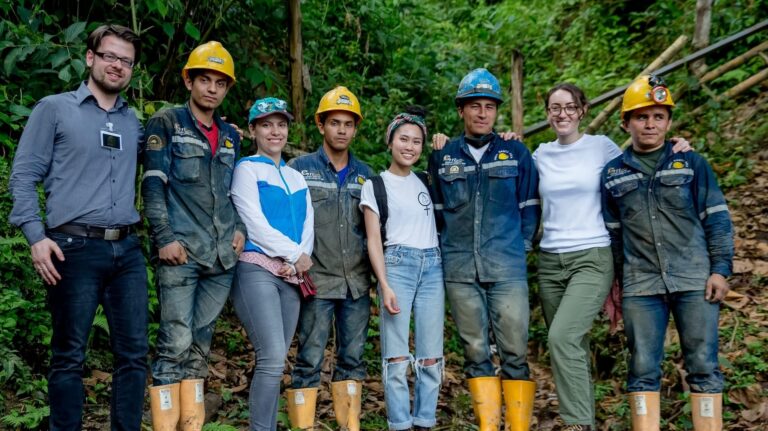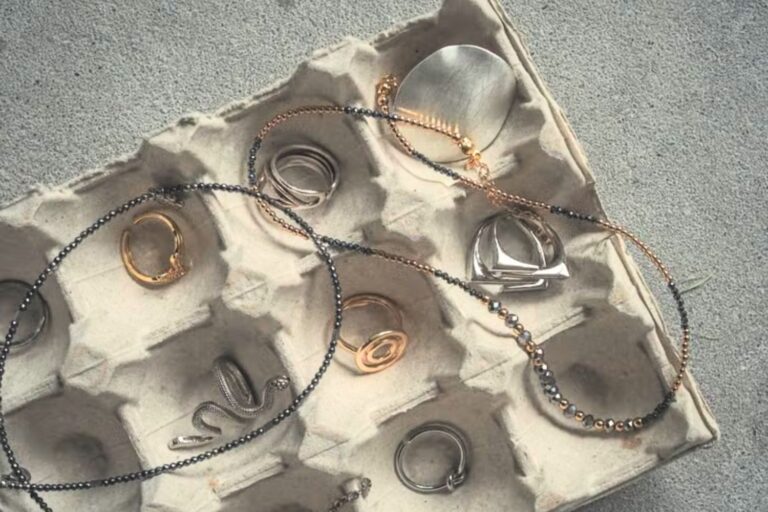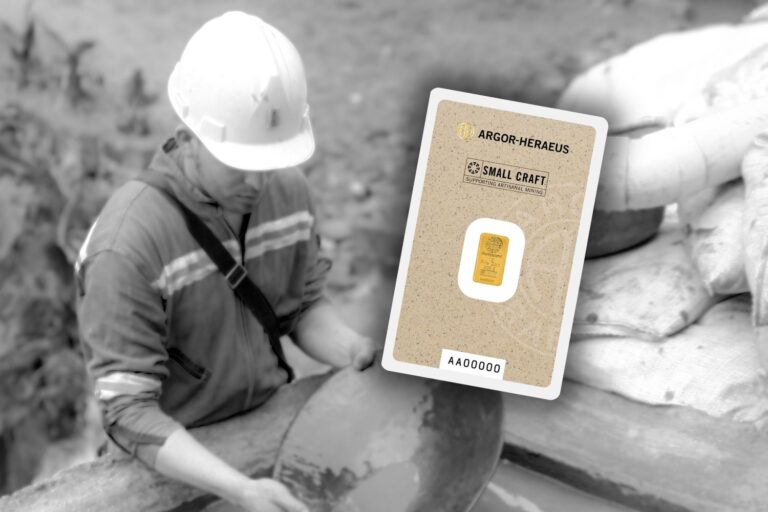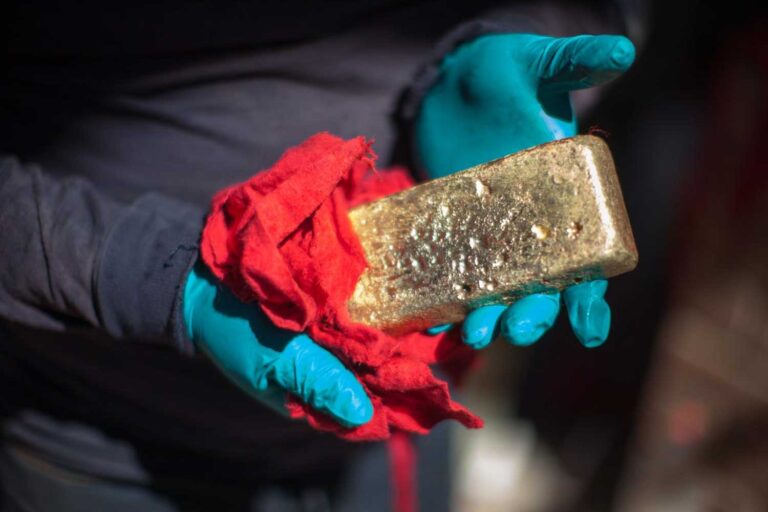

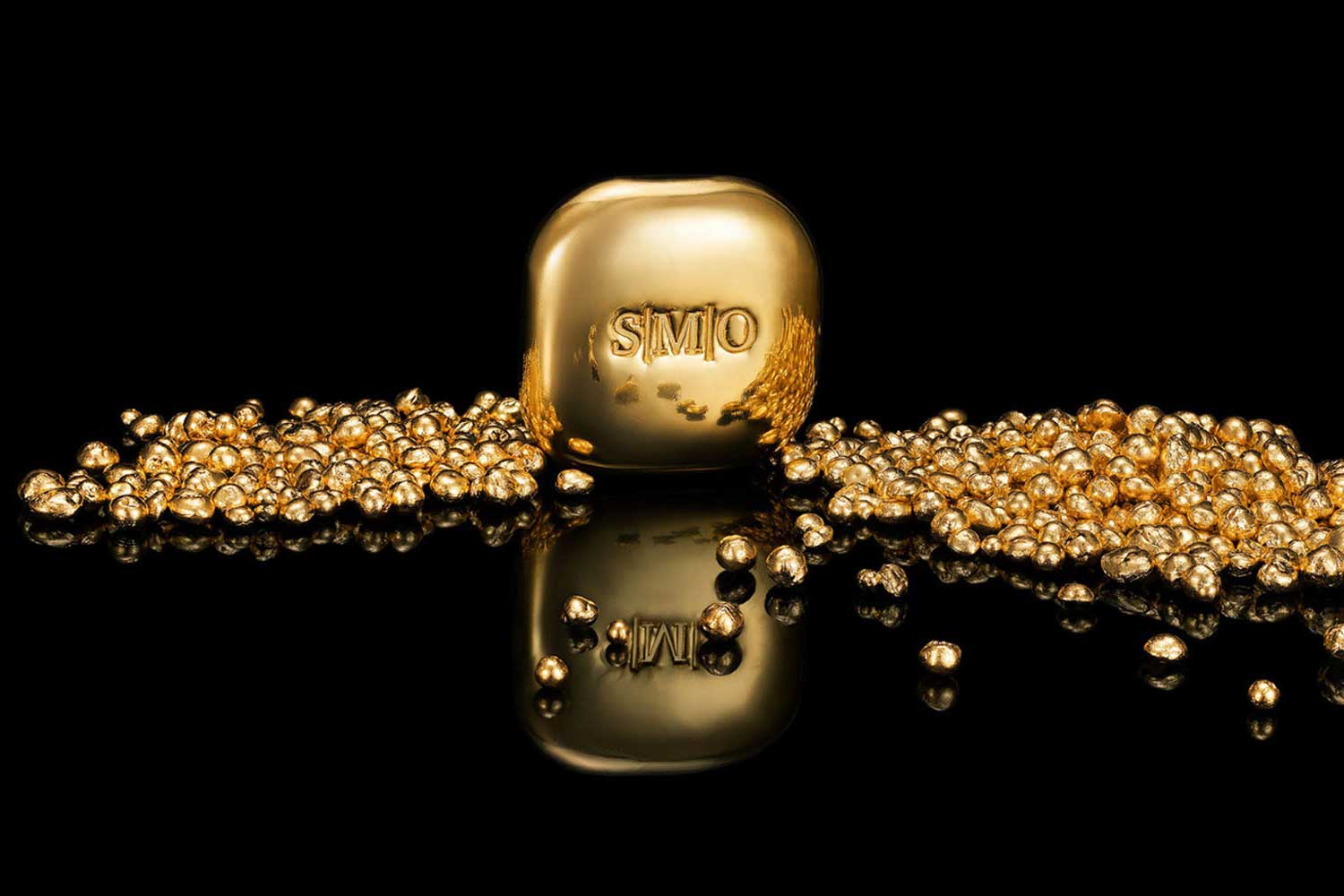
Single Mine Origin Gold, or SMO Gold, is gold from one named large-scale mine, kept separate from all other gold on its way to your workbench. That matters, because most of the world's gold comes from large mines – and loses its origin the moment it is mixed at the refinery. SMO Gold keeps the name of its mine through an independently audited chain of custody, in larger volumes and at a price close to conventional gold.
Key insights
- Single Mine Origin Gold is traceable to one named large-scale mine. Each batch stays separate from other gold all the way from the mine, and an independent auditor checks that it is refined on its own at an LBMA-accredited refinery.
- SMO Gold is not a certification but a sourcing model with audited traceability. SMO selects its member mines against frameworks such as the World Gold Council's Responsible Gold Mining Principles.
- Three member mines supply SMO Gold today. They are Bellevue in Western Australia, Sabodala-Massawa in Senegal and Ity in Côte d'Ivoire; Nalunaq in Greenland is an associate mine.
- The impact comes from the mine itself, not from a premium. In 2025, Sabodala-Massawa paid around 19,600 US dollars per kilogram of gold to the Senegalese state and invested around 500 US dollars per kilogram in local communities.
- SMO Gold is available in larger volumes at competitive prices. That makes it a pragmatic choice for brands and investors who need documented origin at scale – alongside Fairtrade and Fairmined Gold.
Table of contents
- What is Single Mine Origin Gold?
- SMO in brief: the model behind the gold
- How is SMO Gold traced from mine to product?
- Which standards do SMO member mines follow?
- How does SMO Gold create impact without a premium?
- Which mines supply Single Mine Origin Gold?
- SMO Gold vs Fairtrade, Fairmined and recycled gold
- What SMO Gold costs, and what it cannot do
- What can you tell your customers about SMO Gold?
- SMO Gold from Fairever
- FAQs: Single Mine Origin Gold explained
- Key takeaways
- Sources
What is Single Mine Origin Gold?
Single Mine Origin Gold is gold you can trace to one named large-scale mine. The name says it: every batch comes from a single mine, and you know which one – not just the country. That mine is a member of Single Mine Origin (SMO), an initiative owned by the British Betts Group.1
SMO Gold is responsible gold in three specific ways: it is traceable to one named mine through an independently audited chain of custody; its member mines are selected against recognized responsible-mining frameworks; and they publish environmental and social data every year that anyone can read.23
This matters because of where gold comes from. Large-scale mines produce around four-fifths of the world's mined gold; artisanal and small-scale mining supplies 15–20 %.4 In 2025, mines worldwide produced a record 3,671.6 tonnes.5 Before SMO was founded, only a tiny proportion of the world's gold was traceable to its mine, according to the initiative.2
The reason is refining. Refiners usually melt gold from many mines together, and what comes out is pure, but anonymous. We explain this step in our guide to large-scale gold mining. SMO Gold is refined in separate batches instead, so the link to its mine survives.
SMO in brief: the model behind the gold
SMO is a traceability initiative for gold from large-scale mines. It was established in 2017, and since 2024 it has been wholly owned by the Betts Group, a British precious metals refiner and manufacturer.12 SMO supplies gold to the jewelry and investment sectors.
The initiative does three things. It selects the mines, organizes a segregated supply chain from each mine to the refinery and on to manufacturers, and has that chain independently audited. Single Mine Origin Limited itself holds a Chain of Custody certification from the Responsible Jewellery Council (RJC) for gold, valid until December 2028.1 More on this standard in the RJC Chain-of-Custody Standard.
SMO distinguishes two kinds of mines. Member mines have passed its full selection process. Associate mines supply gold that is traceable through its own route, without that full process.3 How the initiative is organized is explained in what is Single Mine Origin (SMO)?
How is SMO Gold traced from mine to product?
SMO Gold stays separate from all other gold at every step, and an independent auditor checks the step where origin is usually lost: refining. Each batch receives a number that links it to its mine. Here is the route.
Segregated from mine to refinery
SMO describes the route like this:2
- Mine: The gold is produced at an SMO member mine, with an independent reconciliation of the mine's output against its export volumes.
- Transport: Logistics partners move the gold to the refinery, kept apart from other material.
- Refinery: An LBMA-accredited refinery processes the batch on its own.
- Audit: Independent auditors verify the segregation throughout the refining process.
- Onward journey: The refined gold travels, still segregated, to a vault or a manufacturer.
The audit at the refinery
The refinery is where SMO makes the difference. Charlie Betts, co-founder and managing director of SMO, puts it simply:
"Normally what happens [in other cases] is that all the gold from different mines gets mixed up and refined. The critical bit for us is that refining happens in segregation."
– Charlie Betts, Co-Founder and Managing Director, SMO, January 20256
An independent auditor checks that each batch from a mine is refined separately from any other material.6 According to SMO, this auditor is Bureau Veritas, an international testing and inspection company.2 Gold from Sabodala-Massawa is refined in Switzerland, gold from Bellevue in Australia – in both cases at LBMA-accredited refineries.678
Batch number and QR code
Every batch of SMO Gold comes with a batch number and a QR code. Scan the code or enter the number on the SMO website, and you see the name of the member mine, along with information on its social and environmental initiatives.2 This gives jewelers and their customers something rare in the gold trade: a named source they can look up themselves. What real traceability requires, and where it ends, is explained in traceable gold.
Which standards do SMO member mines follow?
SMO member mines are selected, not certified. Before SMO admits a mine, it assesses both the mining company and the mine itself against recognized responsible-mining frameworks.3
Selected, not certified
SMO's assessment works on two levels. At company level, it looks at governance, the frameworks the company follows and third-party information. At mine level, it looks at environmental and social performance, provenance, jurisdiction and risk factors.3 The reference frameworks are the World Gold Council's Responsible Gold Mining Principles (RGMPs), the IRMA Standard for Responsible Mining and the ICMM Mining Principles, "as applicable."3
Where a mine operates in a higher-risk or conflict-affected jurisdiction, SMO applies enhanced due diligence before it decides.3
In the words of the Betts Group, SMO works with "best in class" large-scale mining partners.9 To compare them with other mines, it has built an ESG benchmark that collates and standardizes the environmental, social and governance data gold miners disclose.3 According to SMO, member mines use no mercury in extraction.2
ESG data you can check
Which framework applies depends on the operator. Endeavour Mining, which runs Sabodala-Massawa and Ity, is a member of the World Gold Council and has its conformance with the Responsible Gold Mining Principles externally assured.107 Bellevue Gold is not a member of the World Gold Council. It publishes an annual sustainability report aligned with the GRI and SASB reporting standards, and EY provides assurance on its greenhouse gas figures.11
In large-scale mining, much of this assurance is commissioned by the companies themselves, as we explain in responsible large-scale gold mining. The named mine is what makes the data useful: you know whose report to read, and you can compare it year by year.
How does SMO Gold create impact without a premium?
SMO Gold carries no fixed premium for the mine. Its impact comes from how the member mine operates: wages, taxes, local purchasing and community programs, all paid from the sale of its gold. Two examples show what that looks like.
At Sabodala-Massawa in Senegal, 2,829 people worked in 2025; 95 % of Endeavour's employees at the mine were Senegalese. The mine spent 81 % of its procurement with national and local suppliers.
In the same year, it paid 167 million US dollars to the Senegalese state and invested 4.25 million US dollars in local communities, with its own projects focused above all on access to water and education.7 That is around 19,600 US dollars per kilogram of gold for the state and around 500 US dollars per kilogram for social investment.12
At Bellevue in Western Australia, solar and wind supplied 83.5 % of the mine's electricity in its 2026 financial year.11 The mine lies on the land of the Tjiwarl people, and a Native Title Agreement signed in 2022 covers heritage, land and water management, employment and contracting.13
These amounts are not tied to your purchase, as a premium would be. They show what the mine you buy from does with the value it creates – and because you know the mine, you can follow it. Our profiles of the Sabodala-Massawa gold mine and the Bellevue gold mine go into detail.
Which mines supply Single Mine Origin Gold?
Three member mines and one associate mine supply SMO Gold.
| Mine | Country | Operator | With SMO since | SMO Gold from Fairever |
|---|---|---|---|---|
| Bellevue | Australia | Bellevue Gold | 20241 | Gold bars, fine gold grain on request |
| Sabodala-Massawa | Senegal | Endeavour Mining | 202414 | Rings, fine gold grain on request |
| Ity | Côte d'Ivoire | Endeavour Mining | 202114 | – |
| Nalunaq (associate mine) | Greenland | Amaroq | 202515 | – |
Bellevue is an underground mine in the Northern Goldfields of Western Australia that poured its first new gold in October 2023. Its off-grid power station combines 27 megawatts of solar, 24 megawatts of wind and a battery with gas and diesel generators.11
Bellevue Gold states that it achieved net zero greenhouse gas emissions for Scope 1 and 2 at the mine in 2025 and in its 2026 financial year. It gets there through on-site renewable energy, renewable energy certificates and purchased Australian carbon credits that offset its remaining emissions; Scope 3 is not included.11 That describes emissions at the mine, not a property of the gold.
Sabodala-Massawa, in Senegal's Kédougou region, produced 273,533 ounces of gold in 2025.7 It recovers its gold without mercury and keeps a 1,500-hectare No Go Zone inside its permit for the critically endangered western chimpanzee.27
Ity, in western Côte d'Ivoire, was the first Endeavour mine to join SMO. The open-pit mine produced 319,000 ounces of gold in 2025.16
Nalunaq in Greenland is operated by Amaroq. Its SMO Gold went on sale in October 2025, available only to Greenlandic residents.15
SMO Gold vs Fairtrade, Fairmined and recycled gold
SMO Gold, Fairtrade Gold and Fairmined Gold share the most important feature: you know the mine. They differ in the kind of mine, the checks and what miners receive.
| SMO Gold | Fairtrade Gold | Fairmined Gold | Post-consumer recycled gold | Standard gold | |
|---|---|---|---|---|---|
| Source | One named large-scale member mine | Certified artisanal and small-scale mines | Certified artisanal and small-scale mines | End-of-life jewelry, dental and industrial gold | Mixed, mostly unknown |
| Traceable to the mine | Yes | Yes | Yes | No | No |
| Independent checks | Segregated refining audited; SMO holds RJC Chain of Custody certification | FLOCERT audits mines and supply chain | Independent certifiers audit the mines every year | Depends on the supplier | Responsible sourcing rules for LBMA refiners |
| Paid to the mine beyond the gold price | No fixed premium; impact through the mine's own operations | At least 95 % of the LBMA price plus 2,000 USD per kg | At least 95 % of the LBMA price plus 4,000 USD per kg | Nothing | Nothing |
| Available volumes | Large | Limited | Very limited | Large | Large |
| Price compared with the gold price | Small surcharge | Higher | Higher | Small surcharge | Close to the gold price |
Sources: Fairtrade and Fairmined standards,1718 Betts Group,9 SMO.1
Fairtrade and Fairmined Gold put money directly into artisanal and small-scale mining, where most people in gold mining work.4 SMO Gold opens responsible sourcing to the large mines that produce most of the gold, and to buyers who need that gold in volume. SMO sees itself as a complement, not a competitor:
"I'm never looking to convert a Fairtrade customer into an SMO customer; I'm looking to convert a customer who hasn't engaged in the provenance of their material into a customer who has."
– Charlie Betts, Co-Founder and Managing Director, SMO, January 20256
We agree. More on the alternatives: what is Fairtrade Gold?, what is Fairmined Gold? and post-consumer recycled gold. All options side by side: our sourcing models at a glance.
What SMO Gold costs, and what it cannot do
SMO Gold costs only a little more than conventional gold. The small surcharge covers segregated handling, the chain of custody controls and the audits, and it varies with the product and the delivery route.19 Large mines produce steadily and in volume, which keeps these costs low per gram.2
Three things SMO Gold does not do:
- It pays no premium to miners. That is one reason we do not call it fair gold. If your priority is direct income for small-scale miners, choose Fairtrade or Fairmined Gold.
- It is not certified gold. The chain of custody is audited and SMO holds an RJC certification, but there is no product certification comparable to Fairtrade or Fairmined.
- It is not low-carbon by default. Greenhouse gas emissions (Scope 1 and 2) vary widely between mines: Bellevue emitted 0.18 tonnes of CO₂ equivalent per ounce in its 2026 financial year before offsets, Sabodala-Massawa 0.70 tonnes in 2025.117 A study of 194 gold mines found a global average of 0.726 tonnes (2018 data).20
The last point is an argument for SMO rather than against it: only a named mine tells you which of these figures applies to your gold.
What can you tell your customers about SMO Gold?
The strongest claim about SMO Gold is also the simplest: name the mine. In our reading, statements about origin, segregation and audits are not environmental claims; they need to be true and documented, nothing more.
That matters if you sell to consumers in the EU, where the Empowering Consumers Directive has applied since September 27, 2026. It bans generic environmental claims without recognized excellent environmental performance, climate-neutrality claims for products based on offsets, and claims that present one part of a product as the whole.21 More in the EmpCo directive and gold.
Only the fine gold in an alloy is SMO Gold; the alloying metals are not. The following is general information, not legal advice.
Claims that hold up
- "The fine gold in this ring is Single Mine Origin Gold from the Sabodala-Massawa mine in Senegal."
- "The gold in this bar is traceable to the Bellevue gold mine in Western Australia through an independently audited chain of custody."
- "Refined separately from all other gold, under independent audit."
- "From a large-scale mine that publishes its environmental and social data every year."
Claims to avoid
| Claim | Why it does not hold | Say instead |
|---|---|---|
| "Sustainable gold," "eco-friendly gold" | A generic environmental claim, banned without a recognized eco-label – and none exists for gold | Name the mine and the audited chain of custody |
| "Net zero gold," "climate-neutral gold" | EU law bans climate-neutrality claims for products based on offsets | Leave it out, or attribute the mine's own statement with its scope |
| "Responsible gold" on its own | Needs its specification in the same place | Add what makes it responsible: named mine, audited chain, published data |
| "Certified gold," "RJC-certified gold" | The RJC certificate belongs to SMO, not to the gold | "Traceable through an independently audited chain of custody" |
| "Fair gold," "fairly traded gold" | No fair trade terms or premium apply | "Gold from a named large-scale mine" |
| "100 % SMO ring" | The alloying metals are not SMO Gold | "The fine gold in this ring is …" |
SMO Gold from Fairever
Fairever is the partner of the Betts Group and SMO for continental Europe. We have offered SMO Gold since early 2026, in four forms:8
- Gold bars of 1 troy ounce and 100 grams, cast from Bellevue gold.
- SMO's own investment products, currently in 1-ounce and 100-gram sizes.
- Rings made with SMO Gold from Sabodala-Massawa, configured online for business customers.
- Fine gold grain on request, from Bellevue or Sabodala-Massawa, for larger volumes.
For jewelry brands and manufacturers, that means a traceable option for serial production. For investors, it means gold bars with a known source mine at a price close to that of conventional bars. What each mine's gold means for your products: SMO Gold from the Bellevue mine and SMO Gold from the Sabodala-Massawa mine.
FAQs: Single Mine Origin Gold explained
What is Single Mine Origin Gold?
Single Mine Origin Gold, or SMO Gold, is gold traceable to one named large-scale mine. It stays segregated from all other gold from the mine through the refinery and beyond, and an independent auditor checks the separate refining.
Is SMO Gold certified?
No. SMO Gold has no product certification like Fairtrade or Fairmined Gold. Its chain of custody is independently audited, and the company Single Mine Origin Limited holds an RJC Chain of Custody certification for gold.
How can I trace SMO Gold to its mine?
Every batch comes with a batch number and a QR code. Scan the code or enter the number on the SMO website to see the member mine and information about it.
Which mines supply SMO Gold?
Bellevue in Western Australia, Sabodala-Massawa in Senegal and Ity in Côte d'Ivoire are SMO member mines. Nalunaq in Greenland is an associate mine.
Does SMO Gold cost more than regular gold?
Only a little. A small surcharge covers segregated refining, transport and audits. Because large mines supply steady volumes, the extra cost is lower than for Fairtrade or Fairmined Gold.
Is SMO Gold the same as Fairtrade or Fairmined Gold?
No. Fairtrade and Fairmined Gold come from certified artisanal and small-scale mines and pay miners a premium. SMO Gold comes from large-scale mines and pays no premium; its impact comes from the mine's own operations.
Where can I buy SMO Gold in Europe?
Fairever, partner of the Betts Group and SMO for continental Europe, supplies SMO Gold as gold bars, rings and, on request, as fine gold grain.
Key takeaways
In a nutshell ...
- Single Mine Origin Gold keeps what most gold loses: the name of its mine. Segregated refining under independent audit keeps the link from mine to product intact.
- Its impact runs through the mine. Taxes, jobs, local purchasing and community programs replace the premium – and you can follow them in the mine's published data.
- SMO Gold complements Fairtrade and Fairmined Gold. It brings traceability to large-scale mining, in volumes and at prices that work for serial production and investment.
- Claim the mine, not a label. "Traceable to the Bellevue gold mine" holds up; "sustainable," "net zero" or "certified" gold does not.
- Ask your supplier which mine your gold comes from. If the answer is a country or "recycled," ask for gold from a named mine – such as SMO Gold.
Get active, be the change!
Our SMO Gold bars are cast from Bellevue gold; for rings and fine gold grain, talk to us.
Want gold with the name of its mine? Take a look at our Single Mine Origin Gold – or get in touch, and we will find the right form for your production.
Further reading
- How the initiative behind the gold works: what is Single Mine Origin (SMO)?
- A historic mine running largely on sun and wind: the Bellevue gold mine, Australia.
- Senegal's largest gold mine and its chimpanzees: the Sabodala-Massawa gold mine, Senegal.
Sources
- SMO Gold, About us, accessed September 2026. ↩ ↩ ↩ ↩ ↩
- Single Mine Origin, SMO Gold Introduction Brochure, 2026 (not publicly available). ↩ ↩ ↩ ↩ ↩ ↩ ↩ ↩ ↩
- SMO Gold, Member Mines, accessed September 2026. ↩ ↩ ↩ ↩ ↩ ↩ ↩
- IGF / IISD, Global Trends in Artisanal and Small-Scale Mining (ASM), 2018, p. 3; World Gold Council, Artisanal and Small-Scale Gold Mining, accessed September 2026. ↩ ↩
- World Gold Council, Gold Demand Trends Full Year 2025: Supply, 2026. ↩
- Kate Youde, The Traceability Program That’s Going for the Gold, Rapaport Magazine, January 30, 2025. ↩ ↩ ↩ ↩
- Endeavour Mining, Sustainability Report 2025, 2026, pp. 2, 7, 13, 23, 25, 44, 50, 56, 67, 72, 90 and 93–94. ↩ ↩ ↩ ↩ ↩ ↩
- Fairever, internal information, September 2026. ↩ ↩
- The Betts Group, Where Does Your Gold Come From? A Guide to Responsible Options in the UK, 2026 (not publicly available). ↩ ↩
- World Gold Council, Our members, accessed September 2026. ↩
- Bellevue Gold, Sustainability Report 2026, September 2026, including the CY25 Bellevue Gold Project – GHG Accounting & Offsetting Report with EY’s independent assurance report. Reporting period July 1, 2025 – June 30, 2026. ↩ ↩ ↩ ↩ ↩
- Fairever calculation from footnote 7: 273,533 oz ÷ 32.1507 oz per kg ≈ 8,508 kg of gold; 167 million US dollars ÷ 8,508 kg ≈ 19,629 US dollars per kg; 4,251,694 US dollars of total social investment (the mine’s own community projects plus its contribution to the Local Mining Development Fund, p. 44) ÷ 8,508 kg ≈ 500 US dollars per kg. ↩
- Bellevue Gold, Bellevue signs Native Title Agreement with Tjiwarl Aboriginal Corporation, ASX, October 3, 2022. ↩
- Endeavour Mining, Single Mine Origin, accessed September 2026. SMO’s member mines page (footnote 3) gives 2025 as the year Sabodala-Massawa joined; we follow the operator. ↩ ↩
- Amaroq Minerals, Amaroq Minerals Announces Launch of Single Mine Origin Gold Sales from Nalunaq mine, Greenland, GlobeNewswire, October 17, 2025. ↩ ↩
- Endeavour Mining, Ity mine, accessed September 2026. ↩
- Fairtrade International, Fairtrade Standard for Gold and Associated Precious Metals for Artisanal and Small-Scale Mining, version 1.2, November 2013 (in force until June 30, 2027), requirements 4.5.1 and 4.5.3. ↩
- Alliance for Responsible Mining, Fairmined Standard for Gold from Artisanal and Small-Scale Mining, including Associated Precious Metals, version 2.0, April 5, 2014, requirements 5.2.1 and 5.2.5. ↩
- SMO Gold, FAQs, accessed September 2026. ↩
- Sam Ulrich, Allan Trench and Steffen Hagemann, Gold mining greenhouse gas emissions, abatement measures, and the impact of a carbon price, Journal of Cleaner Production 340, 2022. Scope 1 and 2, 194 mines in 35 countries, 2018 data. ↩
- European Parliament and Council, Directive (EU) 2024/825 as regards empowering consumers for the green transition, February 28, 2024, Article 4 and Annex I, points 4a, 4b and 4c. ↩