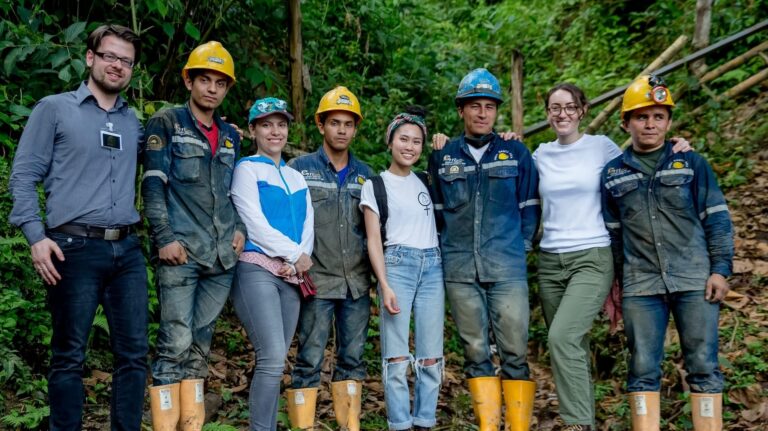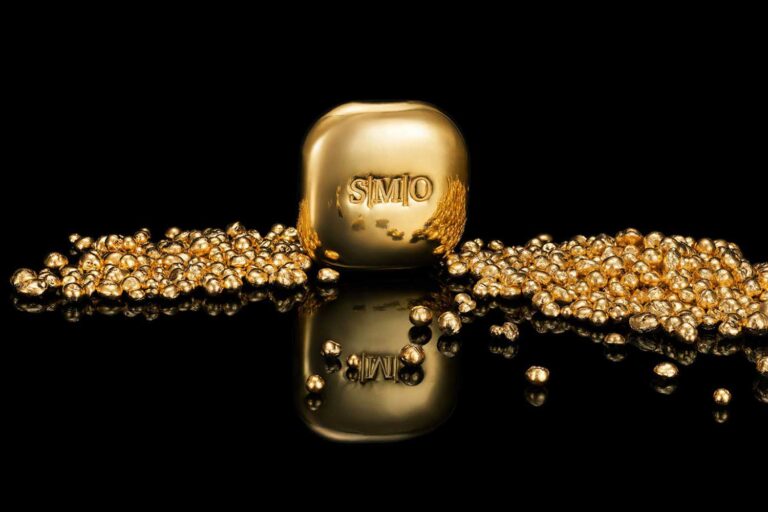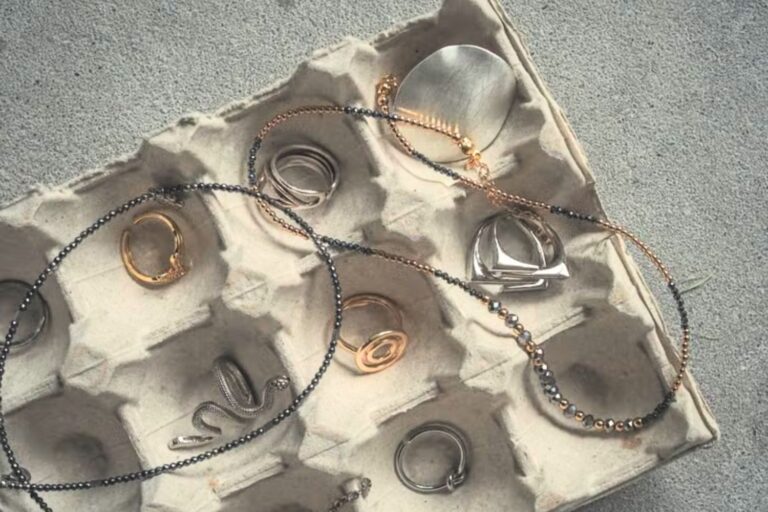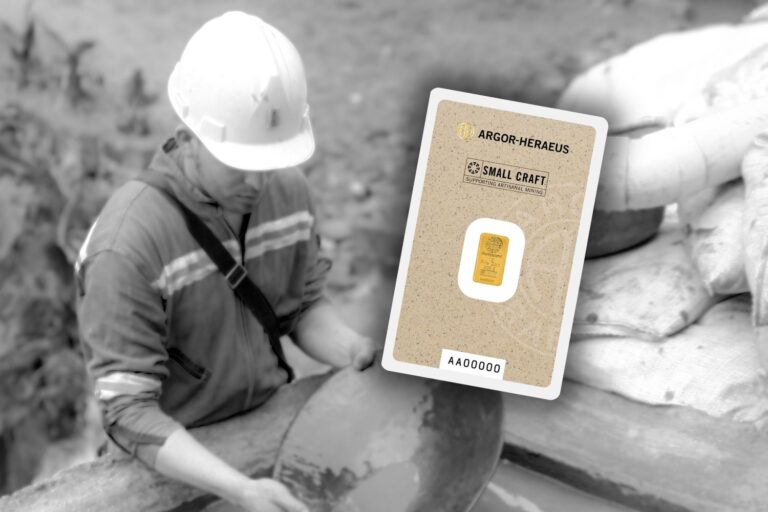

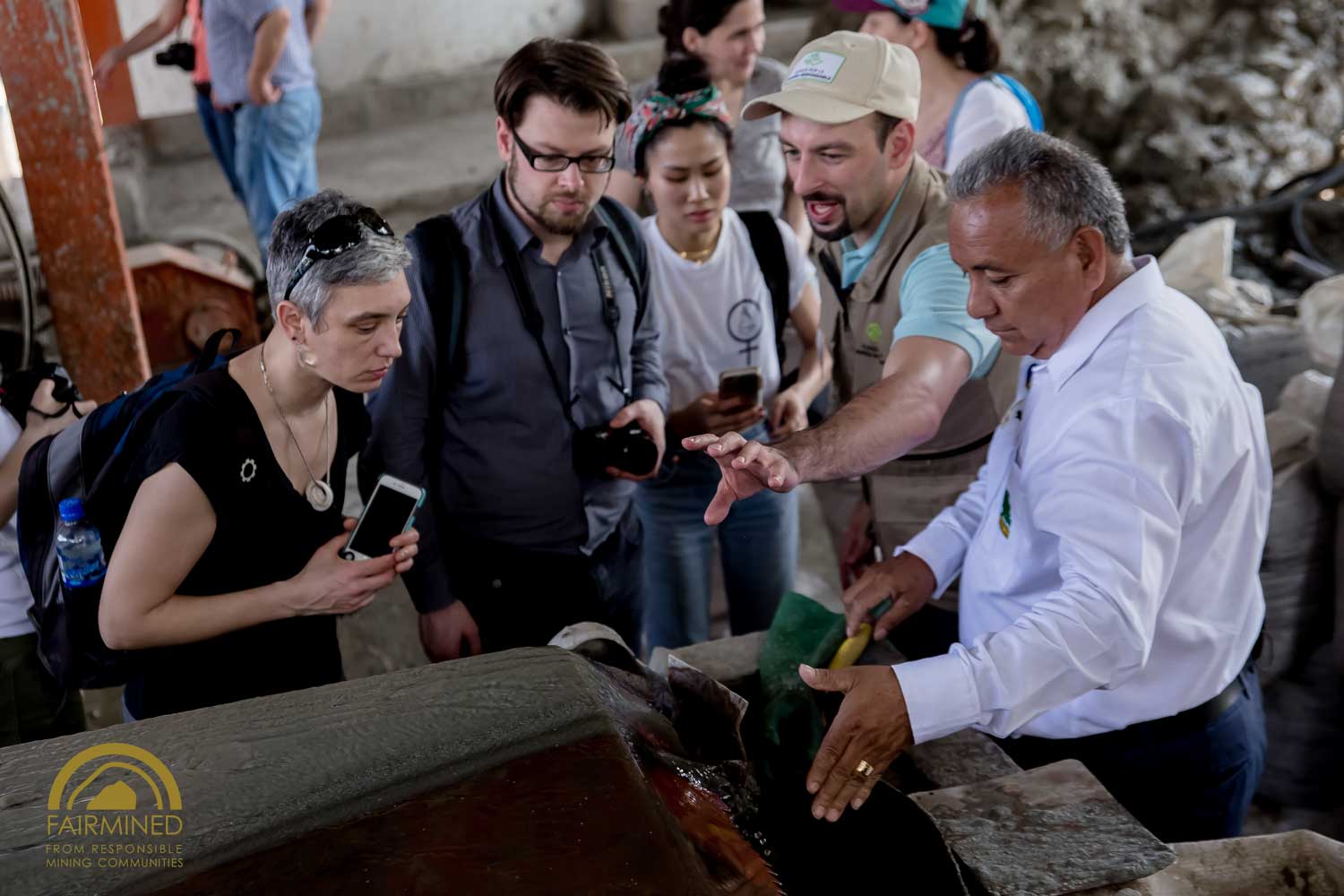
The Alliance for Responsible Mining (ARM) is the Colombian nonprofit that created the Fairmined Standard and has worked with artisanal and small-scale gold miners for over 20 years. Its teams help mining organizations formalize, cut mercury and reach buyers who pay a guaranteed premium. If you buy Fairmined Gold, you back work that reaches far beyond a label.
Key insights
- The Alliance for Responsible Mining is the nonprofit behind Fairmined. Founded in 2004 in Quito and based near Medellín, Colombia, ARM created and runs the Fairmined Standard for gold from artisanal and small-scale mining.
- Its roots lie in the Colombian rainforest. ARM grew out of Oro Verde, a mercury-free mining program in Chocó, and in 2009 launched the first independent third-party certification for gold together with Fairtrade International.
- Certification is only part of the job. ARM supports mining organizations on the ground, works on mercury and formalization, co-develops the open-source CRAFT Code and implements the planetGOLD program in Costa Rica from 2026.
- The track record is measurable. Fairmined-certified mines have sold around 2 tonnes of physical Fairmined gold since 2014 and received more than 7.9 million US dollars in Fairmined Premium; in 2025, 11 mines held the certification at the same time.
- Fairever has worked with ARM since 2017. As a Fairmined Authorized Supplier and ARM member, we source Fairmined Gold from certified partner mines such as Iquira in Colombia and Oro Puno in Peru.
Table of contents
- ARM at a glance
- What is the Alliance for Responsible Mining?
- From Oro Verde to Fairmined: ARM's history
- ARM's mission and vision
- What does ARM do?
- Who runs and funds ARM?
- ARM in numbers: 2025 and since 2014
- How Fairever works with ARM
- FAQs: The Alliance for Responsible Mining (ARM)
- Key takeaways
- Sources
ARM at a glance
| Name | Alliance for Responsible Mining (ARM) Foundation1 |
|---|---|
| Type | Nonprofit organization, recognized by the Medellín Chamber of Commerce in 20082 |
| Founded | 2004 in Quito, Ecuador3 |
| Headquarters | Envigado, near Medellín, Colombia; European association ARM Europe, based in France, since 201834 |
| Focus | Artisanal and small-scale mining (ASM), above all gold |
| Best known for | The Fairmined Standard and label for gold, with associated silver and platinum5 |
| Other work | Field support, mercury reduction, policy dialogue, the CRAFT Code, planetGOLD |
| Leadership | Executive Directors Gina D'Amato and Marcin Piersiak; Board Chair Patrick Schein16 |
| Team | 23 professionals and 11 board members (2025)1 |
| Reach in 2025 | 2,240 miners in 26 mining organizations, eight countries1 |
| Budget 2025 | 1,344,113 US dollars1 |
| Members | 243 organizations at the end of 2025, among them Fairever1 |
| Websites | responsiblemines.org and fairmined.org |
What is the Alliance for Responsible Mining?
The Alliance for Responsible Mining is a nonprofit that works to make artisanal and small-scale mining legitimate, responsible and profitable. It was founded in 2004 and has its headquarters in Envigado, in the Medellín metropolitan area of Colombia.3 Most people in the jewelry trade know ARM through Fairmined, the certification and label it created for gold from small-scale mining.
ARM works with the miners, not around them. Small-scale mining is often informal, frequently relies on mercury and rarely has direct access to formal markets. Instead of excluding it, ARM helps mining organizations improve step by step until they can sell to demanding buyers. Our overview of artisanal and small-scale gold mining explains why the sector matters so much.
Today, ARM's mining work reaches beyond gold. In 2025, its teams also supported copper miners in Peru, tin miners in Brazil and mica producers in Madagascar.1 Gold remains the center of its work, and Fairmined remains its best-known tool. What ties it all together is cooperation: ARM describes its approach as "joint work with mining organizations, companies, governments, and international bodies" to build "more transparent, sustainable, and inclusive supply chains."1
From Oro Verde to Fairmined: ARM's history
Roots in the Colombian rainforest
ARM grew out of Oro Verde, a program of Afro-Colombian miners in Chocó who recovered gold and platinum without mercury or cyanide. Oro Verde's founder, Catalina Cock Duque, later presided over ARM until 2009.7 Cristina Echavarría, an ARM co-founder8 and its executive director at the time, recalled in 2010 how bold the idea had once looked:
"Emerging from the deep rainforest of the Colombian Chocó, far from the 'hi-tech' mining sector, the sole idea of certification of Artisanal gold mining proposed by Oro Verde® almost ten years ago, seemed like madness to everyone working in the sector." – Cristina Echavarría, ARM9
In 2004, an international group from nine countries founded ARM in Quito, Ecuador: community-based mining organizations, environmentalists, business representatives and certification specialists. Shortly afterward, the office moved to Envigado, Colombia, where it still is.3 In 2008, the Medellín Chamber of Commerce formally recognized ARM as a nonprofit.2 The full story of the program that started it all: Oro Verde, Colombia.
Standard Zero and the Fairtrade years
ARM wrote its first rules in 2006, known as Standard Zero. In 2009, it partnered with Fairtrade International to turn them into a joint Fairtrade & Fairmined standard.3 The two organizations called it "the first ever third party independent certification for gold."10
The partnership combined ARM's field expertise in small-scale mining with Fairtrade's established certification system. The first version of the joint standard followed in 2010.5 On February 14, 2011, the first Fairtrade & Fairmined gold ever produced by artisanal and small-scale miners reached the market in the United Kingdom and Canada.3 The first certified organization was the Cotapata mining cooperative in Bolivia.11
In 2013, the partners agreed not to renew their contract and continued with separate systems.12 Both are still in place today. Fairtrade certifies gold from small-scale mining under its own standard for Fairtrade Gold, and ARM under Fairmined. For buyers, that means two established certification systems for gold from small-scale mining, both built on the groundwork laid together from 2009 to 2013.
Going independent with Fairmined
In 2013, the year the partnership ended, Fairmined-certified miners delivered 20 kilograms of gold at the Fairmined premium of 4,000 US dollars per kilogram.2 On April 5, 2014, version 2.0 of the Fairmined Standard took effect. It is still the version in force today.5
The standard sets a minimum price of 95 % of the LBMA gold price and a Fairmined Premium of 4,000 US dollars per kilogram of gold. Fairmined Ecological Gold, recovered by gravity methods only, without mercury or cyanide, earns another 2,000 US dollars per kilogram.5 In 2014, three certified organizations sold 123.6 kilograms of Fairmined gold.13 The rules in detail: the Fairmined Gold Standard.
Growing beyond one standard
From there, ARM broadened its reach step by step:
- 2014: The Iquira cooperative in Huila, Colombia, became the first organization certified under a regional Fairmined project of ARM and the Inter-American Development Bank.14 Today, Fairever regularly buys Fairmined Gold from Iquira.15
- 2015: XAMODX in Mongolia became the first Fairmined-certified organization outside South America, producing Fairmined Ecological Gold.16
- 2018: ARM opened ARM Europe, an association based in France, as a bridge to its projects in Africa.4 With the US nonprofit RESOLVE, it also developed the CRAFT Code.17
- 2021: Gina D'Amato was appointed Executive Director; Marcin Piersiak has led ARM Europe since the same year.18
- 2023: ARM presented Fairmined Credits at the OECD Forum on Responsible Mineral Supply Chains in Paris.1920
- 2024: ARM celebrated its 20th anniversary.21
- 2025: ARM Membership replaced the earlier Fairmined licensing model, and the Global Environment Facility approved planetGOLD Costa Rica with ARM as implementing organization.1
ARM's mission and vision
ARM's vision describes the sector it wants to see:
"A legitimate, responsible and profitable artisanal and small-scale mining sector which promotes inclusive and sustainable development."3
Its mission describes how it gets there:
"We facilitate the empowerment of artisanal and small-scale miners, their organization and the adoption of good practices, promoting favorable environments for the inclusion of artisanal and small-scale miners in the formal economy. We create voluntary standard systems for production and trade and support the creation of responsible supply chains."3
Three words carry the vision: legitimate, responsible and profitable. Legitimate means legal title and formal markets. Responsible means good practices for people and nature. Profitable means that mining has to pay off for the miners and their families, or none of the rest will last.
ARM's management put the stakes plainly in 2025: "we cannot allow ASM communities to continue facing dilemmas between their survival, formalization, and dignified livelihoods."1 That is the core of ARM's approach – and a close match to our own vision of gold as a driving force for sustainable development in mining regions.
What does ARM do?
ARM works on five fronts: the Fairmined system, support in the field, mercury, policy and open standards for the whole sector. Together they explain why the organization is more than a certifier.
Running the Fairmined system
ARM owns and develops the Fairmined Standard and the Fairmined label. It writes the rules, admits the companies that trade and use Fairmined metals, and reports on what the system achieves. The audits are done by certification bodies recognized by ARM; according to ARM's brand manual, these are external organizations, not part of Fairmined.22
Companies take part through ARM Membership. In 2025, it replaced the earlier Fairmined licensing structure; by the end of the year, 243 organizations were members, among them refiners, jewelry brands and other supply chain companies.1
Buyers can support certified mines in two ways. They can buy physical Fairmined Gold, traded in segregated supply chains. Or they can buy Fairmined Credits: each credit represents one gram of gold or silver produced by a Fairmined-certified mine but sold outside the Fairmined supply chain.23 More on both in What is Fairmined Gold? and Fairmined Credits explained.
Technical support in mining communities
Most of ARM's work happens in and around the mines. In 2025, ARM supported 2,240 miners in 26 mining organizations and ran 19 projects and consultancies in eight countries: Colombia, Peru, Brazil, Ecuador, Costa Rica, Liberia, Madagascar and the Democratic Republic of the Congo.1 A few examples from that year:
- Colombia: ARM supported 34 mining production units in the Cañamomo Lomaprieta indigenous reserve in Caldas on environmental management and territorial governance.1
- Colombia: In a pilot with Scotiabank, six mining organizations measured their carbon emissions, and ARM designed a solar power system to cover a mine's entire energy demand.1
- Colombia: 18 women graduated from the leadership program "Women Inspiring Women," run with Women in Mining Colombia.1
- Peru: ARM supported six active Fairmined-certified gold mines, which exported around 55 kilograms of certified gold, and three copper mines working toward the CRAFT Code.1
- Democratic Republic of the Congo: In the province of Ituri, cooperatives reduced the presence of children in the mines, improved tunnel safety and reforested mined areas.1
The logic behind this work is progressive improvement. The Fairmined Standard separates entry requirements from progressive ones that mines must meet within set years after certification.5 Mining organizations do not have to be perfect on day one, but they have to keep getting better and prove it in regular audits.
Fighting mercury in small-scale gold mining
Mercury is the sector's gravest environmental problem. Artisanal and small-scale gold mining is the world's largest man-made source of mercury emissions to air, with 37.7 % of the global total.24 Our overview of gold mining's environmental impact explains the damage.
ARM tackles mercury at several levels. The Fairmined Standard bans whole-ore amalgamation and makes retorts mandatory where mercury is still used. For Fairmined Ecological Gold, only gravity methods are allowed, with no mercury or cyanide at all.5
In Ecuador, ARM studied processing plants and mercury-free gold recovery. Together with Duke University, it published research on whether women who collect waste rock can earn more by selling their ore to mercury-free processing plants.1
ARM also works on the rules. At the diplomatic conference that adopted the Minamata Convention on Mercury in October 2013, ARM's then board chair, María Laura Barreto, argued that national action plans "need to be designed and implemented in partnership with the relevant actors, including and especially the miners."25
Policy work and global dialogue
ARM brings the miners' reality into the rooms where the rules are made. In 2025, it took part in 44 international dialogue spaces, including the OECD Forum on Responsible Mineral Supply Chains and the Intergovernmental Forum on Mining, Minerals, Metals and Sustainable Development (IGF).1 It sits on the advisory group of the Global Coalition for Action on ASGM, convened by the World Bank, the World Gold Council and the IGF, and in the ASM Working Group of the London Bullion Market Association (LBMA).1
ARM also advises governments directly. In Ecuador, it helped the Central Bank align its gold purchasing program for small-scale mining with international responsible sourcing standards. Together with Duke University, the two signed an agreement to evaluate the program's impact on miners' incomes and living conditions.1 In Peru, ARM trained government officials on mining formalization and the regulation of alluvial mining.1
Child labor is part of the agenda too. From 2013 to 2018, ARM worked with Pact, Fondo Acción and Fundación Mi Sangre on Somos Tesoro, a program funded by the US Department of Labor to reduce child labor in Colombia's mining areas.26
Co-developing the CRAFT Code
ARM co-developed the CRAFT Code with RESOLVE in 2017 and 2018, with financial support from the European Partnership for Responsible Minerals (EPRM).17 ARM presented it as the "Passport to Markets" for artisanal and small-scale miners: an open-source code that helps mining organizations manage risks step by step and connect with formal buyers.
Version 2.0, released in 2020, extended CRAFT from gold to tin, tantalum, tungsten, cobalt and gemstones.27 Version 2.1, launched in 2024, is fully aligned with the OECD Due Diligence Guidance. Its new Upstream Assurance scheme defines due diligence duties for the intermediaries who buy from miners.28 In 2025, ARM published a CRAFT branch for mica in Madagascar.1 How the code works: the CRAFT Code.
ARM's role in planetGOLD
planetGOLD is a program supported by the Global Environment Facility (GEF) and led by the UN Environment Programme (UNEP).29 Its mission is "to make small-scale gold mining safer, cleaner, and more profitable" – through mercury-free technologies, formalization, access to formal supply chains and access to finance.29
ARM has contributed in several roles. From August 2023 to June 2024, it led a consultancy for planetGOLD Global on responsible supply chains for small-scale gold, together with Levin Sources, across the nine countries of the program's first phase.30 In Ecuador, ARM trained more than 328 miners and other stakeholders in the CRAFT Code and the planetGOLD criteria.1
The biggest step comes in 2026: ARM is the implementing organization of planetGOLD Costa Rica. The GEF approved the project in July 2025 with funding of 4.5 million US dollars.1
Who runs and funds ARM?
ARM is governed by a Board of Directors, its highest authority. Board members serve voluntarily and without pay.6 In 2025, the board had 11 members.1 Patrick Schein has chaired it since August 2023.6
Day to day, ARM is led by Gina D'Amato and Marcin Piersiak, who signed the 2025 annual report as Executive Directors.1 The team counted 23 professionals in 2025.1
ARM Europe, the association in France founded in 2018, positions ARM in Europe and expands its work outside Latin America.418 Its director, Marcin Piersiak, represented ARM at the OECD Forum and at Inhorgenta in 2025.1 The Fairmined Standard itself is revised with outside input: the Fairmined Standard Committee, with representatives of miners, traders, practitioners and NGOs, reviews and updates it.531
Most of ARM's money comes from development cooperation. In 2025, ARM mobilized 1,344,113 US dollars: 864,833 dollars in Latin America and 479,280 dollars in Europe. Cooperation projects were the main source of income, followed by products and services. Membership and development or licensing fees made up a smaller share.1
The partners named in the 2025 report include the International Council of Swedish Industry (NIR), Scotiabank, the Swiss State Secretariat for Economic Affairs (SECO), GIZ, EPRM, UNEP and the GEF, the Trafigura Foundation, Kering and Brilliant Earth.1
This mix is under pressure. ARM's management notes that international cooperation is "reshaping its priorities under new geopolitical pressures," and the 2026 outlook names ARM's "high dependence on international cooperation resources."1 That makes the market side more important. Memberships, Fairmined sales and development fees tie ARM's income to companies that buy certified gold.
ARM in numbers: 2025 and since 2014
2025 was a hard year for certified gold. With conventional gold at historic highs, selling through traditional channels paid more, which put certified supply chains under pressure.1 Even so, Fairmined-certified mining organizations sold around 99.95 kilograms of gold – 77.35 kilograms through physical, traceable supply chains and 22.6 kilograms through Fairmined Credits.1 That is more than in 2024.21
| ARM in 2025 | |
|---|---|
| Miners supported | 2,240 in 26 mining organizations |
| People reached indirectly | More than 8,960 |
| Countries with projects | 8 |
| Projects and consultancies | 19 |
| Fairmined-certified mines at the same time | 11 |
| New certifications / recertifications | 2 / 9 |
| Fairmined gold sold | 99.95 kg (77.35 kg physical, 22.6 kg via credits) |
| Fairmined Premium | 407,928 US dollars, incl. 90,512 dollars from gold credits |
| ARM members | 243 |
Source: ARM Annual Report 2025.1
The two new mines are Correa Chavestán and Los Conquistadores in Cauca, Colombia. With them, 11 mines held Fairmined certification at the same time, a milestone in ARM's words.1
Over the long run, the numbers add up. By ARM's count, more than 2.1 tonnes of Fairmined gold and silver were sold between 2014 and 2024, and more than 7.5 million US dollars in Fairmined Premium went directly to the mining communities.21 Counting gold alone and adding 2025, that comes to around 2 tonnes of physical Fairmined gold since 2014 and more than 7.9 million US dollars in Fairmined Premium.3233 In its first 20 years, ARM worked with more than 55,000 people in over 600 mining communities, in 32 countries on three continents.21
What does that mean for a single piece of jewelry? A wedding ring of 8 grams in 18-karat gold contains 6 grams of fine gold. Made from Fairmined Gold, it carries 24 US dollars in Fairmined Premium for the mine.5 The mining organizations decide how to use it. In 2025, premium from Fairmined Credits kept the care center Corazones de Oro for children and young people with disabilities in Iquira running for six months, and in Peru, Oro Puno used Fairmined Premium to electrify its production infrastructure. In Ananea, also in Puno, the CECOMIP cooperative funded a scholarship program with credit premiums that prepared 32 young people for higher education.1 These are the stories behind ARM's mining statistics: decisions made by the miners themselves, with money that conventional gold trading does not pay.
How Fairever works with ARM
Fairever has worked with ARM since spring 2017, when we became a Fairmined Authorized Supplier.34 Our Fairmined ID is DE20014.35 Today, Fairever is also one of ARM's members.1
We buy Fairmined Gold from certified partner mines such as the Iquira cooperative in Colombia and Oro Puno in Peru, which supplies our Fairmined Ecological Gold. planetGOLD's 2022 report on integrating responsible small-scale gold into international supply chains lists Fairever's sourcing from certified cooperatives, in partnership with ARM, among its examples.36
In 2018, Fairever's founder, Florian Harkort, visited ARM's headquarters near Medellín and traveled with the ARM team to Iquira.15 More on his path in Why Fairever Exists.
"When I visited ARM's headquarters near Medellín in 2018, what stayed with me was how close the team works to the mines. They spend more time in mining communities than in meeting rooms – and you can feel that in how practical their standard is." – Florian Harkort, founder of Fairever
Florian also served on the Fairmined Standard Committee during the revision of the Fairmined Standard.31 And for several years, Fairever and ARM have appeared together at Inhorgenta in Munich and International Jewellery London (IJL), with shared stands, panels and events.15 At Inhorgenta 2024, the miners of Oro Puno joined us on stage: Fairever's Managing Director, Desirée Binternagel, discussed responsible gold with an ARM board member and a representative of Minera Oro Puno.37
What began as an idea in the rainforest of Chocó has become a global reference for responsible small-scale mining. ARM has shown that artisanal miners can meet demanding international standards, sell their gold to jewelers around the world and decide for themselves how to invest their premium. Its next steps reach further still: planetGOLD Costa Rica, climate action at the mines and responsible supply chains for critical minerals such as copper and tin.1 That is the future we want to help build together with ARM – a world in which gold drives sustainable development in the mining regions, and the people there benefit from the value they create.
FAQs: The Alliance for Responsible Mining (ARM)
What is the Alliance for Responsible Mining (ARM)?
The Alliance for Responsible Mining is a nonprofit organization founded in 2004 and based in Envigado, near Medellín, Colombia. It works with artisanal and small-scale miners on formalization, good practices and market access, and it created the Fairmined Standard for gold from small-scale mining.
Is ARM a mining company?
No. Despite the name, ARM does not mine. "ARM mining" usually refers to the organization's mining programs: its work with mining organizations, the Fairmined certification and projects on mercury, formalization and market access.
What is the difference between ARM and Fairmined?
ARM is the organization; Fairmined is its standard and label. ARM develops the Fairmined Standard, admits companies to the system and reports on its results. Independent certification bodies recognized by ARM audit the mines.
Who founded ARM?
An international group of community mining organizations, environmentalists, business representatives and certification specialists from nine countries founded ARM in Quito, Ecuador, in 2004. Its roots lie in Oro Verde, a mercury-free mining program in Colombia's Chocó region.
What was the relationship between ARM and Fairtrade?
From 2009 to 2013, ARM and Fairtrade International ran a joint Fairtrade & Fairmined standard, the first independent third-party certification for gold. In 2013, they agreed not to renew the partnership. Since then, Fairtrade Gold and Fairmined Gold have been two separate certification systems.
How is ARM funded?
Mainly through development cooperation projects. In 2025, ARM mobilized 1,344,113 US dollars; cooperation projects were the largest source, followed by products and services, membership and development fees.
How many mines are Fairmined certified?
In 2025, 11 mining organizations held Fairmined certification at the same time, most of them in Colombia and Peru. Two mines in Cauca, Colombia, were newly certified that year, and nine were recertified.
What is ARM Membership?
ARM Membership is the way companies take part in the Fairmined system and support ARM's work. In 2025, it replaced the earlier Fairmined licensing structure. By the end of 2025, 243 refiners, jewelry brands and other supply chain companies were members, Fairever among them.
How can companies support ARM?
Companies can join ARM Membership, buy physical Fairmined Gold or Silver from certified mines, buy Fairmined Credits, or fund ARM's projects directly.
Key takeaways
In a nutshell ...
- The Alliance for Responsible Mining sets the rules, others check them. ARM develops the Fairmined Standard and supports the miners, while independent certification bodies recognized by ARM audit the mines.
- ARM's roots and its daily work are in the field. From Oro Verde in Chocó to 19 projects in eight countries in 2025, ARM works with mining organizations on formalization, mercury and market access.
- Fair gold from small-scale mining started as a joint effort. ARM and Fairtrade International launched the first independent certification for gold together, and today two established systems build on it.
- Ask for the mine behind your gold. Fairmined Gold comes from certified mining organizations that receive a premium of 4,000 US dollars per kilogram. Ask your supplier which mine it comes from and for its Fairmined ID.
Get active, be the change!
Every gram of Fairmined Gold comes from a certified mining organization that decides for itself how to invest its premium – in its mine, in education or in care for its community. If that is the kind of gold you want to work with, browse our Fairmined Gold.
Further reading
- The certified metal behind ARM's work: What is Fairmined Gold?
- The rules that Fairmined mines follow: the Fairmined Gold Standard.
- Gold recovered by gravity alone, without mercury or cyanide: Fairmined Ecological Gold.
Sources
- Alliance for Responsible Mining, ARM Annual Report 2025, 2026, pp. 5–18, 21–31, 34–40, 43–45, 48–62 and list of ARM Members. ↩ ↩ ↩ ↩ ↩ ↩ ↩ ↩ ↩ ↩ ↩ ↩ ↩ ↩ ↩ ↩ ↩ ↩ ↩ ↩ ↩ ↩ ↩ ↩ ↩ ↩ ↩ ↩ ↩ ↩ ↩ ↩ ↩ ↩ ↩ ↩ ↩ ↩ ↩
- Alliance for Responsible Mining, Annual Report 2013, 2014. ↩ ↩ ↩
- Alliance for Responsible Mining, History, accessed September 2026. ↩ ↩ ↩ ↩ ↩ ↩ ↩ ↩
- Alliance for Responsible Mining, The Alliance for Responsible Mining opens a branch in Europe, December 17, 2018. ↩ ↩ ↩
- Alliance for Responsible Mining, Fairmined Standard for Gold from Artisanal and Small-scale Mining, including Associated Precious Metals, version 2.0, April 2014, sections 0.3, 0.7, 0.8, 2.1.2, 2.1.3, 2.3.1, 5.2.1, 5.2.5 and 5.2.6. ↩ ↩ ↩ ↩ ↩ ↩ ↩ ↩
- Alliance for Responsible Mining, Board of Directors, accessed September 2026. ↩ ↩ ↩
- Alliance for Responsible Mining, post congratulating Catalina Cock Duque on LinkedIn, January 2024. ↩
- Alliance for Responsible Mining, Recognition of Cristina Echavarría at the 14th Annual Gold and Diamond Conference by IAC, July 25, 2024. ↩
- Alliance for Responsible Mining, Annual Report 2010, letter from the Executive Director, Cristina Echavarría, p. 2. ↩
- Alliance for Responsible Mining, Fairtrade and Fairmined gold standards, June 17, 2009. ↩
- The Scotsman, Miners enjoy taste of success with world's first Fairtrade gold, February 13, 2011. ↩
- Alliance for Responsible Mining, Fairmined gold opens up to new responsible markets, May 22, 2013. ↩
- Alliance for Responsible Mining, Annual Report 2014, 2015. ↩
- Fairmined, Coffee Beans and Gold Nuggets – New Fairmined certified mining cooperative in Colombia, September 18, 2014. ↩
- Fairever, internal information. ↩ ↩ ↩
- Mining.com, Ecological gold from Mongolia: Artisanal miners obtain Fairmined Certification, February 27, 2015. ↩
- Alliance for Responsible Mining, CRAFT Code, the "Passport to Markets" for artisanal and small-scale miners, completes global public consultation and moves to publish final version, June 18, 2018. ↩ ↩
- National Jeweler, Alliance for Responsible Mining Names New Executive Director, December 3, 2021. ↩ ↩
- Fairmined, ARM Presents New Model to Support Responsible Mining: 'Fairmined Credits' at the OECD Forum, May 9, 2023. ↩
- OECD, 2023 Forum on Responsible Mineral Supply Chains, April 24–28, 2023. ↩
- Alliance for Responsible Mining, ARM Annual Report 2024, 2025, "20 years at a glance" and pp. 18, 30–31. ↩ ↩ ↩ ↩
- Alliance for Responsible Mining, Fairmined Brand Identity & Mark Manual, 2020, section 5.1 (not publicly available). ↩
- Fairmined, Fairmined Credits, accessed September 2026. ↩
- UN Environment Programme, Global Mercury Assessment 2018, 2019. ↩
- Alliance for Responsible Mining, When Environment meets Development: Making the Minamata Convention a true ally for the miners, October 26, 2013. ↩
- Alliance for Responsible Mining, Somos Tesoro, project page, accessed September 2026. ↩
- Alliance for Responsible Mining, CRAFT version 2.0 is now ready, October 13, 2020. ↩
- RESOLVE, RESOLVE and Alliance for Responsible Mining Launch CRAFT Code 2.1 – A key tool for responsible mining, October 21, 2024. ↩
- planetGOLD, About, accessed September 2026. ↩ ↩
- Alliance for Responsible Mining, PlanetGOLD Global: Technical Assistance Consultancy, Training and Documentation on Responsible ASM Supply Chains, project page, accessed September 2026. ↩
- Fairmined, Fairmined Standard Revision, accessed September 2026. ↩ ↩
- Our own calculation from the Fairmined gold sales reported in ARM's annual reports (physical gold only, without silver and without Fairmined Credits): 2014: 123.6 kg (footnote 13); 2015: 106.6 kg (Annual Report 2015); 2016: 193 kg (Annual Report 2016, "2016 by the numbers"; the report's text gives 195 kg); 2017: 180 kg (Annual Report 2017); 2018: 361.5 kg (Annual Report 2018); 2019: 412 kg (Annual Report 2019); 2020: 138.2 kg (Annual Report 2020); 2021: 106 kg (Annual Report 2021); 2022: 130.31 kg (Annual Report 2022); 2023: 133 kg (Annual Report 2023); 2024: 74.12 kg (footnote 21); 2025: 77.35 kg (footnote 1). Sum: 2,035.68 kg, rounded to around 2 tonnes. With 195 kg for 2016, the sum is 2,037.68 kg. ↩
- Our own calculation: more than 7.5 million US dollars in Fairmined Premium by 2024 (footnote 21) plus 407,928 US dollars in 2025 (footnote 1) = more than 7,907,928 US dollars, rounded down to more than 7.9 million. The 2025 figure includes 90,512 US dollars in premium from Fairmined gold credits, as reported by ARM; ARM does not state whether its cumulative figure to 2024 includes credit premiums. ↩
- Fairmined, Fairever: Transforming the precious metals supply chain, 2023. ↩
- Fairmined, Fairever – Artisanal Gold, supplier profile, accessed September 2026. ↩
- planetGOLD, Overcoming Practical Barriers for Integrating Responsible Artisanal & Small-Scale Mined Gold into International Supply Chains, 2022, p. 43. ↩
- Fairmined, Exploring Inhorgenta Munich 2024: A Perspective on Sustainability, March 4, 2024. ↩