
The Fairmined Gold Standard is the rulebook that artisanal and small-scale mining organizations follow to sell certified gold. It sets binding requirements on mercury, safety, child protection, fair pay and traceability, and guarantees miners a minimum price plus a premium of 4,000 US dollars per kilogram. Here is what the standard demands, what it gives miners and their communities – and what the Fairmined label proves.
Key insights
- The Fairmined Gold Standard sets the rules for certified gold from small-scale mining. Version 2.0, published by the nonprofit Alliance for Responsible Mining (ARM), has applied since April 2014 and also covers silver and platinum found with the gold.
- Mines do not have to be perfect on day one, but they must keep improving. Entry requirements apply from the first audit; progressive requirements follow in years 1, 3, 6 and 9 and are checked in annual audits.
- Fairmined gold certification covers four fields. ARM groups the requirements into organizational development, environmental protection, work conditions and social development – held together by traceability and assurance.1
- Miners get a guaranteed price and a premium. At least 95 % of the LBMA gold price plus 4,000 US dollars per kilogram, or 6,000 for Fairmined Ecological Gold – more than 7.9 million US dollars in premium since 2014.
- Fairmined Ecological Gold goes furthest. It is recovered with gravity methods only, without mercury or cyanide, and must stay physically traceable at every step.
Table of contents
- The Fairmined Gold Standard at a glance
- What is the Fairmined Gold Standard?
- Who can get Fairmined gold certification?
- Built to improve: a standard in stages
- Organizational development
- Environmental protection
- Work conditions
- Social development
- The Fairmined Premium: what it pays for
- Fairmined Ecological Gold: the extra step
- Traceability: from mine to market
- Assurance: who checks and how
- What the Fairmined label proves – and what not
- FAQs: The Fairmined gold standard explained
- Key takeaways
- Sources
The Fairmined Gold Standard at a glance
| Full name | Fairmined Standard for Gold from Artisanal and Small-scale Mining, including Associated Precious Metals2 |
| Publisher | Alliance for Responsible Mining (ARM), a nonprofit based near Medellín, Colombia |
| Current version | 2.0, applicable since April 5, 2014, refined through pilot amendments23 |
| Who can be certified | Artisanal and small-scale mining organizations (ASMOs) |
| Metals | Gold; silver and platinum when mined together with the certified gold |
| Structure | Entry requirements (year 0) and progressive requirements (years 1 to 9) |
| Minimum price | At least 95 % of the LBMA price |
| Fairmined Premium | 4,000 US dollars per kg of gold; 6,000 for Fairmined Ecological Gold |
| Audits | Annual, by independent certification bodies recognized by ARM4 |
| Certified mines | 11 at the same time in 20255 |
| Supply chain models | Fairmined Labeled, Fairmined Incorporated, Fairmined Credits |
What is the Fairmined Gold Standard?
The Fairmined Gold Standard is a voluntary certification standard for gold from artisanal and small-scale mining. It defines what a mining organization must do to sell its gold as Fairmined, and what buyers must pay for it. Independent certification bodies check compliance; ARM owns and develops the Fairmined Gold Standard.
Its purpose is broader than a label. The Fairmined Gold Standard aims to promote "the progressive organization and formalization of the ASM sector," with better labor rights, safer work and stronger miners' organizations.2 It builds on national law and adds what the law often does not ask for: responsible mercury management, fair trading terms and a premium for development. Our overview of artisanal and small-scale gold mining explains why the sector needs it.
The Fairmined Standard has a history. It grew out of ARM's "Standard Zero" of 2006 and a joint Fairtrade and Fairmined standard from 2010.2 More on the organization behind it: the Alliance for Responsible Mining.
Version 2.0 is still in force. Since 2014, ARM has refined individual rules through pilot amendments, for example on premium governance and on Fairmined Credits.3 ARM is working on a full revision, reviewed by an expert committee of miners, jewelry brands, industry specialists and NGOs. Fairever's founder, Florian Harkort, served on that committee.6
Who can get Fairmined gold certification?
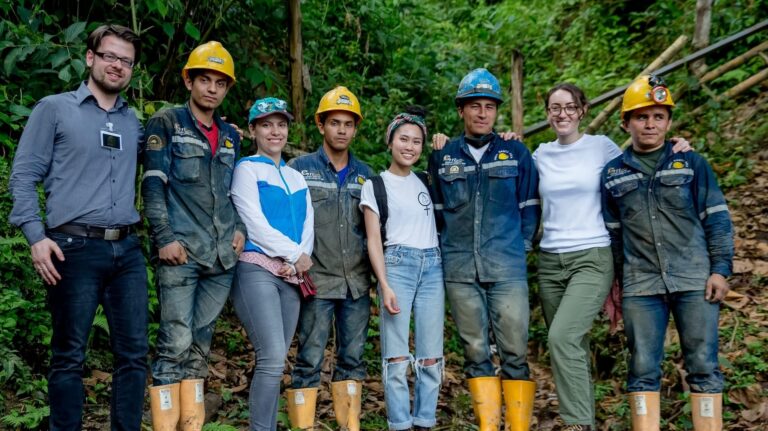
Fairmined certification is open to organized, legal artisanal and small-scale mining organizations – cooperatives, associations or small companies. The standard calls them ASMOs.2
To qualify for Fairmined gold certification, an organization may produce no more than 4 grams of gold per registered miner and day when it enters, and up to 8 grams as it grows. More than half of its miners must be community-based miners from the local mining community, and no owner may hold shares in industrial mining.2 The Fairmined Gold Standard covers low- and middle-income countries eligible for development assistance.
Some areas are excluded: protected areas where mining is banned, critical ecosystems identified by ARM, areas of conflict with local farming, and conflict-affected areas where miners cannot rule out support for armed groups, in line with the OECD Due Diligence Guidance.2 Mechanized dredging in rivers and lakes is excluded, apart from small artisanal dredges that meet strict environmental conditions.
Not every miner in an organization's area has to join at once. The organization defines a "System of Production" – the miners, areas and plants that meet the standard – and can let pioneers lead the way.2 Only gold from this system may be sold as Fairmined.
Built to improve: a standard in stages
The Fairmined Gold Standard is a staged system. Each of its requirements is marked as an entry requirement, which must be met before certification, or a progressive one, due by year 1, 3, 6 or 9.2 Mines start where they are, and must prove progress in every annual audit.
Mercury shows the logic. From day one, whole-ore amalgamation is banned and retorts are mandatory. By year 3, amalgamated tailings may no longer be leached with cyanide unless the mercury is recovered first. By year 9, leaching amalgamated tailings is banned entirely.2 Wages follow the same path: at least the legal minimum from the start, then gradual increases toward a living wage from year 3.
Each requirement also has a defined reach. Some apply to the certified System of Production, some to the organization's entire mining area and some to the surrounding community.2 Where national law is stricter, national law prevails.
ARM puts the idea into one sentence that certified mining organizations may use: "We are committed to the progressive improvement of our mining practices, according to the Fairmined Standard."7 In 2025, nine mining organizations passed their recertification.5
Organizational development
Organizational development is the foundation of the Fairmined Gold Standard. Without a legal, well-run organization, none of the other rules can be enforced. That is why most of these requirements apply from day one.
A legal mining operation
A certified organization must hold land and mining rights for all areas in its System of Production, pay all taxes, fees and royalties, and operate with the agreement of legal and traditional local authorities.2 Its revenues must not finance illegal activities or armed conflict. It needs a legal, transparent structure and financial controls that meet national rules. In a sector where formalization is often the hardest step, this alone sets certified mines apart.
A stronger organization
Every certified organization runs an Internal Control System. It registers each miner by name and ID, records each delivery of ore and gold by date, amount and origin, and keeps certified material separate from everything else.2 Supervisors check the mining areas with random visits.
The organization must also register all miners working in its wider mining area, including those outside the System of Production, and from year 1 promote responsible practices among them. Within the first year, it must set up a grievance procedure for human rights and environmental complaints; it must inform ARM of cases it cannot resolve locally.
A guaranteed minimum price
Buyers must pay at least 95 % of the LBMA gold price for the fine gold content, at the export point.2 UNEP notes that small producers often get "70% or more of international prices, even in remote areas" – the Fairmined minimum price sets the floor far higher.8
The Fairmined Gold Standard also sets clear payment deadlines, unless a contract agrees other terms: the first down payment is due by the next business day after the gold reaches the customs or export agent, the final payment and premium by the next business day after all figures are verified. As a first authorized buyer, Fairever voluntarily pays 96–99 % of the LBMA price.9
Better trade relationships
Fairmined trade runs on written contracts. Each one sets volumes, quality, price, payment and delivery terms, and how the gold content is determined.2 Buyers may not tie certified purchases to unfair terms for uncertified gold.
Access to cash is where small mines often struggle, because local traders finance the miners and tie them to their business. The Fairmined Gold Standard addresses this directly.
After a trial period, buyers must provide a down payment on request: mining organizations may ask for up to 60 % of a shipment's value, and buyers must provide at least 40 %.2 Financing costs are capped at the buyer's bank rate plus credit insurance and 1 % a year. After three years, buyers and mines share indicative sourcing and production plans, so both sides can plan.
Environmental protection
The environmental rules of the Fairmined Gold Standard target the most serious risks of small-scale mining: mercury, water pollution and scarred land. They are designed to be achievable with the means of small mines and to tighten over time.2 Where national law bans mercury or cyanide, the law applies.
Mercury and chemicals under strict rules
Mercury is the sector's biggest environmental problem. Artisanal and small-scale gold mining is the largest man-made source of mercury emissions to air, with 37.7 % of the global total.10 Amalgamating whole, unconcentrated ore is among the worst practices, and inefficient too: it "rarely captures more than 30% of the gold," according to UNEP.8
The Fairmined Gold Standard bans whole-ore amalgamation from the start. Gold must first be concentrated without mercury, retorts must be used to recover the mercury, and amalgam may never be burned in homes or residential areas.2 Mercury and cyanide must be stored safely and handled only by trained adults. Where mercury-free recovery is reasonably possible, amalgamation should not be used at all. The rules follow the priority actions of the Minamata Convention on Mercury.
Cyanide recovers far more gold – often 90 %, says UNEP – and does not persist in the environment the way mercury does.8 The Fairmined Standard allows it, but under firm rules: cyanide solutions and tailings must be detoxified in a lined pond or tank before discharge, and leaching plants must be run by trained staff.2
Protecting water
Tailings and solutions from amalgamation or cyanidation must never be discharged into water bodies or where they can reach them, and fuel residues may not be dumped there either.2 By year 3, the same applies to all tailings and contaminated water, and mines at risk of acid mine drainage must isolate acid-forming material from water. Also by year 3, the organization must work with local authorities on water stewardship in its wider area.
A small footprint
All mines and processing plants need valid environmental licenses or management plans under national law.2 Mining in protected areas where mining is banned is excluded; the rare exceptions require official approval and an environmental mitigation plan. Every technological change must be assessed for its environmental impact.
Giving mined land back
By year 3, open pits and tunnel entrances must be refilled or sealed once mining ends, and mined areas must be topographically restored. By year 6, they must be replanted or restored in line with the land-use priorities of local authorities.2
Climate: not in the standard, but now measured
The Fairmined Gold Standard contains no climate requirements. ARM has started measuring anyway. In 2023, it assessed five small-scale mining operations in Colombia and Peru under the GHG Protocol, across all three scopes: they emitted between 0.89 and 17.16 tonnes of CO₂ equivalent per kilogram of gold, 6.7 tonnes on average.11 ARM has not published which of them were certified.
By comparison, industrial gold mining averages around 23 to 33 tonnes, and the most emission-intensive mine in one global study reached around 169 tonnes.1213 The figures are not directly comparable, since the industrial values cover Scopes 1 and 2 only. ARM's own early reading: small-scale mining "compares favorably with industrial mining in terms of CO2 equivalent per kg of gold."11 Since then, ARM has extended its measurements, including to Fairmined-certified mines, and started pilots to reduce emissions.145
Work conditions
The Fairmined Gold Standard builds on the International Labour Organization's concept of decent work and its core conventions.2 Its labor rules apply to everyone in the certified System of Production: hired workers, members and self-employed miners.
A healthy and safe workplace
From day one, all miners must wear basic protective equipment suited to the mine and the task, and receive basic training on health and safety risks.2 A health and safety committee takes decisions for the entire mining area, a first aid program must be in place, and every accident, fatality and work-related illness is recorded. Machinery and workplaces must be as safe as reasonably practicable.
Within the first year, all miners must have access to regular medical checks, including care for women's health, and the organization needs a policy against gender-based violence. By year 3, a rescue plan is required. Where there is no public social security, miners hit by accidents, occupational disease or disaster receive solidarity support from the start; by year 3, they must be covered by health, pension and occupational risk insurance where a functioning public scheme exists.
Fair pay and stable jobs
Hired workers must earn at least the national sector average or the official minimum wage, whichever is higher.2 Where pay is shared through profit-sharing, miners must not earn less on average than with a fixed salary.
Pay must arrive regularly and on time, never in vouchers or promissory notes. Normal working hours are capped at 48 a week; overtime is voluntary, limited to 12 hours a week and paid at a premium rate. Every hired worker has a binding contract, at least 24 hours of rest every seven days and at least two weeks of paid annual leave.
The Fairmined Gold Standard aims to make work in small-scale mining more stable. By year 3, wages must rise gradually toward a living wage, and local, migrant, seasonal and permanent workers must receive equal pay for equal work.
By year 3, permanent self-employed miners who have worked in the system for more than three months also need a fair profit-sharing agreement. By year 6, all regular work must be done by permanent workers.2 Forced and bonded labor, debt bondage and the confiscation of identity documents are banned from the start.
The right to organize
Employers must recognize, in writing and in practice, the right of all workers to organize, join workers' organizations of their choice and bargain collectively.2 Union organizers must be allowed to meet workers, and no one may suffer for joining a union or not. By year 3, the organization must fund training on social dialogue and ensure that workers can freely elect their representatives.
Social development
The social rules of the Fairmined Gold Standard reach beyond the mine gate. They protect children and women, keep gold out of conflict and make the mining organization a partner in local development.
No link to conflict
The Fairmined Gold Standard follows the OECD Due Diligence Guidance for gold. Organizations in conflict-affected or high-risk areas may only be certified if they can credibly rule out any direct or indirect support for armed groups or security forces through the extraction, transport or trade of gold.2 Revenues of certified organizations must never finance illegal activities or armed conflict.
Child protection
No one under 15 may be employed, or under the higher minimum age set by national mining law. No one under 18 may do hazardous work.2 Young people in family work must not work underground or underwater, carry heavy loads, handle toxic substances or work at night, and their work must never put schooling at risk.
By year 3, organizations in areas where child labor is common must support community-based monitoring and remediation. Independent auditors check these rules at the mine itself.
Gender equality
Rules for joining the System of Production must be transparent and free of discrimination by gender or any other characteristic.2 The Premium Committee, which decides how the premium is spent, must represent all groups, and the organization must seek a fair representation of women on it.
By year 3, the organization must take measures to ensure equal representation of women and give women miners equal access to mineral resources and technology. By year 6, pregnant and breastfeeding women miners must be supported in moving to lighter, safe work.
Wellbeing in the community
By year 3, a certified organization must take an active role in local sustainable development – beyond its own mining area and in cooperation with authorities and community groups.2 The Fairmined Gold Standard names four priorities: the situation of women and children, child and forced labor, mercury management, and forest and water stewardship. Part of the Fairmined Premium goes into this work, as the next section shows.
Anny Jaramillo, director of planning at the Chede mining organization in Colombia, describes the effect:
"A mining organization with high standards has positive impacts beyond itself: it creates the possibility of generating production chains that positively impact the economy, the environment, and local communities."
– Anny Jaramillo, Chede mining organization15
The Fairmined Premium: what it pays for
The Fairmined Premium is money on top of the gold price, paid in full to the certified mining organization. It is one of the core elements of the Fairmined Gold Standard and amounts to 4,000 US dollars per kilogram of Fairmined Gold and 100 US dollars per kilogram of Fairmined Silver. For ecological gold, buyers add a further 2,000 US dollars per kilogram.2
A wedding ring of 8 grams in 18-karat gold contains 6 grams of fine gold – made from Fairmined Gold, it carries 24 US dollars in premium.
The miners decide how it is spent. Each organization forms a Premium Committee that represents all groups in the System of Production, including women miners.2 Within the first year, it assesses needs and draws up a Development Priorities Plan; the organization turns it into a Premium Investment Plan, keeps dedicated accounts and reports publicly on the results every year. Buyers, in turn, report every premium payment to ARM.
Since 2014, certified mining organizations have received more than 7.9 million US dollars in Fairmined Premium. In 2025 alone, it was around 410,000 US dollars, including premium from Fairmined Credits.145
Most of the money goes into the mines themselves. In 2022, the most recent year with published amounts per mine, six mining organizations put around 61 % of the premium they invested into their operations and responsible practices, 30 % into their workers and families and 9 % into their communities.15
From the third year, ARM expects organizations to use part of the premium for local development.11 Typical investments range from safety equipment, rescue training and better processing technology to worker housing, education, health campaigns and restoring mined land.16171518
A few examples:
- Keeping wages paid: during the 2020 pandemic lockdowns, Chede in Colombia "was able to maintain payroll thanks to the Fairmined premium, while the rest of the mining organizations of the region were forced to suspend their workers' salaries."16
- Housing: in 2022, Iquira in Colombia bought one hectare of land for a housing project for at least 120 families.15
- Restoring land: in 2020 and 2021, Oro Puno in Peru closed and replanted a total of 35,000 square meters of mined land with native plants.1617
- Education: in 2023, CECOMIP in Peru paid four teachers so that workers could catch up on primary and secondary school.18
- Via Fairmined Credits: in 2025, credits kept the care center Corazones de Oro in Iquira running for six months, for 13 children and young people with disabilities.5 More in Corazones de Oro.
The full picture, mine by mine: what the Fairmined Premium is used for.
Fairmined Ecological Gold: the extra step
Fairmined Ecological Gold is the most demanding category of the Fairmined Gold Standard. On top of all regular requirements, mercury and cyanide must not be used for processing at all; "only gravimetric methods are used."2 The organization also needs an environmental management plan to keep ecological disruption to a minimum, and it must start rehabilitating the native ecosystem from the outset.
Fairmined Ecological Gold must be physically traceable at every stage, with no exceptions, and may only be combined with other Fairmined Ecological Gold. Buyers pay an Ecological Premium of 2,000 US dollars per kilogram on top of the regular premium, 6,000 US dollars in total.2
Gravity-only processing is not the rule, because it recovers less gold and not every deposit allows it. "Deposit type dictates the type of extraction possible, which in turn dictates if and how mercury is used (and potentially eliminated)," UNEP's practical guide on mercury reduction explains.8 Gravity works best where gold is coarse and free, as in many alluvial deposits; in hard rock, gold is often locked in other minerals.
UNEP cites a well-designed gravity-only plant that recovers around 70 % of the gold, against often 90 % with cyanide. According to the standard, making a complete ban on mercury and cyanide a condition would exclude 95 % of all artisanal miners – so it rewards ecological gold instead of requiring it.2 The Ecological Premium may also compensate for the lower recovery.
Fairever sources its Fairmined Ecological Gold from Oro Puno in Peru. At around 4,700 meters in the Andes, its miners wash gold from glacial moraine with water and gravity alone.19 In 2018, Oro Puno became the first Peruvian mining organization with this certification.917 Its full story: the Oro Puno gold mine. The category in detail: what is Fairmined Ecological Gold?
Traceability: from mine to market
Every gram of Fairmined Gold must be traceable to a certified mining organization. It starts at the mine, where the Internal Control System tracks ore, concentrate and gold. Documentary traceability is always required, and every transaction is registered in ARM's information system.2
From the mine to the first buyer, and on to the refinery, the gold must stay physically separate, with narrow exceptions for outsourced processing.2 Refiners must be authorized Fairmined operators themselves. The standard offers three supply chain models:
- Fairmined Labeled: the gold stays physically segregated all the way to the finished piece, and only these products may carry the Fairmined label.
- Fairmined Incorporated: physical traceability ends at the refinery; companies may make corporate claims about their Fairmined purchases, but not label individual products.
- Fairmined Credits: a book-and-claim model. Each credit stands for one gram of gold that a certified mine has sold into the local, legal market, and the buyer pays the premium for it. In 2022, credits replaced the earlier "Fairmined Certificates."520 More in Fairmined Credits explained.
The Fairmined Gold Standard allows gold from several certified mines to be blended. We go further and keep gold separate by mine where possible, and our label names the mine and its Fairmined ID. Why that matters: traceable gold.
Assurance: who checks and how
Fairmined gold certification is granted and checked by independent certification bodies, not by ARM. A mining organization applies to ARM, whose application committee reviews its documents and background within two weeks. If it qualifies, an ARM-recognized certification body audits it on paper and on site and decides on certification.4 ARM lists NaturaCert, IMOcert and MonCertf for mining organizations.21
A certificate is valid for 18 months, and the next audit is due within 12 months of the last one – in practice, every year. The mining organization pays for its audits.4 Organizations that no longer comply can be suspended or decertified, and buyers may no longer purchase from them as certified.2
The supply chain is audited too. Every company that trades or processes Fairmined Gold must be authorized by ARM and is subject to audits.2 First authorized buyers, which buy directly from the mines, receive a physical audit one year after their first purchase; later audits follow every 12 to 24 months, depending on risk.22 ARM lists SCS Global Services and Mazars as auditors for suppliers.21
Fairever has been a Fairmined Authorized Supplier since 2017, with the Fairmined ID DE20014, and is an ARM member.23245 As a first authorized buyer, we are audited by SCS Global Services.9
"Every audit is an exciting and helpful process – and to be honest, I'm always relieved when the auditor has turned over every stone and is still happy at the end."
– Florian Harkort, founder of Fairever
Companies that sell Fairmined products to consumers were long called licensees under the Fairmined Standard. Since 2024, ARM Membership has replaced this licensing model; by the end of 2025, it had 243 member organizations.145
What the Fairmined label proves – and what not
The Fairmined label on a product proves a lot. The gold comes from a certified mining organization that was independently audited against the standard. The miners were paid at least the minimum price plus the Fairmined Premium. And the gold was physically traceable from the mine to the finished product.2
Some things the label does not say on its own:
- Regular Fairmined Gold is not necessarily mercury-free. Mercury is tightly restricted and phased down; only Fairmined Ecological Gold rules out mercury and cyanide completely.
- It does not always name a single mine. The Fairmined Gold Standard allows blending gold from several certified mines – ask your supplier which mine yours comes from.
- It is not a climate label. The Fairmined Standard has no requirements on greenhouse gases.
- It reflects progress, not perfection. A mine in its first year meets the entry requirements; the progressive ones follow over the years.
Whether Fairmined Gold deserves to be called responsible gold is a question of its own: is Fairmined gold actually responsible gold?
FAQs: The Fairmined gold standard explained
What is the Fairmined Gold Standard?
The Fairmined Gold Standard is a voluntary certification standard for gold from artisanal and small-scale mining, published by the Alliance for Responsible Mining. It sets requirements on organization, environment, work conditions, social development and traceability, and guarantees miners a minimum price plus the Fairmined Premium.
Which version of the Fairmined Standard applies?
Version 2.0, applicable since April 5, 2014. ARM has since refined individual rules through pilot amendments, for example the introduction of Fairmined Credits in 2022, and is working on a full revision.
How much is the Fairmined Premium?
Under the Fairmined Gold Standard, the Fairmined Premium is 4,000 US dollars per kilogram of gold and 100 US dollars per kilogram of silver. For Fairmined Ecological Gold, buyers pay a further 2,000 US dollars per kilogram, 6,000 in total. It comes on top of a minimum price of 95 % of the LBMA price.
Is Fairmined Gold mercury-free?
Only Fairmined Ecological Gold is always recovered without mercury. Regular Fairmined mines may still use mercury under strict rules: no whole-ore amalgamation, mandatory retorts and no discharge into water. Fairmined Ecological Gold is recovered with gravity methods only, without mercury or cyanide.
Who audits Fairmined mines?
Independent certification bodies recognized by ARM, such as NaturaCert and IMOcert, audit Fairmined mines every year before renewing their Fairmined gold certification. Companies in the supply chain are audited as well, for example by SCS Global Services.
What is the difference between Fairmined Gold and Fairmined Ecological Gold?
Fairmined Ecological Gold meets all requirements for Fairmined Gold and additionally rules out mercury and cyanide in processing, requires an environmental management plan and ecosystem rehabilitation from the start, and must be physically traceable without exception. Its premium is 6,000 instead of 4,000 US dollars per kilogram.
How many mines are Fairmined certified?
In 2025, 11 mining organizations held Fairmined certification at the same time, most of them in Colombia and Peru. Two mines in Cauca, Colombia, were newly certified that year, and nine were recertified.
Key takeaways
In a nutshell ...
- Fairmined gold certification is earned step by step and checked every year. Entry requirements come first, progressive ones follow up to year 9 – and independent auditors verify both at the mine.
- The rules reach from the tunnel to the village. Protective equipment, fair pay and child protection apply at work; by year 3, certified organizations also take responsibility for their wider community.
- The premium puts decisions in the miners' hands. More than 7.9 million US dollars since 2014, spent on safety, housing, education and health – as decided by each mine's own Premium Committee.
- Fairmined Ecological Gold is the strongest option where geology allows it. Gravity methods only, no mercury, no cyanide – rewarded with the highest premium in the standard.
- Ask for the mine, not just the label. Fairmined Gold is traceable to certified mining organizations; ask your supplier which mine your gold comes from and for its Fairmined ID.
Get active, be the change!
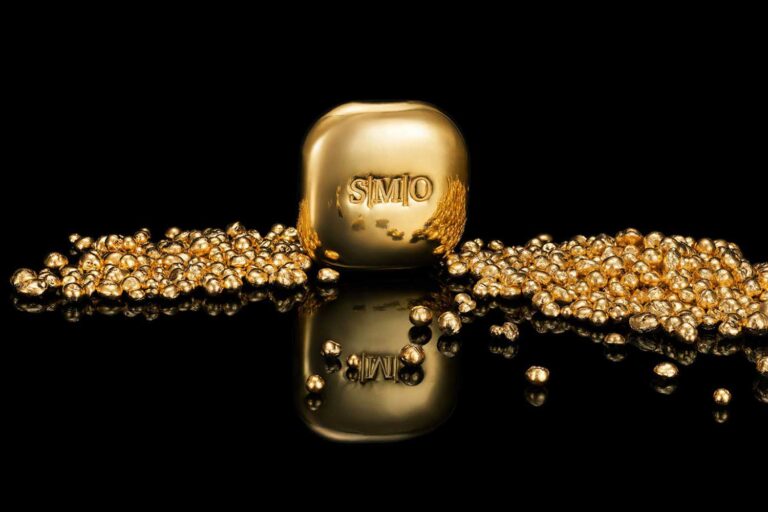
Our Fairmined Gold is available as grain, sheet, wire, casting pieces and findings; our Fairmined Eco Gold as fine gold grain.
Want to work with gold whose rules you now know? Take a look at our Fairmined Gold and Fairmined Eco Gold – or get in touch and ask us about the mines behind them.
Further reading
- The certified metal and what it means for your jewelry: What is Fairmined Gold?
- What you can safely tell your customers: Fairmined product claims.
- Where the premium goes, mine by mine: what the Fairmined Premium is used for.
Sources
- Fairmined, The Fairmined Standard, infographic, 2016, www.fairmined.org. ↩
- Alliance for Responsible Mining, Fairmined Standard for Gold from Artisanal and Small-scale Mining, including Associated Precious Metals, version 2.0, April 5, 2014, including Market Annex and Glossary. ↩ ↩ ↩ ↩ ↩ ↩ ↩ ↩ ↩ ↩ ↩ ↩ ↩ ↩ ↩ ↩ ↩ ↩ ↩ ↩ ↩ ↩ ↩ ↩ ↩ ↩ ↩ ↩ ↩ ↩ ↩ ↩ ↩ ↩ ↩ ↩ ↩ ↩ ↩ ↩ ↩
- Fairmined, The Fairmined Standard, including the pilot amendments published there, accessed September 2026. ↩ ↩
- Alliance for Responsible Mining, Procedimientos para la Auditoría y la Certificación en el Estándar Fairmined para las OMAPE, version 2, December 23, 2022, sections 1.0, 2.2, 5.0 and 5.1. ↩ ↩ ↩
- Alliance for Responsible Mining, ARM Annual Report 2025, 2026, pp. 6, 12, 16, 41, 43, 58 and 59, and list of ARM Members. ↩ ↩ ↩ ↩ ↩ ↩ ↩ ↩
- Fairmined, Fairmined Standard Revision, accessed September 2026. ↩
- Alliance for Responsible Mining, Fairmined Brand Identity & Mark Manual, 2020, section 4.6 (not publicly available). ↩
- Kevin Telmer and Daniel Stapper, Artisanal Gold Council, for UNEP, Reducing Mercury Use in Artisanal and Small-Scale Gold Mining: A Practical Guide, 2012, pp. 7, 16, 24, 48, 54, 56 and 60. ↩ ↩ ↩ ↩
- Fairever, internal information, September 2026. ↩ ↩ ↩
- UN Environment Programme, Global Mercury Assessment 2018, 2019. ↩
- Alliance for Responsible Mining, ARM Annual Report 2023, 2024, pp. 9, 13 and 47. Average: our own calculation from the five published values (0.89 + 3.68 + 5.59 + 6.32 + 17.16) ÷ 5 = 6.73 tonnes, rounded to 6.7. ↩ ↩ ↩
- Sam Ulrich, Allan Trench and Steffen Hagemann, Gold mining greenhouse gas emissions, abatement measures, and the impact of a carbon price, Journal of Cleaner Production 340, 2022. Values per ounce converted to per kilogram (× 32.1507): weighted average of 194 mines 23.3 tonnes; highest single mine around 169 tonnes; Scope 1 and 2. ↩
- World Gold Council, Gold and climate change: Current and future impacts, 2019: 32,689 tonnes of CO₂ equivalent per tonne of gold (2018 data, Scope 1 and 2). ↩
- Alliance for Responsible Mining, ARM Annual Report 2024, 2025, pp. 12, 19 and 30. Our own calculation: ARM counts the cumulative Fairmined Premium from 2014 – 6,297,449.65 US dollars "since 2014" by the end of 2021 (footnote 17, p. 9) and 6,838,930 US dollars by the end of 2022 (footnote 15, p. 5). Adding 555,452 US dollars for 2023 (footnote 11, p. 13) gives 7,394,382 US dollars by the end of 2023, consistent with ARM's "+7.5 Million USD" by 2024. Plus 410,268 US dollars in 2025 (407,928 US dollars including gold credits, plus 2,340 US dollars from silver credits; footnote 5, p. 12) = more than 7.9 million US dollars since 2014. ↩ ↩ ↩
- Alliance for Responsible Mining, Fairmined Premium Report 2022, 2023, pp. 5 and 12–37. Distribution: our own calculation from the amounts invested by the six mining organizations in 2022 (Chede, Iquira, La Gabriela, CECOMIP, Oro Puno, Cruz Pata): 320,477 US dollars for operations and responsible practices, 161,319 for workers and families, 47,471 for the community, of 529,267 in total – 60.6 %, 30.5 % and 9.0 %, rounded to 61 %, 30 % and 9 %. ↩ ↩ ↩ ↩
- Alliance for Responsible Mining, Fairmined Premium Report 2020, 2021, pp. 9 and 31. ↩ ↩ ↩
- Alliance for Responsible Mining, Fairmined Premium Report 2021, 2022, pp. 9, 37 and 39. ↩ ↩ ↩
- Alliance for Responsible Mining, Fairmined Premium Report 2023, 2025, p. 34. ↩ ↩
- Alliance for Responsible Mining, Empresa Minera Oro Puno, mine profile, 2020 ("aproximadamente 4700 metros sobre el nivel del mar"). ↩
- Alliance for Responsible Mining, Pilot Amendment: Fairmined Credits, approved November 18, 2022. ↩
- Fairmined, Recognized certification and auditing bodies for artisanal and small-scale mining organizations and for Fairmined authorized suppliers and licensees, undated (published 2021), accessed September 2026. ↩ ↩
- Alliance for Responsible Mining, Fairmined Assurance System – Fairmined Authorized Supplier and Licensees, version 2.0, December 30, 2022, section 5.2. ↩
- Fairmined, Fairever: Transforming the precious metals supply chain, 2023. ↩
- Fairmined, Fairever – Artisanal Gold, supplier profile, accessed September 2026. ↩