
Fairmined Gold is gold from certified artisanal and small-scale mines, bought on fixed terms: at least 95 % of the London gold price, plus a Fairmined Premium of 4,000 US dollars per kilogram. It matters because small-scale mining provides most of the jobs in gold mining, often under harsh conditions. Fairmined Gold rewards mines that meet binding rules and gives you gold with a documented origin – here is how it works and how it gets into your jewelry.
Key insights
- Fairmined Gold is certified gold from artisanal and small-scale mining. Independent auditors check the mining organizations every year against the Fairmined Standard of the nonprofit Alliance for Responsible Mining (ARM).
- Miners receive a minimum price and a premium on top. The standard guarantees at least 95 % of the LBMA gold price plus 4,000 US dollars per kilogram, which the miners invest themselves – 6,000 for Fairmined Ecological Gold.
- There are three ways to source Fairmined Gold. Only Fairmined Labeled gold stays physically separate up to the finished piece and can carry the Fairmined label; Fairmined Incorporated and Fairmined Credits suit other supply chains.
- Fairmined Gold is rare. In 2025, 11 certified mines in Colombia and Peru sold 99.95 kilograms under the Fairmined system, 77.35 of them as physical gold.
- Fairever buys Fairmined Gold directly from the mines. We source it from Iquira in Colombia and Oro Puno in Peru and supply it as semi-finished products for jewelry makers.
Table of contents
- What is Fairmined Gold?
- Why Fairmined Gold matters
- Who stands behind Fairmined Gold
- How Fairmined Gold works for miners
- Where Fairmined Gold comes from
- Three ways to source Fairmined Gold
- Rules for jewelry made with Fairmined Gold
- What Fairmined Gold costs
- The Fairmined family: Ecological Gold and Silver
- Fairmined vs Fairtrade Gold and recycled gold
- Fairmined Gold at Fairever
- FAQs: What is Fairmined Gold?
- Key takeaways
- Sources
What is Fairmined Gold?
Fairmined Gold is gold mined by certified artisanal and small-scale mining organizations and traded under the Fairmined Standard. The standard sets rules for both how the gold is mined and how it is bought: legal mining, safe work, child protection, mercury management, a minimum price and a premium.1 Every company that trades or processes the gold on its way to a labeled product is audited as well.
Certified gold from organized small-scale mines
Fairmined certifies only artisanal and small-scale mining organizations: cooperatives, associations and small companies with legal mining rights.1 Mining corporations cannot take part. The standard even caps productivity: when it joins, an organization may produce no more than 4 grams of gold per registered miner and day.
Certified fine gold, not the whole alloy
The certification applies to the precious metal itself. In an 18-karat ring, which is 75 % fine gold, it is the fine gold that is Fairmined certified; the other metals in the alloy don't have to be.1 Silver and platinum can be certified too, but only when they are mined together with certified gold.
Why Fairmined Gold matters
Small-scale mining is where most people in gold mining work. Around 15–20 million people mine gold this way, and more than 100 million depend on it.23 They account for about 90 % of all jobs in gold mining, but only 15–20 % of the gold.4
Many of them work informally, sell to local traders at low prices and use mercury to bind the gold. Small-scale gold mining is the largest man-made source of mercury emissions to air, with 37.7 % of the global total.5 Our overview of artisanal and small-scale gold mining describes the sector in detail.
Fairmined's approach is inclusion, not exclusion. Instead of shutting small-scale miners out of the market, the standard sets clear rules with deadlines and rewards progress with better prices. Making a complete ban on mercury and cyanide a condition would exclude 95 % of all artisanal miners, the standard notes – so it rewards gold mined without them instead.1
Who stands behind Fairmined Gold
The Alliance for Responsible Mining (ARM) owns and develops the Fairmined Standard. ARM is a nonprofit, founded in 2004, that works with small-scale mining communities, mainly in Latin America.67 Version 2.0 of the standard has applied since April 2014.1
ARM writes the rules, others check them. Independent certification bodies recognized by ARM audit the mines every year. ARM is working on the next version, Fairmined Standard 3.0, with an expert committee of miners, jewelry professionals, refiners, NGOs and academics.8 Fairever's founder, Florian Harkort, served on that committee.9
Companies take part through ARM Membership, which replaced the earlier Fairmined licensing model in 2024. By the end of 2025, it had 243 member organizations.107 More about the organization: the Alliance for Responsible Mining.
How Fairmined Gold works for miners
Fairmined Gold rests on two pillars: fair trading terms for the gold and binding rules at the mine. Auditors check both.
A guaranteed minimum price
Buyers pay at least 95 % of the LBMA gold price for the fine gold content, at the point of export.1 The LBMA price is the international benchmark for gold, set in London. In remote mining areas, miners often get less: in Burkina Faso, those selling small quantities at the mine site receive 85–87 % of the LBMA price, while exporters get 97 %, according to a planetGOLD study.11
As a first buyer, Fairever voluntarily pays 96–99 % of the LBMA gold price instead of the required 95 %.9
The Fairmined Premium
On top of the price, buyers pay a Fairmined Premium of 4,000 US dollars per kilogram of gold, in full to the mining organization.1 The miners decide how to spend it. A Premium Committee that represents all groups of miners, including women, draws up an investment plan, and the organization reports publicly on the results every year.
By the end of 2025, certified mines had received more than 7.9 million US dollars in Fairmined Premium.107 They have invested it in safety equipment, mercury-free processing, housing, schooling and care. Mine by mine: what the Fairmined Premium is used for.
Rules at the mine
The standard sets binding requirements for people and the environment. Examples:1
- Legal mining rights, all taxes and royalties paid, and no support for armed groups, in line with the OECD Due Diligence Guidance.
- No amalgamation of whole ore with mercury, mandatory retorts, and no discharge of mercury or cyanide residues into water.
- Protective equipment and health and safety training for all miners, plus a health and safety committee.
- No employment of children under 15, and no hazardous work for anyone under 18 – checked on site by independent auditors.
- Wages at least at the official minimum or the sector average, whichever is higher, rising gradually toward a living wage.
Some requirements apply from the first audit; others must be met by year 1, 3, 6 or 9. Every detail is in our guide to the Fairmined Gold Standard.
Where Fairmined Gold comes from
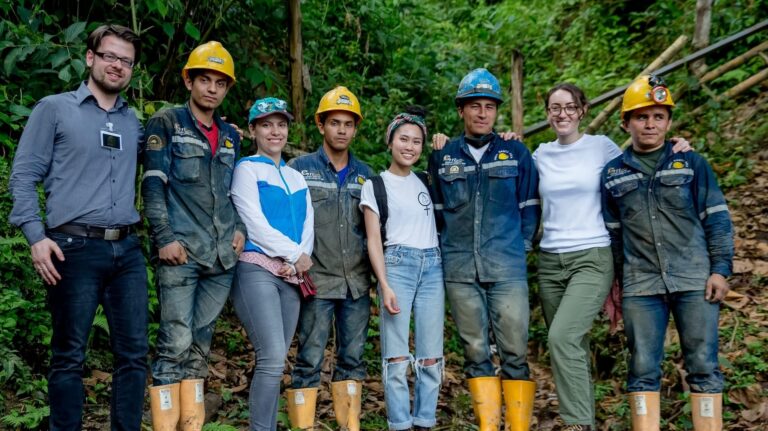
Fairmined Gold comes mainly from Colombia and Peru. In 2025, 11 mining organizations held Fairmined certification at the same time: five in Colombia and six in Peru.7 They include Iquira, Chede and La Gabriela as well as the newly certified Correa Chavestán and Los Conquistadores in Colombia, and Oro Puno, CECOMIP and AMATAF in Peru.127
The quantities are small. In 2025, certified mines sold 99.95 kilograms of gold under the Fairmined system: 77.35 kilograms through physical supply chains and 22.6 kilograms through Fairmined Credits.7 Around 55 kilograms of the physical gold came from Peru.
Every one of those kilograms is hard-won. Behind it are mining organizations that formalized, passed audits and found buyers abroad – in 2025, at record gold prices that made selling through conventional channels more tempting.7 Demand decides how fast Fairmined Gold grows.
Iquira, Colombia
Iquira is a cooperative in the department of Huila, in southwest Colombia. Coffee farmers founded it in 2004, after gold and silver deposits had been discovered nearby. Its miners work underground and stopped using mercury even before Colombia banned it.12
Iquira has been Fairmined certified since 2014, and its gold went into the Nobel Peace Prize medal and the Palme d'Or of the Cannes Film Festival.12 Fairever buys Fairmined Gold and Silver from Iquira regularly. Florian Harkort has visited the cooperative several times, first in 2018 with the ARM team.9 Its full story: the Iquira gold mine in Colombia.
Oro Puno, Peru
Oro Puno is a small mining company high in the Andes of Puno, in southern Peru. Its miners wash gold from glacial moraine with water and gravity alone, without mercury or cyanide. In 2018, Oro Puno became the first Peruvian mining organization certified for Fairmined Ecological Gold; its Fairmined ID is PE10018E.139
Oro Puno is where our Fairmined Ecological Gold comes from. Florian Harkort visited the mine in 2019, and Fairever's managing director, Desirée Binternagel, in 2022.9 More in our profile of the Oro Puno gold mine in Peru.
Three ways to source Fairmined Gold
The Fairmined Standard offers three supply chain models. They differ in whether the physical gold reaches you, and in what you may claim.114
| Fairmined Labeled | Fairmined Incorporated | Fairmined Credits | |
|---|---|---|---|
| Physical Fairmined Gold | Yes, up to the finished product | Yes, up to the refinery | No |
| Traceable to the mine | Yes | Up to the refinery | No – the premium goes to a named mine |
| Fairmined label on the product | Yes | No, company claims only | Claims approved by ARM; product claims only if credits cover all the gold |
| Premium for the mine | 4,000 US dollars per kg | 4,000 US dollars per kg | 4 US dollars per credit (1 gram) |
| Best for | Jewelry makers who want certified gold in the piece | Manufacturers who cannot keep gold separate after refining | Companies whose supply chains cannot take in physical gold from small-scale mines |
Fairmined Labeled
Fairmined Labeled gold stays physically separate from the mine to the finished product. Every company along the way is authorized and audited, and documents accompany every step.1 Only these products may carry the Fairmined label. It is the model for jewelry makers who want to say: this piece is made with Fairmined Gold.
The standard allows gold from several certified mines to be blended. We go further: we keep our Fairmined Gold separate by mine wherever we can, and every Fairever label names the source mine and its Fairmined ID.9 Why that matters: traceable gold.
Fairmined Incorporated
With Fairmined Incorporated, physical traceability ends at the refinery.1 Companies can use the gold in their production and make claims about their Fairmined purchases as a company, but they may not label individual products. In practice, few companies use this model.9
Fairmined Credits
Fairmined Credits follow a book-and-claim model, as known from green electricity. The certified mine sells its gold to a formal buyer in its home market; a company pays the Fairmined Premium for that volume separately, through ARM.127 One credit stands for one gram of certified gold and pays 4 US dollars of premium to the mine, plus ARM's Development Fee.12
Credits support certified mines where physical gold is not an option, for example in industrial supply chains. The gold in your product is not Fairmined Gold and cannot be traced to the mine. ARM approves every claim in advance, and product claims require credits for all of the gold in the product, along with its actual source.12 In 2025, Fairmined Credits covered 22.6 kilograms of gold.7 Details: Fairmined Credits explained.
Rules for jewelry made with Fairmined Gold
For Fairmined Labeled products, the standard sets clear product rules:1
- Minimum fineness: at least 9 karats for gold, 800 for silver and 850 for platinum.
- All the gold in the alloy: in an 18-karat alloy sold as Fairmined Gold, all of the gold must be Fairmined. Using Fairmined Silver or Platinum in the alloy is optional.
- The 85 % rule: prefabricated components that are not available from the Fairmined chain, such as certain findings, may make up no more than 15 % of the fine gold in a piece. At least 85 % must be certified.
- Honest labeling: the label must make clear that only the gold, silver or platinum is Fairmined certified.
- Scrap can return: Fairmined Gold from a workshop's scrap can re-enter the certified chain through a registered refinery, as long as it contains no other gold.
The label is allowed on jewelry and semi-finished components, including watches, on coins, bars and medals, on religious artifacts and on gold leaf.1 Brands that join ARM Membership can use the Fairmined label on products from the Labeled model, following ARM's mark manual.715
What you can tell your customers, with examples: Fairmined product claims. In the EU, sustainability claims now need to be specific; our article on the EmpCo directive and gold explains what that means for jewelry.
What Fairmined Gold costs
Fairmined Gold costs more than conventional gold – for reasons you can trace. Its price is made up of four parts:
- The gold itself: the mines receive at least 95 % of the LBMA gold price; at Fairever, 96–99 %.19
- The Fairmined Premium: 4,000 US dollars per kilogram, or 4 US dollars per gram, paid in full to the mining organization.1
- The Fairmined Development Fee: 0.70 US dollars per gram, which the first buyer pays to ARM.11612 ARM introduced it instead of a license fee for the label; as a nonprofit, it uses the fee to run the Fairmined system and support mining organizations.16
- Separate handling: small batches have to be exported, refined and processed apart from other gold, which adds cost at every step.12
What does that mean for a wedding ring? A ring weighing 8 grams in 18-karat gold contains 6 grams of fine gold. Made with Fairmined Gold, it carries 24 US dollars of Fairmined Premium for the mine and 4.20 US dollars of Development Fee for ARM.17 For the mining organization, those amounts add up with every kilogram. More on prices: how much fair gold costs.
The Fairmined family: Ecological Gold and Silver
Fairmined Ecological Gold
Fairmined Ecological Gold is the most demanding category in the standard. It is recovered with gravity methods only, without mercury or cyanide. The mine needs an environmental management plan and must restore the native ecosystem from the outset. The gold must be physically traceable at every stage.1 Buyers pay an Ecological Premium of 2,000 US dollars per kilogram on top of the regular premium – 6,000 US dollars in total.
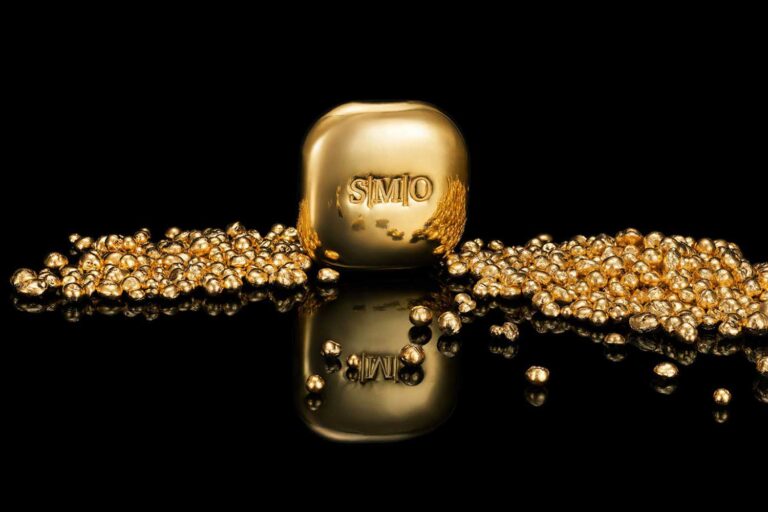
It is rare, because gravity methods recover less gold and only work with suitable deposits, such as coarse gold in gravel.18 Our Fairmined Ecological Gold comes from Oro Puno and is available as fine gold casting grain. The category in detail: what is Fairmined Ecological Gold?
Fairmined Silver
Fairmined Silver comes from the same certified mines, as a by-product of gold mining; silver can only be certified together with certified gold. Its premium is 100 US dollars per kilogram, or 150 for Fairmined Ecological Silver.1 At our partner mines, a kilogram of gold comes with only around 80–150 grams of silver.9
Supply is correspondingly small. We offer Fairmined Silver in our shop from time to time, and our Fairmined Ecological Silver currently goes to one long-term client.9 More in what is Fairmined Silver?
Fairmined vs Fairtrade Gold and recycled gold
Fairmined and Fairtrade are two certification systems for gold from artisanal and small-scale mining. Both follow the principles of fair trade and guarantee at least 95 % of the LBMA gold price. They differ in their standards, auditors and premiums: the Fairtrade Premium is 2,000 US dollars per kilogram, the Fairmined Premium 4,000.191 And only Fairmined Ecological Gold is available on the market today, since no mine is certified for Fairtrade's ecological category.9
The two systems started out together. In 2011, the first gold labeled "Fairtrade & Fairmined" reached the market; in 2013, the partners decided to go separate ways.6 More in what is Fairtrade Gold?, in our comparison Fairtrade Gold vs Fairmined Gold and in what fair gold means to us.
Recycled gold works differently. It is reprocessed from existing gold, so its original mine is unknown, and it changes nothing where gold is mined. In 2025, mines supplied 3,672 tonnes of gold and recycling 1,404 tonnes – most gold is still newly mined.20 Fairmined Gold puts money and rules exactly there. Why "regular" recycled gold falls short: why recycled gold is not a solution.
Fairmined Gold at Fairever
Fairever has worked with Fairmined since 2017, as a Fairmined Authorized Supplier with the Fairmined ID DE20014, and today as an ARM member.217 We are a first authorized buyer: we buy directly from certified mines, pay the minimum price and premium, and are audited by SCS Global Services.9
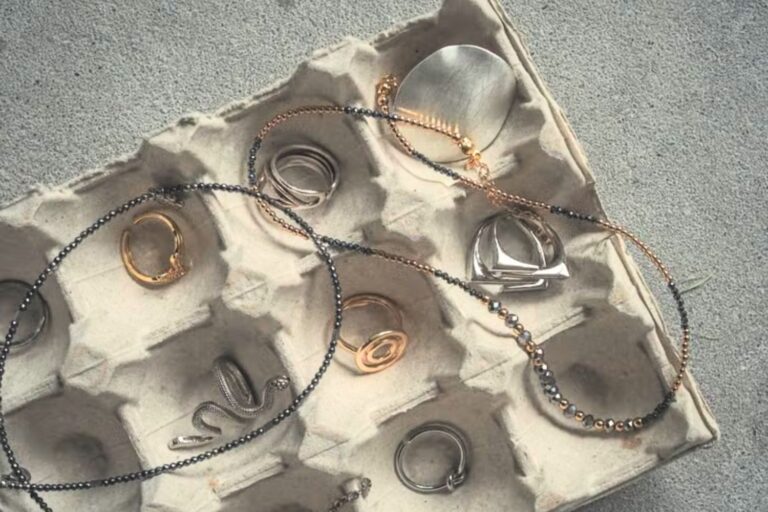
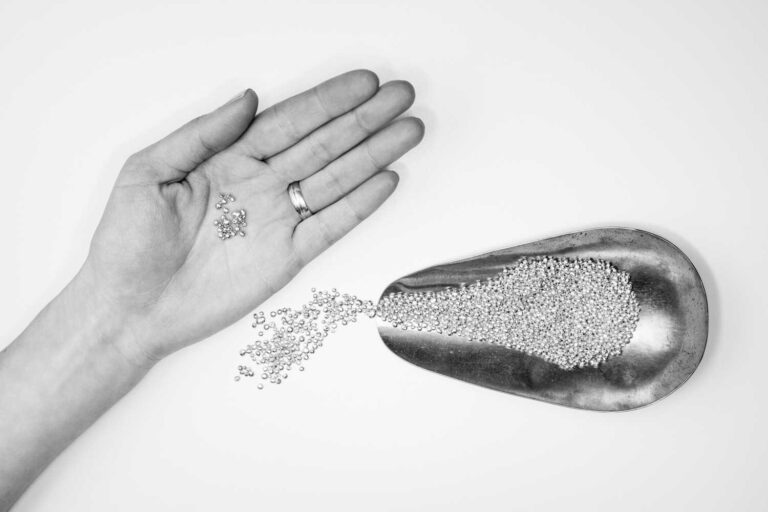
For jewelry makers, we supply Fairmined Gold as casting grain in 999.9 fine gold and as wire, sheet, casting pieces, chain and findings in 14 and 18 karats, in yellow, rose, red and white.9 The contained fine gold is certified to Fairmined Standards. Our Fairmined Ecological Gold is available as fine gold casting grain.
For companies that can't use physical gold from small-scale mines, we offer Fairmined Credits in our shop. In 2025, ARM and Fairever worked together to make the credits available to more buyers internationally.7
FAQs: What is Fairmined Gold?
What does Fairmined mean?
Fairmined is a certification system for gold, silver and platinum from artisanal and small-scale mining, run by the nonprofit Alliance for Responsible Mining. Certified mines meet the Fairmined Standard, are audited every year and receive at least 95 % of the LBMA gold price plus a Fairmined Premium of 4,000 US dollars per kilogram.
Is Fairmined Gold mercury-free?
Only Fairmined Ecological Gold is always recovered without mercury and cyanide. Regular Fairmined mines may still use mercury under strict rules: no whole-ore amalgamation, mandatory retorts and no discharge into water. Some regular Fairmined mines, such as Iquira in Colombia, work without mercury anyway.
How much is the Fairmined Premium?
The Fairmined Premium is 4,000 US dollars per kilogram of gold and 100 US dollars per kilogram of silver, paid in full to the mining organization. For Fairmined Ecological Gold, buyers pay a further 2,000 US dollars per kilogram, 6,000 in total.
Is Fairmined Gold traceable?
Fairmined Labeled gold is physically traceable from the certified mine to the finished product. The standard allows gold from several certified mines to be blended; Fairever keeps its Fairmined Gold separate by mine wherever possible and names the mine and its Fairmined ID on every label.
What is the difference between Fairmined Gold and Fairtrade Gold?
Both are certified gold from artisanal and small-scale mining with a minimum price of 95 % of the LBMA gold price. They differ in their standards, auditors and premiums: the Fairmined Premium is 4,000 US dollars per kilogram, the Fairtrade Premium 2,000. Fairmined also offers Fairmined Credits and an ecological category available on the market.
What are Fairmined Credits?
Fairmined Credits are a book-and-claim model: one credit stands for one gram of gold that a certified mine sold on its local market, and pays 4 US dollars of premium to that mine. The buyer's own gold is not Fairmined Gold, and ARM approves all claims.
Where does Fairmined Gold come from?
Mainly from certified small-scale mines in Colombia and Peru. In 2025, 11 mining organizations held Fairmined certification, five in Colombia and six in Peru, including the Iquira cooperative in Colombia and Oro Puno in Peru.
Where can I buy Fairmined Gold?
Fairever supplies Fairmined Gold as casting grain, wire, sheet, casting pieces, chain and findings for jewelry makers, Fairmined Ecological Gold as casting grain, and Fairmined Credits. Fairmined lists Fairever as an Authorized Supplier with the Fairmined ID DE20014.
Key takeaways
In a nutshell ...
- Fairmined Gold ties fair trading terms to binding rules at the mine. Certified mines get at least 95 % of the LBMA gold price and 4,000 US dollars per kilogram on top – and are audited every year.
- The supply chain model decides what you can claim. Only Fairmined Labeled gold reaches the finished piece and can carry the Fairmined label; Incorporated and Credits support certified mines in other ways.
- The extra cost per piece is small, and it goes to the source. A wedding ring with 6 grams of fine gold carries 24 US dollars of premium for the mine and 4.20 US dollars for ARM.
- Fairmined Ecological Gold goes furthest where geology allows it. Gravity only, no mercury, no cyanide – and the highest premium, at 6,000 US dollars per kilogram.
- Every kilogram counts, so ask for the mine. With 77.35 kilograms of physical gold in 2025, Fairmined Gold grows only if buyers ask for it. Ask your supplier which mine your gold comes from and for its Fairmined ID.
Get active, be the change!
Fairmined Gold from Colombia and Peru can go into your next collection. Take a look at our Fairmined Gold and Fairmined Eco Gold – from casting grain to findings.
Further reading
- What you can safely tell your customers: Fairmined product claims.
- Every requirement, from mercury to minimum wage: the Fairmined Gold Standard.
- Where our Fairmined Ecological Gold is mined: the Oro Puno gold mine in Peru.
Sources
- Alliance for Responsible Mining, Fairmined Standard for Gold from Artisanal and Small-scale Mining, including Associated Precious Metals, version 2.0, April 5, 2014, including Market Annex. ↩ ↩ ↩ ↩ ↩ ↩ ↩ ↩ ↩ ↩ ↩ ↩ ↩ ↩ ↩ ↩ ↩ ↩ ↩
- UNEP Global Mercury Partnership, Artisanal and Small-Scale Gold Mining (ASGM), accessed September 2026; Intergovernmental Forum on Mining (IGF), Transforming Artisanal and Small-Scale Gold Mining: Progress in Formalization, February 2025. ↩
- planetGOLD, An Introduction to ASGM, accessed September 2026. ↩
- IGF / IISD, Global Trends in Artisanal and Small-Scale Mining (ASM), 2018, p. 3; World Gold Council, Artisanal and Small-Scale Gold Mining, accessed September 2026. ↩
- UN Environment Programme, Global Mercury Assessment 2018, 2019. ↩
- Alliance for Responsible Mining, History, accessed September 2026. ↩ ↩
- Alliance for Responsible Mining, ARM Annual Report 2025, 2026, pp. 10–11, 15, 22, 39–40, 43, 58–60 and list of ARM Members. ↩ ↩ ↩ ↩ ↩ ↩ ↩ ↩ ↩ ↩ ↩ ↩
- Fairmined, Fairmined Standard Revision, accessed September 2026. ↩
- Fairever, internal information, September 2026. ↩ ↩ ↩ ↩ ↩ ↩ ↩ ↩ ↩ ↩ ↩ ↩ ↩
- Alliance for Responsible Mining, ARM Annual Report 2024, 2025, pp. 12, 19 and 30. Our own calculation: more than 7.5 million US dollars in Fairmined Premium paid to mining communities by 2024 (ARM, "20 years at a glance") plus 410,268 US dollars in 2025 (407,928 US dollars including gold credits, plus 2,340 US dollars from silver credits; footnote 7) = more than 7.9 million US dollars. ↩ ↩
- planetGOLD / The Impact Facility, Overcoming Practical Barriers for Integrating Responsible Artisanal & Small-Scale Mined Gold into International Supply Chains, September 2022, p. 31. ↩
- Alliance for Responsible Mining, Fairmined Credits – Book and Claim Model to Support Responsible Production from Artisanal and Small-scale Mining, including mine profiles, 2025 (supply as of June 2025; not publicly available). ↩ ↩ ↩ ↩ ↩ ↩ ↩ ↩
- Alliance for Responsible Mining, Fairmined Premium Report 2021, 2022, pp. 37 and 39. ↩
- Alliance for Responsible Mining, Pilot Amendment: Fairmined Credits, approved November 18, 2022. ↩
- Alliance for Responsible Mining, Fairmined Brand Identity & Mark Manual, 2020 (not publicly available). ↩
- Alliance for Responsible Mining, Explanatory Document: The Fairmined Development Fee, September 2016. ↩ ↩
- Our own calculation: a ring of 8 grams in 18-karat (750) gold contains 8 × 0.75 = 6 grams of fine gold; 6 grams × 4 US dollars = 24 US dollars of Fairmined Premium; 6 grams × 0.70 US dollars = 4.20 US dollars of Development Fee. ↩
- Kevin Telmer and Daniel Stapper, Artisanal Gold Council, for UNEP, Reducing Mercury Use in Artisanal and Small-Scale Gold Mining: A Practical Guide, 2012, pp. 24, 48, 56 and 60. ↩
- Fairtrade International, Fairtrade Standard for Gold and Associated Precious Metals for Artisanal and Small-Scale Mining, version 1.2, November 2013 (in force until June 30, 2027), requirements 4.5.1 and 4.5.3. ↩
- World Gold Council, Gold Demand Trends Full Year 2025: Supply, 2026. ↩
- Fairmined, Actors List 2026, 2026: Fairever, DE20014, member since July 4, 2017. ↩