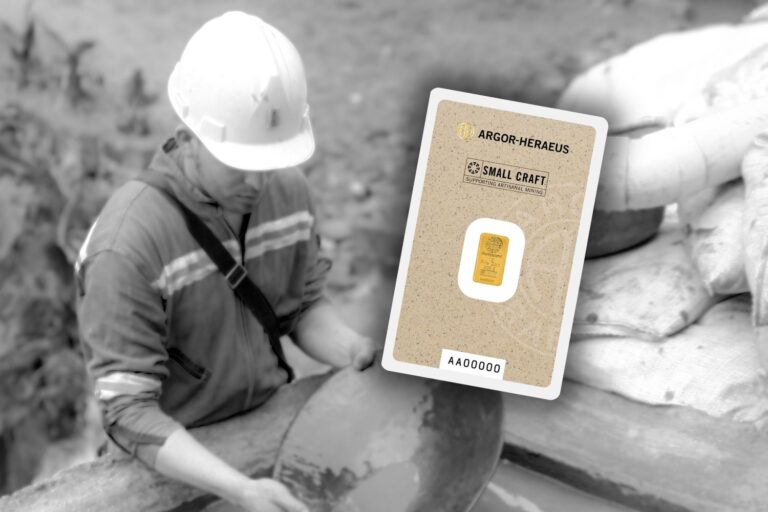

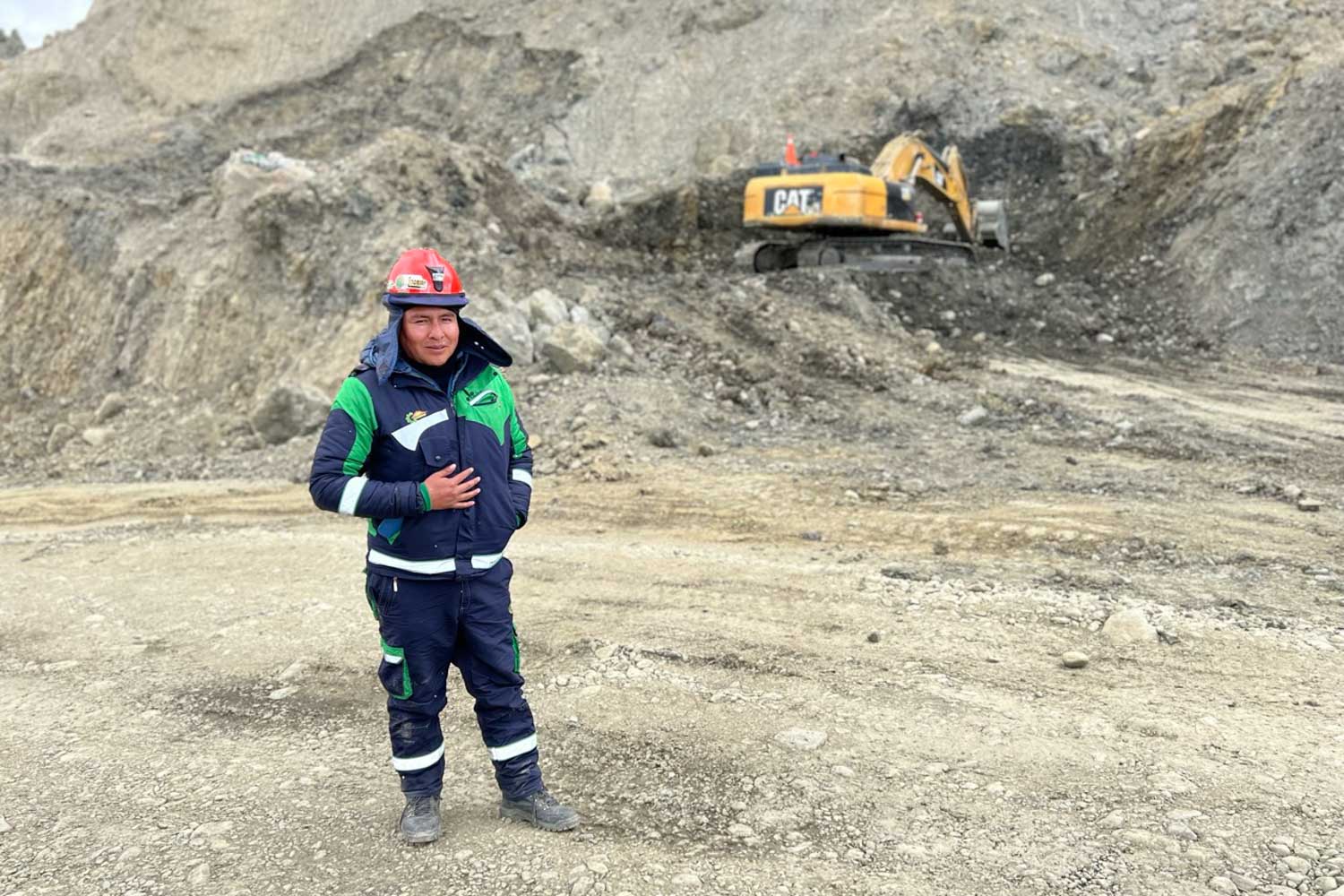
Most people know the FAIRTRADE Mark from coffee or bananas, but few know who stands behind it. The Fairtrade system is co-owned by producers, and it keeps the people who write the rules apart from the people who check them. That is why the mark on a gold ring carries the same guarantees as on a bag of coffee – plus physical traceability all the way back to the mine.
Key insights
- Fairtrade is a certification system, not a trader. Fairtrade International sets the standards, FLOCERT checks them, and national Fairtrade organizations license the FAIRTRADE Mark to companies.
- Producers co-own Fairtrade. The three regional producer networks hold 50 % of the votes in the General Assembly of Fairtrade International, and half of the Standards Committee are producer representatives.
- Fairtrade Standards cover every link of the chain. Separate standards apply to small-scale producer organizations, plantations, traders and gold mines, combining binding core requirements with improvements that must follow over time.
- Minimum price and premium are the economic core. For gold, the mine receives at least 95 % of the LBMA gold price plus a Fairtrade Premium of 2,000 US dollars per kilogram, and the miners decide together how to invest it.
- The Fairtrade Gold Mark means physical traceability. Fairtrade cocoa or sugar may be sourced via mass balance, but gold with the Fairtrade Gold Mark may not: all the gold in the piece is certified and traceable from mine to product.
Table of contents
- Fairtrade at a glance
- What is Fairtrade?
- From Max Havelaar to Fairtrade Gold
- Who runs the Fairtrade system?
- How Fairtrade standards work
- Minimum price and premium
- How Fairtrade certification works
- The FAIRTRADE Mark and its variants
- Fairever in the Fairtrade system
- FAQs: The Fairtrade system explained
- Key takeaways
- Sources
Fairtrade at a glance
| What it is | International certification and labeling system for fair trade |
| Umbrella organization | Fairtrade Labelling Organizations International e.V. (Fairtrade International), Bonn, Germany1 |
| Founded | 1997; the first fair trade label, Max Havelaar, dates back to 198823 |
| Ownership | 50 % of the votes with three regional producer networks, 50 % with national Fairtrade organizations1 |
| Certification body | FLOCERT GmbH, Bonn, founded in 20034 |
| Producers (2024) | Around 2 million farmers and workers in around 1,800 producer organizations in 68 countries5 |
| Products | More than 37,000 products with the FAIRTRADE Mark5 |
| Fairtrade Premium 2024 | More than 201 million euros5 |
| Gold | Certified since 2011; 1,284 kg of Fairtrade gold sold in 20246 |
| Website | fairtrade.net |
What is Fairtrade?
Fairtrade is an international certification and labeling system that sets fair terms of trade for producers and workers, above all in the Global South. Products that meet its standards may carry the FAIRTRADE Mark. Behind the system stands Fairtrade International, a nonprofit association based in Bonn, Germany.2
Fairtrade and fair trade are not the same thing. "Fair trade" refers to the broad movement, including labeled and unlabeled goods. "Fairtrade," written as one word, describes the certification and labeling system governed by Fairtrade International.7 Both share the definition of the International Fair Trade Charter:
"Fair Trade is a trading partnership, based on dialogue, transparency and respect, that seeks greater equity in international trade."8
In practice, the Fairtrade system works with three tools: standards that define fair production and trade, certification that checks them, and a mark that tells buyers the rules were met. The same logic applies to a banana from Ecuador and a gram of gold from the Peruvian Andes. Whether the system delivers on its promise is a question of its own, which we explore in is Fairtrade actually fair?
From Max Havelaar to Fairtrade Gold
Fairtrade began in 1988 with a coffee label in the Netherlands. After world coffee prices collapsed in the 1980s, small-scale coffee farmers in Mexico were struggling.9 The Dutch priest Frans van der Hoff, who worked with the coffee cooperative UCIRI, and Nico Roozen of the Dutch organization Solidaridad launched Max Havelaar in 1988 – the first label for fair trade.3 Soon after, the first Max Havelaar coffee from Mexico was on the shelves of Dutch supermarkets.9
The idea spread quickly. In 1992, TransFair started work in Germany as a one-person operation; today it is called Fairtrade Deutschland.10 The same year, the Fairtrade Foundation was founded in the United Kingdom9 and Max Havelaar in Switzerland, where the idea grew out of a campaign by six major Swiss aid organizations.11 FAIRTRADE Österreich followed in 1993.12
In 1997, the national initiatives joined forces under one umbrella: Fairtrade Labelling Organizations International, known today as Fairtrade International.2 In 2002, the international FAIRTRADE Mark was launched, with its blue sky, green growth and a producer raising one arm.9 In 2003, Fairtrade separated standard setting from certification and set up FLOCERT as a company of its own.4
Gold joined the system in 2011. Together with the Alliance for Responsible Mining (ARM), Fairtrade International had developed a joint Fairtrade & Fairmined standard, which ARM called "the first ever third party independent certification for gold."^13] On Valentine's Day 2011, the first certified gold went on sale in the United Kingdom, mined by the Cotapata cooperative in Bolivia.14 In 2013, the partners ended their formal partnership and continued with two separate systems.15 More on the partner: [the Alliance for Responsible Mining (ARM). In Germany, Fairtrade gold has been on the market since 2015,16 with Fairever as the first Fairtrade-certified precious metals supplier.17
Who runs the Fairtrade system?
The Fairtrade system rests on three pillars: Fairtrade International, three regional producer networks and the national Fairtrade organizations. FLOCERT, the certification body, is a separate company. Fairtrade International describes the whole as "a non-profit, multi-stakeholder association."2
Fairtrade International
Fairtrade International is the umbrella organization and owner of the FAIRTRADE Mark. Its legal name is Fairtrade Labelling Organizations International e.V., a nonprofit association under German law with its registered office in Bonn.1 Its central office in Bonn has around 90 staff. Fairtrade International develops the Fairtrade Standards, owns the mark and supports producers.2
Its members form two groups of equal weight: the producer networks and the national Fairtrade organizations. The constitution gives each group "50% of the total votes, regardless of the number of Members or Delegates."1 The General Assembly meets once a year, approves the annual accounts and ratifies the members of the Supervisory Board.18 Fairtrade calls itself "the only global sustainability standard where farmers and workers have representation at all levels of governance."19
Producer networks
The three producer networks give farmers, workers and miners their voice in the Fairtrade system. Fairtrade Africa covers Africa and the Middle East, CLAC Latin America and the Caribbean, and NAPP Asia and the Pacific.20 They are regional associations that certified producer organizations may join, and they represent small-scale producers, workers and other producer stakeholders.20 Fairtrade-certified gold mines in Peru, for example, lie within CLAC's region.
National Fairtrade organizations
National Fairtrade organizations bring Fairtrade to the market in consumer countries. They license the mark to companies, approve products and designs, and promote fair trade among consumers, retailers, industry and policymakers. Worldwide, there are 25 national Fairtrade organizations and marketing organizations.21 In our core markets, they are:
- Germany: Fairtrade Deutschland e.V. in Cologne, founded in 1992 as TransFair and backed by more than 30 member organizations, with a team of almost 100 people at its head office.10
- Austria: FAIRTRADE Österreich in Vienna, a nonprofit association founded in 1993 that awards the Fairtrade mark in Austria.12
- Switzerland: Fairtrade Max Havelaar, a foundation set up in 1992. With the support of Coop and Migros, the first Fairtrade coffees reached Swiss shops that same year.11
- United Kingdom: The Fairtrade Foundation, established in 1992 by six organizations including CAFOD, Christian Aid and Oxfam, which licenses the FAIRTRADE Mark in the UK.922
How Fairtrade standards work
Fairtrade Standards define what fair production and fair trade mean in practice. They set social, environmental and economic requirements for producers, and rules for traders, including the prices they pay.23 For gold mines, they range from protective equipment paid for by the employer to the rule that alluvial mining must not destroy riverbeds or riverbanks.24
Types of Fairtrade standards
The Fairtrade system has standards for each type of producer and for everyone who trades in between:25
- Small-scale Producer Organizations: for farmer cooperatives and associations.
- Hired Labour: for large farms and plantations with a hired workforce.
- Contract Production: temporarily for small-scale producers who are not yet democratically organized.
- Trader Standard: for companies that buy and sell Fairtrade products and handle the Fairtrade Minimum Price and Premium.
- Gold and Associated Precious Metals: for artisanal and small-scale mining organizations and for traders buying and selling precious metals.
- Textile and Climate: for textile operators processing Fairtrade cotton, and for farming communities producing Fairtrade carbon credits.
For gold, the Trader Standard applies alongside the Gold Standard. Where the two differ, the Gold Standard prevails.24
Core and development requirements
Fairtrade does not expect perfection on day one. The Gold Standard distinguishes core requirements, which must be met, from development requirements, which describe continuous improvement measured on a scoring system. That makes Fairtrade certification a process rather than a single test. Each requirement carries a number – 0, 1, 3 or 6 – that states how many years after certification it is first audited.24 A mining organization can start with the basics and grow into the full standard, audit by audit.
How Fairtrade standards are set
Fairtrade International writes the Fairtrade Standards in consultation with farmers, workers, businesses and external experts. The final decision lies with the Standards Committee, and "fifty percent of the committee members are producer representatives."26 Fairtrade follows the ISEAL Code of Good Practice for standard setting. Just as important: Fairtrade International sets the standards, but certification and audits are handled by an independent body.26
A new Fairtrade Gold Standard for 2027
Fairtrade published a revised Gold Standard in June 2026. Version 2.0 takes effect on July 1, 2027; until then, version 1.2 from 2013 remains valid.^27] The revision brings family and individual mining businesses into scope, alongside mining organizations. It puts "traceability and segregation (including reprocessing) from mine to market" at the center and strengthens health and safety with mandatory prevention measures based on risk and hazard identification. It also emphasizes the phase-out of mercury, sets out a more detailed management plan for water, waste, mine closure and rehabilitation, and reinforces democratic principles in the administration of the premium.28 The rules in detail: [the Fairtrade Gold Standard.
Minimum price and premium
Two payments set Fairtrade apart from conventional trade: the Fairtrade Minimum Price and the Fairtrade Premium. The Minimum Price "aims to cover the average costs of sustainably producing" a crop and acts as a safety net when market prices drop. When the market price is higher, producers get the market price.7
The Fairtrade Premium is "an extra sum of money (paid on top of the selling price)" that farmers and workers invest in projects of their choice. They decide together how to spend it.7 In 2024, producers earned more than 201 million euros in Fairtrade Premium, and 1.5 billion euros over the past ten years.5
Gold follows the same logic, adapted to a metal with a world market price. The mine receives at least 95 % of the LBMA gold price for the fine gold content, at the export point, plus a Fairtrade Premium of 2,000 US dollars per kilogram.24 At the mine, a Fairtrade Premium Committee of elected representatives decides how to use it; its members must reflect the miners in number and gender. The General Assembly of the mining organization approves every decision on the premium.24
What does that mean for a single ring? A wedding ring of 8 grams in 18-karat gold contains 6 grams of fine gold. Made with Fairtrade Gold, it carries 12 US dollars in Fairtrade Premium for the mine.29
How Fairtrade certification works
FLOCERT is the certification body of the Fairtrade system. It checks whether the Fairtrade Standards are met – at the mine or farm and at every company that trades or processes Fairtrade products. It was founded in Bonn in 2003 because the standard-setting side of Fairtrade had to be separated from the side that verifies producers. Today, FLOCERT is "an independently governed subsidiary of Fairtrade International, FLOCERT's sole shareholder."4
FLOCERT serves more than 6,000 customers in around 120 countries, with around 150 employees and more than 120 auditors.4 Certification follows three steps: application, an on-site audit and a certification decision. Auditors cross-check documents, inspect the premises and hold confidential interviews with workers and members. For producers, the main criteria are transparency and democratic decision-making, working conditions, environmental conditions and traceability. For traders, they are contracts, payment terms, sourcing plans, prefinance and the Fairtrade Minimum Price and Premium.30
Fairtrade certification is not a one-off. A certificate starts a certification cycle of three years for producers and five years for traders. During the cycle, FLOCERT audits periodically and may also carry out unannounced audits; a renewal audit follows at the end.30
Fairtrade certification or license?
Companies that handle Fairtrade products need a certificate; brands that sell finished products with the mark need a license. Fairtrade puts it plainly: "If you are a producer, trader, importer, exporter, or manufacturer, you must get certified." Brands that want to sell finished products with the FAIRTRADE Mark "must apply to become a licensee," and may only source from Fairtrade-certified operators.31
In Germany, the license contract is signed with Fairtrade Deutschland, which must approve product and design before the mark is used. FLOCERT certifies the supply chain up to the point where products are packed for consumers. For the product mark, Fairtrade Deutschland charges a one-time application fee of 160.50 euros and a minimum fee of 250 euros from the second contract year; the license fee is calculated quarterly based on the volume of products sold.32
The FAIRTRADE Mark and its variants
The FAIRTRADE Mark is a registered certification mark owned by Fairtrade International.23 It comes in several variants, each with a precise meaning:33
- FAIRTRADE Mark: All ingredients meet Fairtrade Standards and are fully traceable, kept separate from non-certified products from farm to shelf – typical for coffee, rice or bananas.
- FAIRTRADE Mark with arrow: For products with several ingredients, such as biscuits. All ingredients available as Fairtrade are certified, with at least 20 % Fairtrade content in total. The mark is also used for cocoa, sugar, fruit juice and tea sourced via mass balance.
- Fairtrade Sourced Ingredient Mark: A white mark showing that one named ingredient, such as cocoa in a breakfast cereal, was sourced as Fairtrade.
- FAIRTRADE Cotton and Textile Marks: For traceable Fairtrade cotton, and for textiles made according to the Fairtrade Textile Standard.
- FAIRTRADE Gold Mark: Stands for "the fair extraction and trading of all the gold used in a piece of jewellery, as well as the gold's physical traceability throughout the supply chain." Matching marks exist for silver and platinum.34
For gold, there are no shortcuts. Mass balance is only allowed for cocoa, sugar, fruit juices and tea, with a special rule for cotton after ginning, and Fairtrade gold is not part of the Sourced Ingredient model.^35] On jewelry, a Fairtrade stamp next to the hallmark is compulsory. Depending on the country, it is applied by the official assay office or by a body approved by the national Fairtrade organization.34 What jewelry brands may say about it: [Fairtrade Gold product claims.
Fairever in the Fairtrade system
Fairever has been part of the Fairtrade system since 2015. Founded that year as TRAID GOLD, we became the first Fairtrade-certified precious metals supplier in Germany. In autumn 2015, we brought the world's first certified Fairtrade Gold bars to market.^17] The whole story: [why Fairever exists.
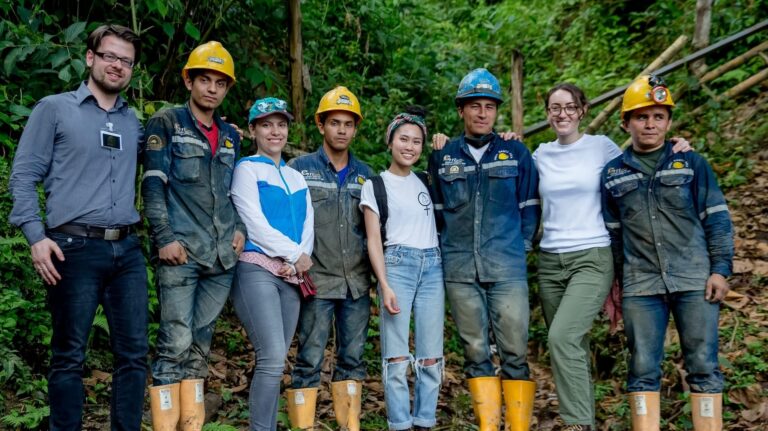
We hold both roles in the Fairtrade system described above: Fairtrade certification and a license. FLOCERT certifies us under our FLO ID 33345, and we are a licensee of Fairtrade Deutschland.^36]17 We buy Fairtrade Gold directly from the [CECOMSAP mining organization (FLO ID 38864) in Ananea, in Peru's Puno region. Our strategic partner, the Betts Group, refines it, and the gold stays separate from non-certified gold.17
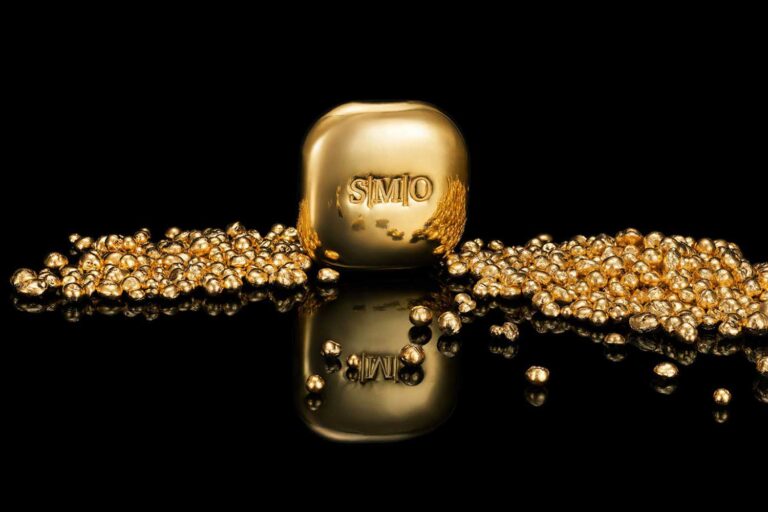
The gold goes into semi-finished products for jewelry makers and into Fairtrade gold bars of 1 troy ounce and 100 grams. On every label, we name the mine and its FLO ID. And we pay the mine 96–99 % of the LBMA gold price instead of the 95 % the standard requires – on top of the Fairtrade Premium.1724
FAQs: The Fairtrade system explained
What is Fairtrade?
Fairtrade is an international certification and labeling system for fair trade. Products that meet the Fairtrade Standards may carry the FAIRTRADE Mark. The system is governed by Fairtrade International, a nonprofit association based in Bonn, Germany, founded in 1997.
Who owns Fairtrade?
Fairtrade International is owned by its members: three regional producer networks and the national Fairtrade organizations. Each group holds 50 % of the votes in the General Assembly, so farmers, workers and miners co-own the system.
What is the difference between Fairtrade and fair trade?
"Fair trade" is the broad movement for fairer trading conditions, with labeled and unlabeled goods. "Fairtrade," written as one word, is the certification and labeling system of Fairtrade International.
What is FLOCERT?
FLOCERT is the independent Fairtrade certification body, founded in 2003 in Bonn. It audits producers, traders and manufacturers against the Fairtrade Standards. FLOCERT is independently governed; its sole shareholder is Fairtrade International.
How does Fairtrade certification work?
A company applies to FLOCERT, is audited on site and receives a certification decision. The certificate starts a cycle of three years for producers and five years for traders, with periodic audits, possible unannounced audits and a renewal audit at the end.
What is the difference between Fairtrade certification and a Fairtrade license?
Producers, traders, importers, exporters and manufacturers need a FLOCERT certificate. Brands that sell finished products with the FAIRTRADE Mark need a license, which they sign with their national Fairtrade organization, in Germany with Fairtrade Deutschland.
What does the FAIRTRADE Mark mean?
The FAIRTRADE Mark shows that a product meets the Fairtrade Standards. The black mark means all ingredients available as Fairtrade are certified; variants exist for mixed products, single ingredients, cotton, textiles and gold.
What is the Fairtrade Premium for gold?
Fairtrade-certified mines receive 2,000 US dollars per kilogram of gold on top of a price of at least 95 % of the LBMA gold price. The miners decide democratically how to invest the premium.
Is Fairtrade Gold traceable?
Yes. Gold with the FAIRTRADE Gold Mark is physically traceable throughout the supply chain and kept separate from non-certified gold. Mass balance, which Fairtrade allows for cocoa, sugar, fruit juices and tea, plays no part in it.
How much does a Fairtrade license cost in Germany?
For the product mark, Fairtrade Deutschland charges a one-time application fee of 160.50 euros and a minimum fee of 250 euros from the second contract year. The license fee itself is calculated quarterly based on the volume of products sold.
Key takeaways
In a nutshell ...
- Nobody in the Fairtrade system checks their own work. Fairtrade International writes the standards, FLOCERT audits them, and national Fairtrade organizations such as Fairtrade Deutschland license the mark.
- Producers are co-owners, not beneficiaries. They hold 50 % of the votes in Fairtrade International's General Assembly and half the seats on the Standards Committee.
- The Fairtrade Gold Mark carries the same guarantees as the mark on coffee – with no exceptions. All the gold in the piece is certified and physically traceable from the mine; mass balance plays no part in it.
- The Gold Standard is getting stricter. From July 2027, version 2.0 puts traceability from mine to market at the center and emphasizes the phase-out of mercury.
- Ask for the mine behind the mark. Fairtrade-certified mines have a FLO ID. Ask your supplier which mine your gold comes from and for its FLO ID.
Get active, be the change!
Every gram of Fairtrade Gold comes from a certified mining organization that receives the Fairtrade Premium and decides together how to invest it. If that is the gold you want to work with, explore our Fairtrade Gold.
Further reading
- The rules for Fairtrade-certified mines in detail: the Fairtrade Gold Standard.
- What makes the certified metal different: What is Fairtrade Gold?
- A Fairtrade-certified mine at 4,600 meters: the CECOMSAP gold mine, Peru.
Sources
- Fairtrade International, Constitution of Fairtrade Labelling Organizations International e.V., version of June 11, 2026, §§ 1, 4 and 6. ↩ ↩ ↩ ↩
- Fairtrade International, About Fairtrade International, accessed September 2026. ↩ ↩ ↩ ↩ ↩
- Solidaridad, Francisco Petrus van der Hoff Boersma (1939–2024), 2024. ↩ ↩
- FLOCERT, FLOCERT's history with Fairtrade, accessed September 2026. ↩ ↩ ↩ ↩
- Fairtrade International, Key figures at a glance, accessed September 2026 (data for 2024). ↩ ↩ ↩ ↩
- Fairtrade International, Gold, accessed September 2026. ↩
- Fairtrade International, FAQ, accessed September 2026. ↩ ↩ ↩
- World Fair Trade Organization and Fairtrade International, The International Fair Trade Charter, September 25, 2018. ↩
- Fairtrade Foundation, 25 Facts about Fairtrade, August 28, 2025. ↩ ↩ ↩ ↩ ↩
- Fairtrade Deutschland, Das sind wir, accessed September 2026. ↩ ↩
- Fairtrade Max Havelaar, Über Fairtrade Schweiz, accessed September 2026. ↩ ↩
- FAIRTRADE Österreich, Über FAIRTRADE Österreich, accessed September 2026. ↩ ↩
- Alliance for Responsible Mining, Fairtrade and Fairmined gold standards, June 17, 2009.
- The Ecologist, World's first Fairtrade gold goes on sale in UK, February 12, 2011. ↩
- Alliance for Responsible Mining, Fairmined gold opens up to new responsible markets, May 22, 2013. ↩
- Fairtrade Deutschland, 10 Jahre Fairtrade-Gold: 10 Jahre Fairänderung, June 2, 2025. ↩
- Fairever, internal information. ↩ ↩ ↩ ↩
- Fairtrade International, Governance and board, accessed September 2026. ↩
- Fairtrade International, Key benefits, accessed September 2026. ↩
- Fairtrade International, Producer networks, accessed September 2026. ↩ ↩
- Fairtrade International, Fairtrade global network, accessed September 2026. ↩
- House of Commons Library, Role of Fairtrade certification in UK business and trade, December 9, 2025. ↩
- Fairtrade America, Behind the Fairtrade Mark, accessed September 2026. ↩ ↩
- Fairtrade International, Fairtrade Standard for Gold and Associated Precious Metals for Artisanal and Small-Scale Mining, version 1.2, November 8, 2013, valid from April 16, 2015, introduction and requirements 3.2.31, 3.3.47, 4.1.1, 4.1.3, 4.5.1 and 4.5.3. ↩ ↩ ↩ ↩ ↩ ↩
- Fairtrade International, Who we have standards for, accessed September 2026. ↩
- Fairtrade International, How we set standards, accessed September 2026. ↩ ↩
- Fairtrade International, Gold and Associated Precious Metals Standard, accessed September 2026.
- Fairtrade International, Announcement: Fairtrade Standard for Gold and Associated Precious Metals, June 25, 2026. ↩
- Our own calculation: 8 g ring × 750 ‰ = 6 g fine gold; 6 g × 2 US dollars per gram (2,000 US dollars per kilogram, footnote 24) = 12 US dollars. ↩
- FLOCERT, How to join Fairtrade, accessed September 2026. ↩ ↩
- Fairtrade International, Get certified, accessed September 2026. ↩
- Fairtrade Deutschland, Ihr Weg zum Fairtrade-Siegel, accessed September 2026. The fees quoted apply to the product mark; for the ingredient mark, there is neither an application fee nor a minimum fee. ↩
- Fairtrade Canada, Understanding the Fairtrade labels, accessed September 2026. ↩
- Fairtrade International, FAIRTRADE Gold Mark Guidelines, issue 5, 2018. ↩ ↩
- Fairtrade International, Fairtrade Sourced Ingredient Mark Guidelines, issue 5b, September 2026.
- Fairever, brochure Gold aber fair, imprint.