
Fairtrade Gold is gold from certified artisanal and small-scale mines, bought on Fairtrade terms: at least 95 % of the London gold price, plus a Fairtrade Premium of 2,000 US dollars per kilogram. It matters because small-scale mining provides around nine in ten jobs in gold mining, often under harsh conditions. Fairtrade Gold gives that work binding rules, fair trading terms and a documented path from the mine to your product.
Key insights
- Fairtrade Gold is certified gold from artisanal and small-scale mining. Mining organizations are audited by the independent certifier FLOCERT against the Fairtrade Gold Standard, which covers working conditions, child protection, mercury and trading terms.
- Miners receive a minimum price and a premium on top. The standard guarantees at least 95 % of the London gold price and a Fairtrade Premium of 2,000 US dollars per kilogram, which an elected committee invests locally.
- Fairtrade Gold never mixes with non-certified gold. It stays physically separate from the mine to the finished product, and jewelry from licensed makers can carry the Fairtrade stamp.
- Fairtrade Gold is still rare. In 2024, 1,284 kilograms were sold – around 0.035 % of global mine production. Most of it comes from Peru.
- Fairever buys Fairtrade Gold directly from the mine. We source it from the CECOMSAP cooperatives in Peru and supply it as semi-finished products, rings and gold bars.
Table of contents
- What is Fairtrade Gold?
- Why Fairtrade Gold matters
- Who stands behind Fairtrade Gold
- How Fairtrade Gold works
- Traceable from mine to product
- Where Fairtrade Gold comes from
- Where the Fairtrade Premium goes
- Fairtrade Silver: rare by nature
- Fairtrade Gold at Fairever
- FAQs: What is Fairtrade Gold?
- Key takeaways
- Sources
What is Fairtrade Gold?
Fairtrade Gold is gold mined by certified artisanal and small-scale mining organizations and traded under the Fairtrade Standard for Gold and Associated Precious Metals. The standard sets rules for both how the gold is mined and how it is bought: working conditions, child protection, environmental management, a minimum price and a premium.1 Every company that handles the gold on its way to a labeled product is certified as well.
Certified gold from small-scale mines
Fairtrade certifies only artisanal and small-scale mining.2 In practice, that means cooperatives and small mining organizations with legal mining rights – not mining corporations.1 From July 2027, family and individual mining businesses can be certified as well.3
The certification applies to the precious metal itself. In an 18-karat ring, which is 75 % fine gold, it is the fine gold that is Fairtrade certified; the other alloy metals are not. Silver and platinum can also be certified, but only when they are mined alongside certified gold.1
Fairtrade, fair trade and Fairmined
Fairtrade with a capital F is a certification system and a registered mark. Fair trade, lowercase, is the wider movement for fairer trading terms. Fairtrade Gold is one kind of fair trade gold; Fairmined Gold is another. Both guarantee miners at least 95 % of the LBMA gold price; the Fairmined Premium is higher, at 4,000 US dollars per kilogram.4
The two systems started out together. On February 14, 2011, the first gold labeled “Fairtrade & Fairmined” reached the market. In 2013, the partners decided to go separate ways.5 We compare both in Fairtrade Gold vs Fairmined Gold and explain the idea they share in our article on what fair gold means to us.
Why Fairtrade Gold matters
Small-scale mining is where most people in gold mining work. Around 15–20 million people mine gold this way, and around 100 million live off it.67 They make up about 90 % of all jobs in gold mining, while producing only 15–20 % of the gold.8
Many of them work informally, sell to local traders at low prices and use mercury to separate the gold. Small-scale gold mining is the largest human-made source of mercury pollution, responsible for around 37 % of global releases.6 Our overview of artisanal and small-scale gold mining describes the sector in detail.
Fairtrade applies to gold the same idea as to fairly traded coffee or cocoa: change the terms of trade in favor of small producers, so that they can invest in their own development.3 For gold from fair trade, that means a guaranteed price, a premium and democratic organization.
Fairtrade's approach is inclusion, not exclusion. The standard does not demand perfection on day one. It sets binding rules with clear deadlines, checks progress and rewards it with better prices. Mining organizations gain access to international buyers, and every kilogram they sell funds projects that the miners choose themselves.
Who stands behind Fairtrade Gold
Fairtrade International sets the standard. National Fairtrade organizations, such as Fairtrade Deutschland or the Fairtrade Foundation in the UK, license the FAIRTRADE Mark to companies in their markets.1
FLOCERT does the auditing. It is an independent certification body, accredited under ISO 17065, and checks both the mining organizations and the traders in the supply chain.2 The organization that writes the rules and the one that checks them are separate.
The standard is being renewed. The current version 1.2 dates from 2013. Version 2.0 was published in June 2026 and replaces it on July 1, 2027. It strengthens occupational health and safety, spells out the phase-out of mercury in more detail and reinforces democratic principles in managing the premium.9 How the organizations and the certification process fit together is covered in the Fairtrade system explained.
How Fairtrade Gold works
Fairtrade Gold rests on two pillars: fair trading terms for the gold and binding rules for the mine. Both are checked in the audit.
The Fairtrade Minimum Price
Buyers pay at least 95 % of the LBMA gold price for the pure gold content, at the point of export.1 The LBMA price is the international benchmark price for gold, set in London. In remote mining areas, miners often get far less: in Burkina Faso, miners selling small quantities at the mine site receive 85–87 % of the LBMA price, while exporters in the same country get 97 %, according to a planetGOLD study.10
At Fairever, we voluntarily pay 96–99 % of the LBMA gold price instead of the required 95 %.11
The Fairtrade Premium
On top of the price, buyers pay a Fairtrade Premium of 2,000 US dollars per kilogram of gold. For silver, the premium is 10 % of the LBMA silver price. The premium goes to the mining organization in full.1 A wedding ring weighing 8 grams in 18-karat gold contains 6 grams of fine gold, which comes to 12 US dollars of Fairtrade Premium.12
The miners decide how it is spent. An elected Fairtrade Premium Committee, representative of all groups of miners and workers “in number and gender,” assesses needs and draws up a development plan. The general assembly approves the decisions and receives a report on the results every year.1
From July 2027, the amounts will no longer be written into the standard itself. Fairtrade will publish the minimum price and premiums in its pricing database instead.3
Rules in the mine
The standard sets binding requirements for people and the environment. Examples from the current version:1
- No employment of children under 15, or under the higher age set by national mining law, and no hazardous work for anyone under 18 – checked on site by independent auditors.
- Protective equipment for all miners and workers, paid for by the employer, and a committee for health and safety at work.
- No mercury, wherever gold can be recovered without it commercially and technically – a requirement that applies from the third year of certification.
- Rehabilitation of mined land within two years after mining ends.
- Respect for land rights and for the free, prior and informed consent of indigenous peoples.
Some requirements apply from the first audit; others must be met within one, three or six years. The details are in our article on the Fairtrade Gold Standard.
Fairtrade Ecological Gold
Fairtrade Ecological Gold is the strictest category. It is processed without any mercury or cyanide, using only non-toxic methods such as gravity separation. For it, buyers pay an additional Ecological Premium of 15 % of the LBMA gold price.1 From 2027, the category is called Fairtrade Eco gold.3
At present, no mine is certified for it, so Fairtrade Ecological Gold is not available on the market.11 Certified gold mined entirely without mercury and cyanide does exist in the Fairmined system: Fairmined Ecological Gold.
Traceable from mine to product
Fairtrade Gold is physically segregated: it is never mixed with non-certified gold, from the mine through the refinery to the finished product. Documents accompany every step, and every company that handles the gold on its way to a labeled product must be certified.1
That is not how the gold market usually works. Refiners commonly mix gold from many sources, and many are reluctant to process gold in separate batches, because it typically costs more, as Human Rights Watch found.13 Once gold has been mixed, its origin can no longer be traced. Keeping it apart takes extra effort at every step – and it is the only way to show where the gold was mined.
In a labeled product, all of the gold must be Fairtrade Gold. Gold bars and coins consist of 100 % Fairtrade Gold. In jewelry, only a few small components may contain non-certified metal where no Fairtrade version is available – for example catches, earring scrolls or solder.13
The Fairtrade stamp shows it on the piece. On jewelry from licensed makers, the Fairtrade mark appears next to the hallmark, applied by an assay office or another approved body.1415 The stamp is not allowed if physical traceability cannot be guaranteed.3
Our labels go one step further. The standard allows gold from several certified mines to be combined, but we keep it separate by mine wherever we can. Every Fairever label names the source mine and its FLO ID, the mine's Fairtrade identification number.11
Where Fairtrade Gold comes from
Fairtrade Gold currently comes mainly from Peru.11 The certified organizations are cooperatives and small mining companies.
The quantities are small. In 2024, 1,284 kilograms of Fairtrade Gold were sold, and almost 6.5 tonnes were exported under Fairtrade terms over the last ten years.2 In 2023, the certified organizations counted 1,892 miners, 10 % of them women.16 Global mine production in 2024 was 3,661 tonnes.17 So Fairtrade Gold accounts for around 0.035 % of the world's newly mined gold, roughly one kilogram in every 2,850.18
Every one of those kilograms is hard-won. Behind it are mining organizations that formalized their operations, passed audits and found buyers abroad. Measured against the world's gold, Fairtrade Gold is still a drop in the ocean – and demand decides how fast it grows.
An example: CECOMSAP in Peru
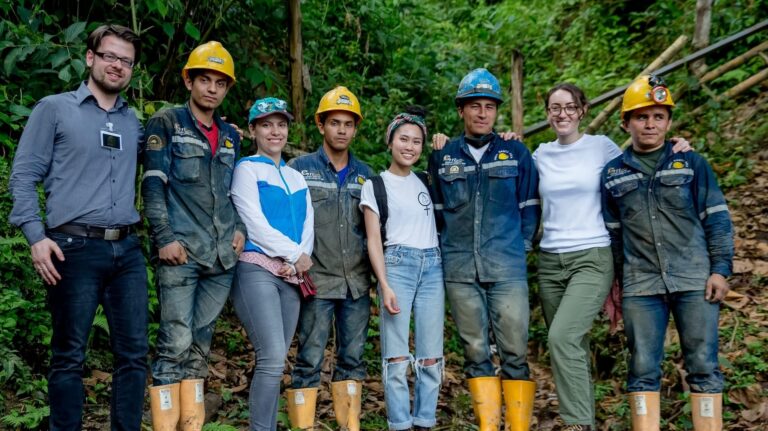
CECOMSAP is an umbrella organization of ten cooperatives in Ananea, in Peru's Puno region, with 348 members in 2022.19 The cooperatives mine at 4,600 to 4,900 meters above sea level.20 CECOMSAP has been Fairtrade certified since 2017, and its FLO ID is 38864. Since 2023, all ten cooperatives have recovered their gold without mercury, on gravity-based vibrating tables; cyanide has never been used.11 The full story is in our profile of the CECOMSAP gold mine in Peru.
Where the Fairtrade Premium goes
Fairtrade Gold sales generated 3.13 million euros in Fairtrade Premium in 2023.16 Fairtrade does not publish a separate report on how the gold premium is used. What mining organizations do with it can be traced in individual cases.
At CECOMSAP, gold sales in Switzerland alone paid the ten cooperatives 1.3 million Swiss francs in Fairtrade Premium in 2021.19 The documented projects include:
- Work and safety: protective clothing, health and safety training, a dining hall for miners and better worker housing.192021
- Water and environment: vibrating tables to replace mercury, water treatment and a flocculation system that recovers clean water.202122
- Community: computers for schools, playgrounds, food for poorer villagers and blankets for families in need.2022
The money is kept separate and open to scrutiny. The premium goes into its own bank account, which needs one signature from the premium committee and one from the mining organization, and every committee member can see the books.1 From July 2027, organizations that received 150,000 US dollars or more in premium in the previous year must also have their premium accounts checked by an external financial auditor.3
More on how the premium works, and whether it delivers: is Fairtrade actually fair?
Fairtrade Silver: rare by nature
Fairtrade Silver exists, but it is rarely available on the market.11 Silver can only be certified as a by-product of certified gold mining.1 At our partner mines, a kilogram of gold comes with only around 80–150 grams of silver.11 Some certified gold mines, CECOMSAP among them, don't have their silver certified at all, because such small quantities hardly justify the extra effort and cost.11 More in what is Fairtrade Silver?
Fairtrade Gold at Fairever
We buy Fairtrade Gold directly and regularly from CECOMSAP. Our strategic partner, the Betts Group, refines it and keeps it separate from any other gold.11 Fairtrade lists Fairever among its authorized suppliers of Fairtrade Gold semi-finished jewelry products.23
Two ways for jewelry makers
Fairtrade offers jewelry makers two models:23
- Goldsmith Registration Scheme: for smaller jewelers and goldsmiths who buy less than 500 grams of Fairtrade Gold a year. Registration is simple, but finished pieces cannot carry the Fairtrade stamp, because traceability ends with the supplier.
- Licensee Scheme: for businesses that sign a license agreement with Fairtrade and are audited by FLOCERT. Their gold is traceable to the finished piece, which can carry the Fairtrade stamp.
What you may tell your customers in each case is covered in Fairtrade Gold product claims.
Semi-finished products and rings
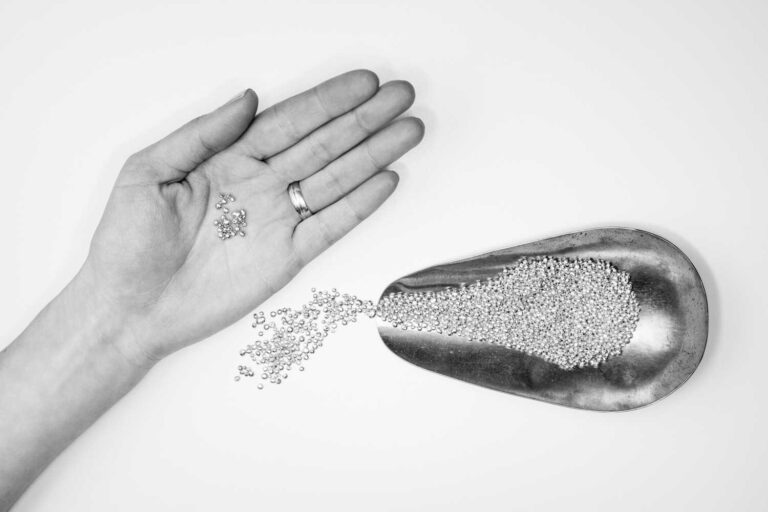
For jewelry makers, we supply casting grain in 999.9 fine gold, plus wire, sheet and casting pieces in 18 and 14 karat, in several colors. The contained fine gold is certified to Fairtrade Standards.
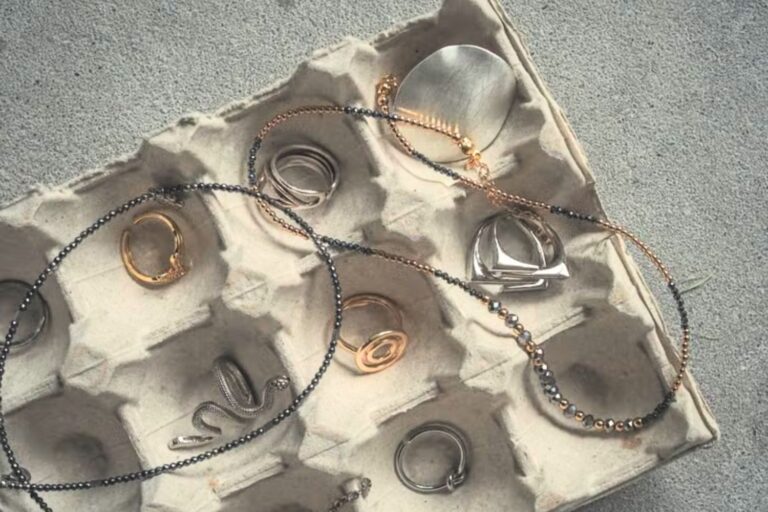
Business clients can design rings made with Fairtrade Gold in our ring configurator. These rings carry the Fairtrade stamp.11 More in our article on rings from Fairtrade Gold.
Gold bars
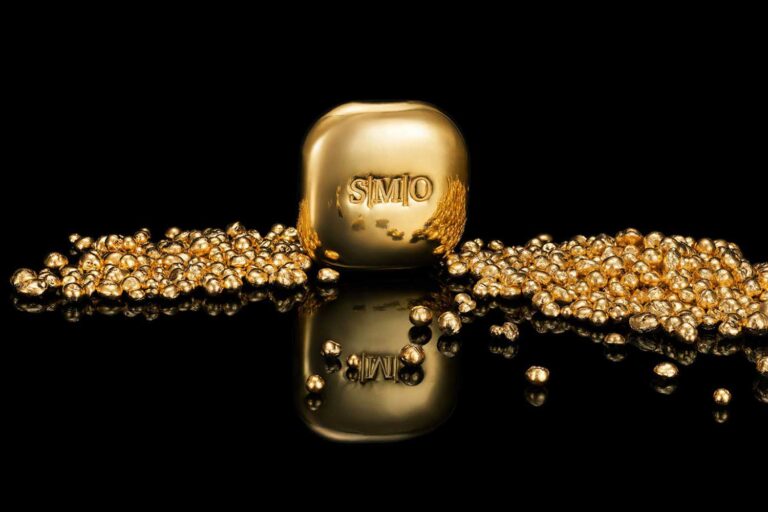
For investors, we offer gold bars of 1 troy ounce and 100 grams, cast in 999.9 fine gold and made of 100 % Fairtrade Gold. If you sell them back to us later, we honor the Fairtrade Premium in the buy-back price.24 Details in our Fairtrade gold bars explained.
FAQs: What is Fairtrade Gold?
What does Fairtrade Gold mean?
Fairtrade Gold is gold from certified artisanal and small-scale mining organizations, traded under the Fairtrade Gold Standard. Miners receive at least 95 % of the LBMA gold price plus a Fairtrade Premium of 2,000 US dollars per kilogram. FLOCERT audits the mines and every company in the supply chain.
Is Fairtrade Gold the same as fair trade gold?
Fairtrade Gold is one kind of fair trade gold. “Fair trade” describes the general principle of fairer trading terms for small producers. “Fairtrade” is a specific certification system with its own standard, independent audits by FLOCERT and the FAIRTRADE Mark.
What is the difference between Fairtrade Gold and Fairmined Gold?
Both are certified gold from artisanal and small-scale mining, with a minimum price of 95 % of the LBMA gold price. They differ in their standards, auditors and premiums: the Fairmined Premium is 4,000 US dollars per kilogram, the Fairtrade Premium 2,000 US dollars. Our article comparing Fairtrade Gold and Fairmined Gold covers the details.
Is Fairtrade Gold mercury-free?
Not necessarily. The Fairtrade Gold Standard requires mines to stop using mercury wherever gold can be recovered without it commercially and technically, and strictly regulates its use until then. CECOMSAP in Peru, for example, has recovered its gold without mercury since 2023.
How do miners benefit from Fairtrade Gold?
They receive at least 95 % of the LBMA gold price and a Fairtrade Premium of 2,000 US dollars per kilogram, paid in full to their organization. An elected committee decides how the premium is used, for example for safety equipment, mercury-free processing equipment or schools.
How can I tell whether jewelry is made with Fairtrade Gold?
Look for the Fairtrade stamp next to the hallmark; it is only allowed on products with fully traceable Fairtrade Gold. You can also ask the jeweler which mine the gold comes from. At Fairever, the mine and its FLO ID are named on every label.
Where can I buy Fairtrade Gold?
Fairever supplies Fairtrade Gold as casting grain, wire, sheet and casting pieces for jewelry makers, as rings for business clients and as gold bars of 1 troy ounce and 100 grams. Fairtrade lists Fairever among its authorized suppliers.
Key takeaways
In a nutshell ...
- Fairtrade Gold combines fair trading terms with binding rules in the mine. Miners get at least 95 % of the LBMA gold price and 2,000 US dollars per kilogram on top – and have to meet requirements on safety, child protection and mercury.
- The standard grows with the miners. Instead of excluding small-scale mining, it sets deadlines for improvement. Version 2.0 raises the bar further from July 2027.
- Traceability is the proof. Fairtrade Gold is kept separate all the way to the finished product; the Fairtrade stamp and, at Fairever, the name of the mine on the label make it visible.
- Every kilogram counts, and there are still very few. At around 0.035 % of global mine production, it only grows if buyers ask for it. Ask your supplier for Fairtrade Gold – and for the mine behind it.
Get active, be the change!
Fairtrade Gold from Peru can go into your next collection or your next investment. Take a look at our Fairtrade Gold products – from casting grain and sheet to gold bars.
Further reading
- Every requirement, from minimum price to mercury: the Fairtrade Gold Standard.
- Where our Fairtrade Gold is mined, at 4,700 meters: the CECOMSAP gold mine in Peru.
- Two certifications side by side: Fairtrade Gold vs Fairmined Gold.
Sources
- Fairtrade International, Fairtrade Standard for Gold and Associated Precious Metals for Artisanal and Small-Scale Mining, version 1.2, November 2013 (in force until June 30, 2027), chapter 2 (scope) and requirements 1.4.2, 1.4.3, 2.1.7, 2.1.8, 2.2.2, 2.2.4, 2.2.5, 3.2.1, 3.2.30, 3.2.33, 3.3.14, 3.3.16, 3.3.47, 3.3.50, 4.1.1, 4.1.3, 4.1.4, 4.1.8, 4.1.10, 4.1.11, 4.5.1, 4.5.3, 4.5.4 and 4.5.5. ↩ ↩ ↩ ↩ ↩ ↩ ↩ ↩ ↩ ↩ ↩ ↩ ↩
- Fairtrade International, Fairtrade Gold, accessed September 2026. ↩ ↩ ↩
- Fairtrade International, Fairtrade Standard for Gold and Associated Precious Metals for Artisanal and Small-Scale Mining, version 2.0, June 25, 2026 (applies from July 1, 2027), section “How to use this Standard” (scope) and requirements 2.2.2, 2.2.3, 2.4.2, 3.9, 4.1.17 and 4.5; introduction (purpose). ↩ ↩ ↩ ↩ ↩ ↩ ↩
- Alliance for Responsible Mining, Fairmined Standard for Gold from Artisanal and Small-Scale Mining, including Associated Precious Metals, version 2.0, April 2014, requirements 5.2.1 and 5.2.5. ↩
- Alliance for Responsible Mining, History, accessed September 2026. ↩
- UNEP Global Mercury Partnership, Artisanal and Small-Scale Gold Mining (ASGM), accessed September 2026; Intergovernmental Forum on Mining (IGF), Transforming Artisanal and Small-Scale Gold Mining: Progress in Formalization, February 2025. ↩ ↩
- planetGOLD, An Introduction to ASGM, accessed September 2026. ↩
- IGF / IISD, Global Trends in Artisanal and Small-Scale Mining (ASM), 2018, p. 3; World Gold Council, Artisanal and Small-Scale Gold Mining, accessed September 2026. ↩
- Fairtrade International, Announcement: Revised Fairtrade Standard for Gold and Associated Precious Metals, June 25, 2026. ↩
- planetGOLD / The Impact Facility, Overcoming Practical Barriers for Integrating Responsible Artisanal & Small-Scale Mined Gold into International Supply Chains, September 2022, p. 31. ↩
- Fairever, internal information, September 2026. ↩ ↩ ↩ ↩ ↩ ↩ ↩ ↩ ↩ ↩
- Our own calculation: a ring of 8 grams in 18-karat (750) gold contains 8 × 0.75 = 6 grams of fine gold; 6 grams × 2,000 US dollars per kilogram ÷ 1,000 = 12 US dollars. ↩
- Human Rights Watch, The Hidden Cost of Jewelry: Human Rights in Supply Chains and the Responsibility of Jewelry Companies, February 2018, p. 45. ↩
- Fairtrade International, FAIRTRADE Gold Mark Guidelines, issue 5, licensee version, 2018 (not public), p. 12. ↩
- The Assay Office London, Fairtrade Marks, accessed September 2026. ↩
- Fairtrade International, Monitoring the Scope and Benefits of Fairtrade, 16th edition, 2025 (data for 2023), pp. 11, 15 and 18. ↩ ↩
- World Gold Council, Gold Demand Trends Full Year 2024: Supply, 2025. ↩
- Our own calculation: 1,284 kg (footnote 2) ÷ 3,661,000 kg (footnote 17) × 100 ≈ 0.035 %; 3,661,000 ÷ 1,284 ≈ 2,851, rounded to 2,850. The comparison sets Fairtrade Gold sold in 2024 against gold mined in 2024; the year of sale and the year of mining do not always match. ↩
- Hildegard Willer, Faires Gold für die „Bärreli“, Welt-Sichten, August 26, 2022. ↩ ↩ ↩
- Fairtrade International, Cooperativa Minera Metalúrgica San Francisco de Ananea, accessed September 2026. ↩ ↩ ↩ ↩
- Fairtrade International, The gold mining organisation Halcon de Oro, accessed September 2026. ↩ ↩
- Patrick Steinemann, Fairtrade Gold: Fairness, die allen dient, magazine “ZH” 3/2022, Zürcher Kantonalbank. ↩ ↩
- Fairtrade International, Let your business shine with Fairtrade Gold, accessed September 2026. ↩ ↩
- Fairever, Return of gold, accessed September 2026. ↩