
Buying gold online is easy. A few clicks, a live price, a nice product photo, plus a seal or a big word like “sustainable” or “LBMA” — and the whole thing already looks reputable. That’s exactly the problem.
Buying gold often gets expensive not just at the price-per-gram level, but in the things many people only notice after the purchase: impractical denominations, hidden costs, unclear origin, weak resaleability, or expectations the product can’t actually meet in the end.
Key Insights
- The cheapest price isn’t automatically the best buy. Shipping, denomination, resale, documentation and origin are equally decisive in whether a gold bar will really suit you later on.
- Good gold buying starts with a clear intention. Gift, wealth protection, crisis provision, impact investment or short-term speculation lead to different decisions when it comes to denomination, timing, documentation and choice of dealer.
- “LBMA” or “recycled” are not shortcuts for “all good”. Both can make sense — but neither LBMA Good Delivery nor recycled gold automatically answer the question of where the gold comes from and what impacts are connected to it.
Why It's Not Just the Gold Price That Matters Online
The gold price is important. But it’s only the starting point. Anyone buying gold bars online should ask at least five additional questions: What does shipping cost? Does the denomination fit my goal? How easily can the bar be resold later? What evidence is there about purity, manufacturer and origin? And what exactly is a buzzword like “responsible”, “recycled” or “certified” actually supposed to mean here?
Online, you can quickly see lots of offers side by side. That’s convenient, but it tempts you to look only at the price per gram. A good gold purchase is usually one that’s well thought-out, technically clean and high quality all around — not just the one with the lowest entry price.
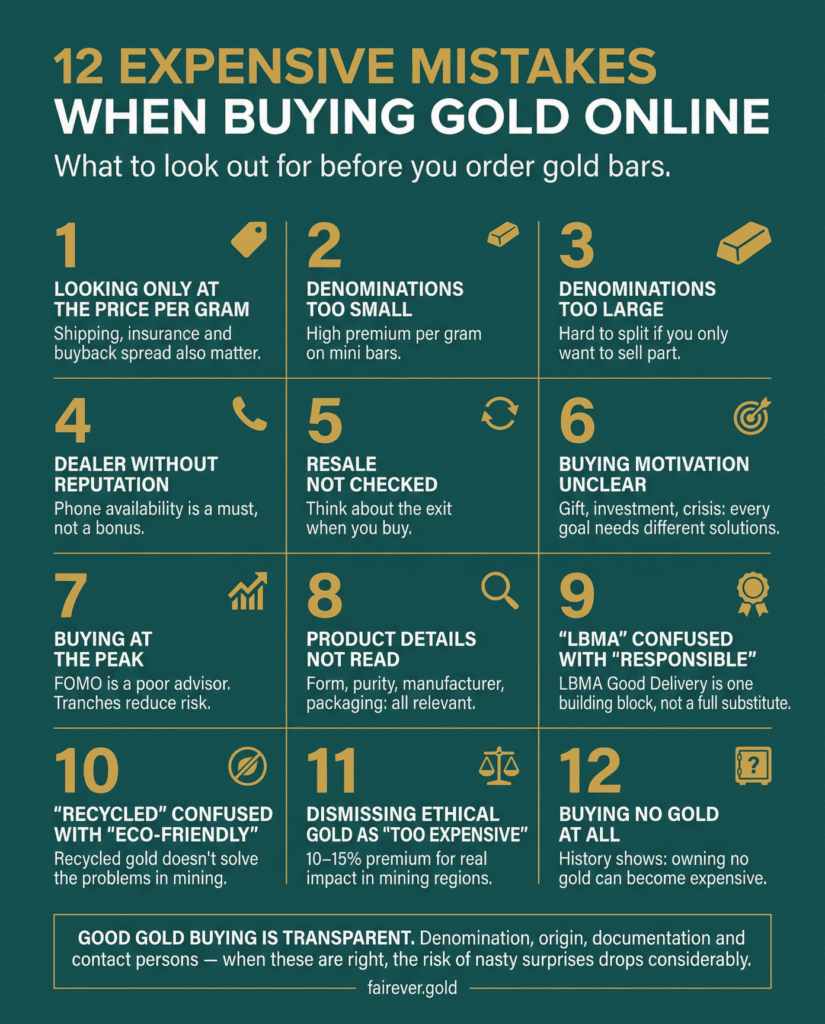
The 12 Most Common Mistakes When Buying Gold Bars Online
1. Looking only at the gold price per gram
This is the most common mistake — and often the most expensive. Because the visible price per gram blanks out exactly the costs that make the difference later: shipping, insurance, payment fees, packaging, and so on. The buyback spread is also relevant.
If you only click on the cheapest price, you often don’t buy the best overall package, just the best number on the first line. With gold, what counts isn’t only what you pay today, but also how liquid, traceable and responsible the purchase still is tomorrow.
2. Buying denominations that are too small when you actually want to invest
Small bars have their appeal. They’re nice to give as gifts, feel accessible and are psychologically easy to buy. For serious investment purposes, however, they’re often inefficient, because the premium per gram on small denominations is usually significantly higher.
If you want to build long-term wealth in gold, you’re often better off with larger units. Not the largest possible — but large enough that the additional costs per gram don’t get out of hand.
3. Buying denominations that are too large when you want to stay flexible
The opposite mistake is just as common. A large bar can look more attractive per gram at the entry point. But if later you only want to sell part of your holdings, that advantage quickly turns into a problem.
Gold should fit your real life. If you want to factor in liquidity and partial sales, what you usually need isn’t the biggest bar, but the most suitable denomination.
4. Ordering from a dealer with no reputation and no customer service
Gold isn’t a t-shirt or a kitchen utensil. If something goes wrong, you’re dealing with an asset that has real material value. That’s why being able to reach the dealer by phone isn’t a bonus, it’s a must. Competent personal advice is irreplaceable, even in the age of AI.
A reputable dealer clearly shows who’s behind the shop, how you can get in touch and how shipping and insurance work. If a provider only has glossy product photos but no real point of contact, caution is in order.
Ideally, positive reports, reviews, awards or similar coverage of the dealer can also be found online in reputable media and sources. Take the time to do your research – it can be worth its weight in gold!
5. Not checking the resale option before buying
Many people only think about the entry point when they buy. It’s smarter to think about the exit at the same time, even if it’s still far in the future. Are you buying a product that comes from respected, certified manufacturers and is properly documented? Or one that will be hard to sell later?
A gold bar isn’t only good once you’ve bought it. It’s good if it remains easy and fairly tradeable later as well.
Our promise: Fairtrade gold bars you’ve bought from Fairever can be sold back to Fairever later on. We honour the Fairtrade premium when we do. You can find more on this on our information page: https://www.fairever.gold/de/gold-rueckgabe
6. Not clarifying your own buying motivation
Gold isn’t just gold. Someone looking for a gift often needs something different from someone wanting to build a long-term crisis reserve. Someone speculating on short-term price movements has different requirements from someone consciously investing in gold with traceable origin.
This distinction is often skipped online. The result: wrong denominations, wrong expectations, wrong time horizon. Before buying, you should therefore answer one simple question: What is this gold supposed to do for me?
7. Buying at the peak — and acting impulsively
Gold often becomes especially attractive when the headlines are loud. But that’s exactly when the chances of buying out of nervousness or FOMO also rise. Anyone investing everything at once may catch an unfavourable moment.
For larger amounts, it can make sense to split purchases into several tranches. That doesn’t guarantee a better price. But it reduces the risk of buying everything right at a local high. The same applies in reverse when selling: not every strong move calls for an immediate, hectic reaction.
8. Not reading product details carefully
Gold bars look interchangeable at first glance. But they aren’t. What matters includes the form, purity, manufacturer, weight, packaging and the question of which standards or proofs even exist.
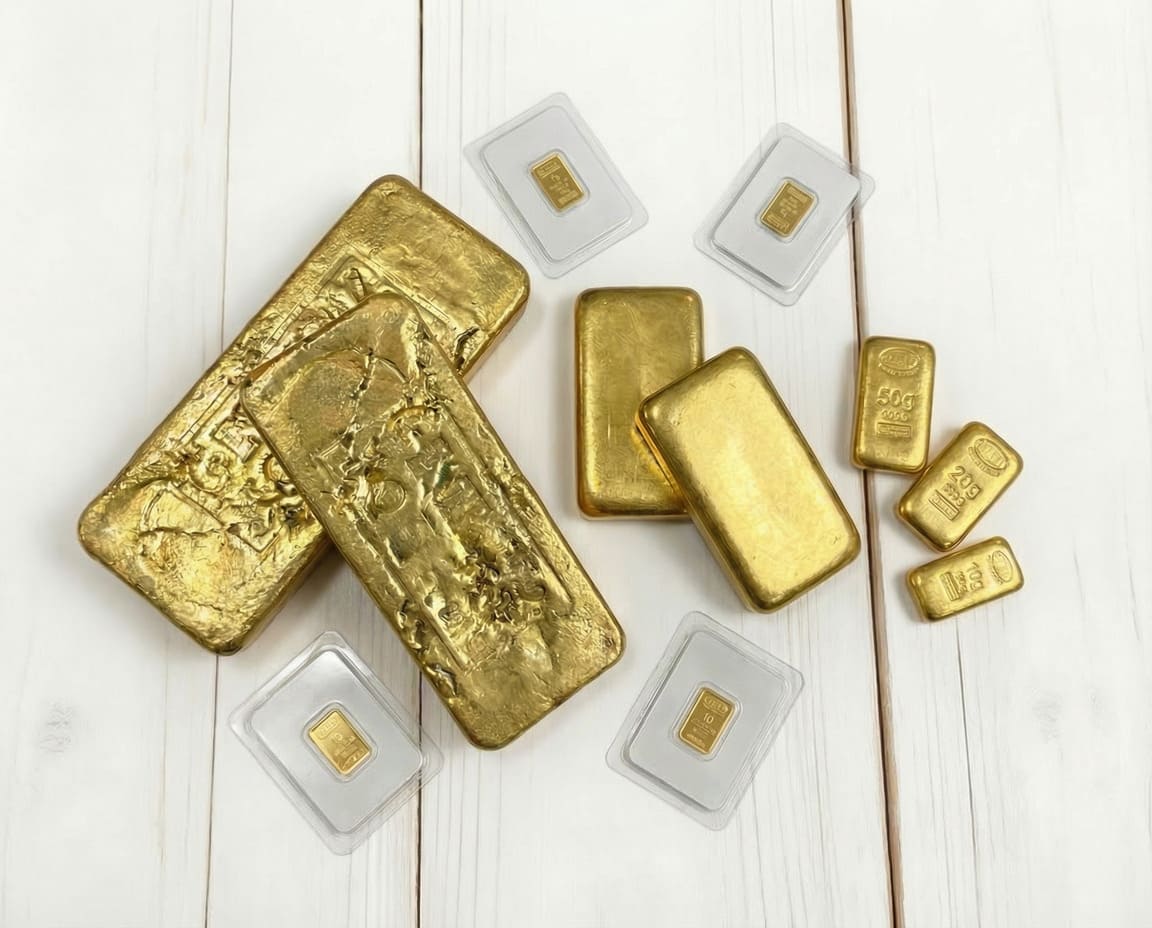
The form is also worth a look: minted bars often feel more polished, cast ones more classic and raw. That’s not a question of right or wrong – but of taste, market acceptance and intended use. If you don’t read the details, you can easily end up buying something other than what you had in mind.
9. Believing “LBMA Good Delivery” is the same as “responsible”
LBMA Good Delivery is a baseline standard. But it’s not a full substitute for an independent ethical review. The LBMA itself describes the Good Delivery lists as a list of refineries and bars accepted for the London bullion market. Good Delivery metal from accredited refineries is subject to a Responsible Sourcing programme with annual audits. That’s a relevant market signal. But it doesn’t automatically mean that all questions about human rights, occupational safety, mine of origin or full transparency are properly answered. (Read more: LBMA)
This is exactly where criticism from NGOs and human rights organisations comes in. Global Witness and SWISSAID have criticised, among other things, weak transparency rules, loopholes when dealing with problematic suppliers and what they see as inadequate implementation of the OECD Guidance. A 2024 civil society letter notes that the LBMA itself has acknowledged not being fully aligned with the OECD Guidance. Human Rights Watch in 2025 explicitly welcomed new LBMA disclosure rules as a step forward, but at the same time called for further transparency, including the disclosure of all mines and suppliers. RAID also supports a procedure in which the LBMA is accused of having certified gold from a mine with serious abuse allegations as “responsibly sourced”. (Global Witness)
The practical consequence: LBMA Good Delivery is one building block, but it’s not perfection. Anyone wanting to buy responsibly should additionally ask about precise origin, supply chain and solid evidence. That these questions matter is also shown by reports from Human Rights Watch and WWF on child labour, violence, environmental destruction, land conflicts and other serious abuses in the gold sector.
10. Believing “recycled gold” is automatically environmentally friendly
Recycled gold can make sense. But the statement “recycled = automatically more environmentally friendly and ethically better” is too crude. The World Gold Council points out that virtually all gold ever extracted is in principle still available, and that recycling primarily reacts to price and economic shocks. An NGO alliance even explicitly wrote in 2024 that the classic substitution effect doesn’t work the same way for gold as for other materials: more “recycled” gold on the market doesn’t automatically reduce pressure on mining. (World Gold Council)
Fairtrade now puts this very clearly too: reprocessed gold can help lower the individual CO₂ footprint, but doesn’t solve the structural problems of the gold sector. Anyone wanting to achieve measurable impact in mining regions can’t get past sustainably mined gold. That’s exactly why the contrast “recycled good, mined bad” is too simple. It blanks out social impact, mine improvement, land restoration, mercury reduction and fair pay. (Fairtrade America)
For you as a buyer, this means: ask more precisely. What exactly was recycled here? Is it really Post-Consumer material? Or just remelted investment gold with a fuzzy backstory? And what problems does this product actually solve — only a climate narrative, or also questions of origin, working conditions and impact?
11. Thinking ethical gold with known origin is fundamentally too expensive
This mistake is understandable, but often imprecise. Yes: traceability, independent certification and better conditions at the source cost money. Fairtrade gold is on average around 10 to 15 percent more expensive than conventional or recycled gold. That’s the honest side. The other is: “ethical gold” isn’t a single product with exactly one price, but a spectrum of different models with different premiums, evidence and impacts.
That, in our view, is the decisive point. Fairever deliberately doesn’t position itself as the provider of one single “right” solution, but as a partner with several responsible options: Fairtrade, Fairmined, Fairmined Ecological, Single Mine Origin (SMO), and transparent Post-Consumer recycling solutions.
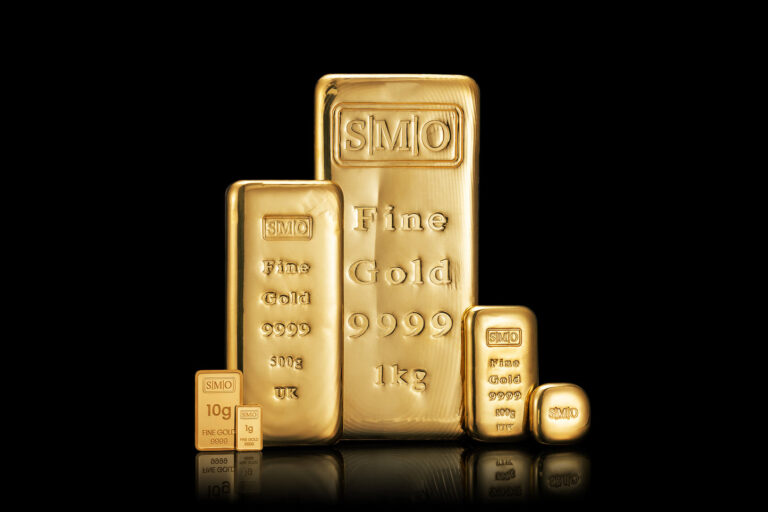
For the investment and gift market, Fairtrade gold bars and SMO gold bars are a good fit. We’re continuously expanding our range across different price points.
The more important question is therefore not: “Is ethical gold more expensive?” But: What exactly am I paying more for — and is that added value important to me? If origin, traceability and impact matter to you, then the right comparison isn’t only the price per gram, but the overall package of price, evidence and meaning.
12. Not buying any gold at all
This is perhaps the most surprising point on this list — but it belongs here. Gold isn’t a magic bullet, doesn’t generate ongoing returns and also fluctuates in price. Even so, history shows that there are phases in which not owning any gold can become very expensive.
A classic example is the Weimar hyperinflation of 1922/23. This phase is often described as an economic catastrophe that impoverished millions of Germans. Before the First World War, the exchange rate was just over four (paper) marks per US dollar; you needed 4 marks to buy 1 dollar. By 1920, the mark had already lost massive value, and in 1922/23 the situation escalated completely. By November 1923, you would have needed 4.2 trillion marks to buy 1 dollar! Anyone relying solely on paper money at that time lost everything.
A second example from more recent history and the present day is Turkey. The World Gold Council describes gold there not only as deeply culturally rooted, but explicitly also as protection against inflation and currency weakness. “Generations of Turkish savers” have used gold as a hedge against the erosion of purchasing power. That’s a fairly modern reminder of why people in countries with high inflation or weak currencies see gold differently from people in stable phases in Western Europe.
Why is this still relevant today? Not because a currency reform is automatically just around the corner. But because even the European Central Bank is currently emphasising that gold is seen by many central banks as a store of value, an inflation hedge, a crisis building block and a geopolitical safeguard. In 2025, the ECB pointed to record purchases by central banks and to the fact that gold is held as protection against economic and geopolitical risks.
The Fairever Perspective: What Makes "Good" Gold Bars and "Good" Gold Dealers in Practice
A good gold bar, in our view, isn’t simply a bar with high purity. It’s a product that’s technically clean, marketable, transparently described and — if that matters to you — credibly impactful.
A good dealer therefore does at least the following:
- They state weight, purity, form, manufacturer, standards, certification and packaging clearly and without games.
- They explain understandably which additional costs apply, e.g. for shipping and insurance.
- They are reachable by phone and email when questions about shipping, authenticity, evidence or resale come up.
- They communicate honestly about what standards and certifications achieve — and what they don’t.
- For ethical and sustainable claims, they show not just buzzwords but concrete evidence of positive impact on people and the environment.
What kind of evidence really helps? On the technical side, manufacturer information, clean product data and market-standard formats are important. On the ethical side, things get more interesting: here, what helps above all is known origin, single-mine logic, independent certification and a verified supply chain.
Fairtrade and Fairmined explicitly describe their approach as a lever for real positive change in small-scale mining; Single Mine Origin (SMO) emphasises 100% traceability back to a responsible mine at the source; and Fairever itself is building its positioning precisely on offering responsible options with different price and impact profiles transparently side by side.
In short: a “good” gold bar is one you’ll still think well of in a few years. A “good” gold dealer is one who isn’t fooling you today.
What You Should Take Away
- Buying gold is more than comparing prices. Looking only at the cheapest price per gram often means missing exactly the points that get really expensive later.
- You need to understand standards and labels. A nice design and great claims aren’t enough. LBMA Good Delivery, recycling, Fairtrade, Fairmined or SMO answer different questions. None of these words should be taken at face value.
- The right choice depends on your goal. Gift, wealth protection, flexibility, crisis provision or impact investment lead to different decisions.
- Good gold buying is transparent. When origin, documentation, cost structure and contact persons are clear, the risk of nasty surprises drops considerably.
If you want to buy gold bars online, before placing an order check not only the price, but these three things: Does the denomination fit my goal? Can I trace the origin and quality? And would I still be happy and comfortable holding this product in two or five years’ time?