
Recycled gold sounds sustainable – but what’s really behind it? The term isn’t protected and can mean anything: from end-of-life jewellery from end users to freshly mined gold that has only been remelted once. In this guide, you’ll learn which types exist, where the gold comes from and what happens during recycling.
The Four Types of Recycled Gold
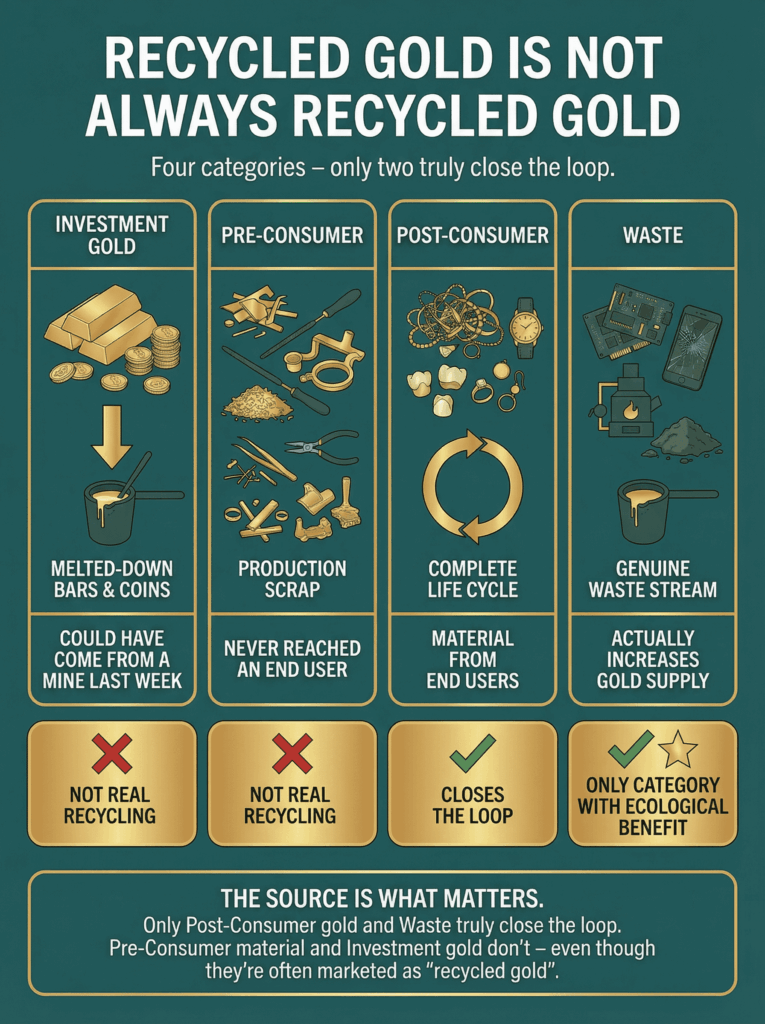
Recycled gold isn’t just recycled gold. The industry distinguishes four main categories – and only two of them really close the loop.
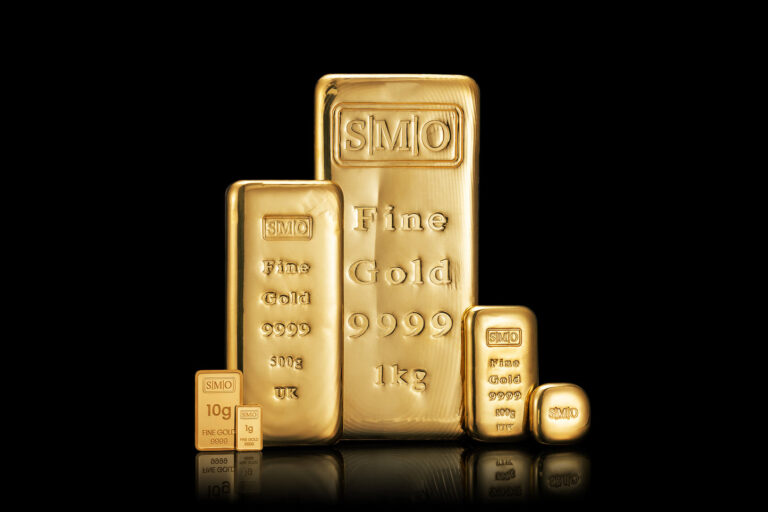
- Investment gold: Melted-down gold bars and coins. Doesn’t count as real recycling, because it’s already at least 99.9% pure (so it isn’t “waste”) and far too easily contains conflict gold. The bars could have come from a mine just last week.
- Pre-Consumer: Production scrap from jewellery making: offcuts, filings, casting residues. These materials never reached an end customer – strictly speaking, this isn’t real recycling, but an industry-internal material flow.
- Post-Consumer: Material from end users: end-of-life jewellery, watches, ornaments, dental gold. This gold has gone through a complete life cycle as a product and is being returned to the loop.
- Waste: Actual “waste” that ends up in the waste stream: e.g. electronic scrap, crucibles, industrial parts at the end of their useful life, low-grade material from waste incineration, sweepings.
The distinction between these four categories really matters. Only Post-Consumer gold and waste recycling truly close the loop. Pre-Consumer material and Investment gold don’t – even though they’re often marketed as “recycled gold”.
Read more: Which differences really count, which categories close the loop and which don’t, and how to recognise them → Is Recycled Gold really Recycled?
Where Does Recycled Gold Come From?
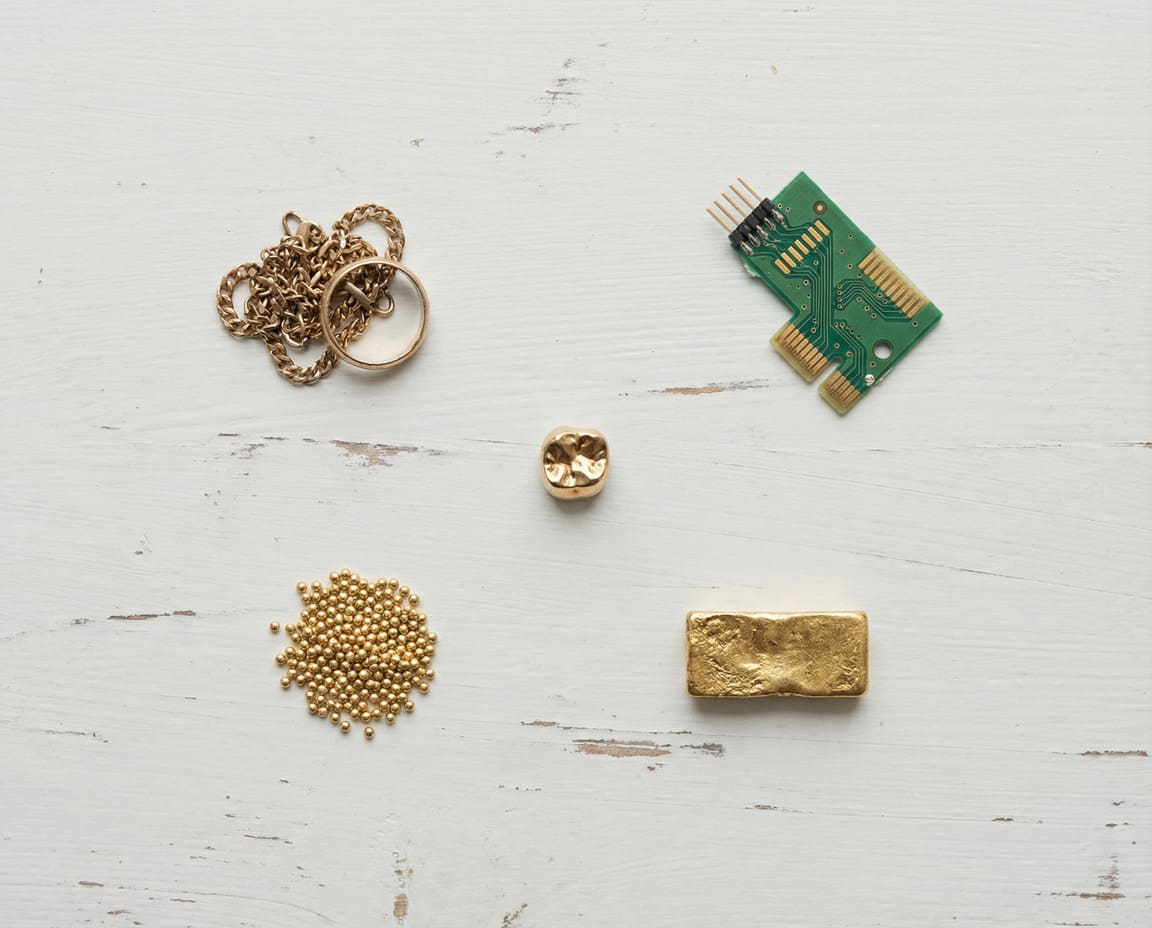
Jewellery and Watches
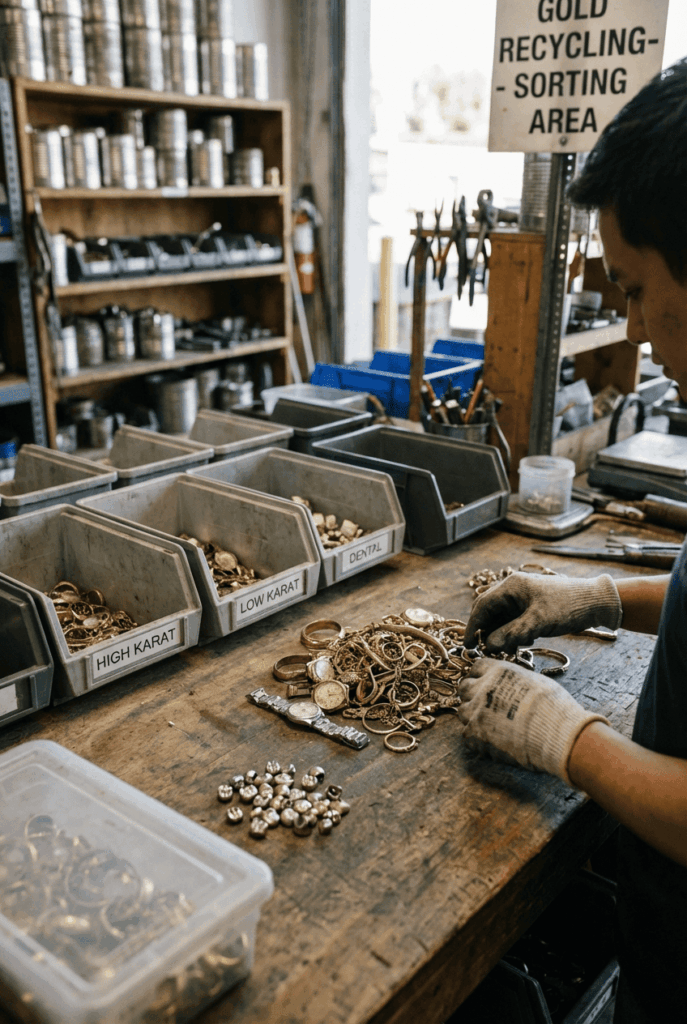
End-of-life jewellery is the best-known source of recycled gold. When you no longer want to wear a piece of jewellery, you can hand it in to jewellers, assayers or pawnbrokers. They collect the material, sort it by alloy and send it for refining.
Be careful with the term “old gold”: the industry likes to use this term. But you can’t necessarily tell from a bar or a ring how old it really is – the “old” is simply claimed. In many cases, it’s actually material that comes relatively freshly from a mine. The incentive for dealers to feed gold from conflict regions into the recycling loop is unfortunately very high, because the margins are generous. “Old gold” sounds like circular economy, but in practice it can mean there’s hardly any difference from freshly mined gold.
Important to know: not every piece of jewellery handed in automatically becomes Post-Consumer gold. Many dealers mix the material with Pre-Consumer scrap or Investment gold – at which point the recycling category can no longer be traced.
Electronic Scrap
There’s more gold in smartphones, laptops and televisions than most people think. Circuit boards, connectors, processors – tiny amounts are built in everywhere. One tonne of electronic scrap contains around 250 grams of gold. By comparison: from one tonne of ore from gold mines, often only 5 grams of gold or less can be extracted.
The problem: recovery is complex and often takes place under precarious conditions in countries without environmental standards.
Other Sources
Besides jewellery and electronics, there are other sources:
- Dental gold: crowns, bridges and fillings made from gold alloys
- Industrial residues: electroplating baths, ceramic décor, soldering alloys
- Photo development: gold used to be used in analogue photography
In terms of volume, these sources account for a smaller share, but they’re also part of the Post-Consumer loop.
How Is Gold Recycled?
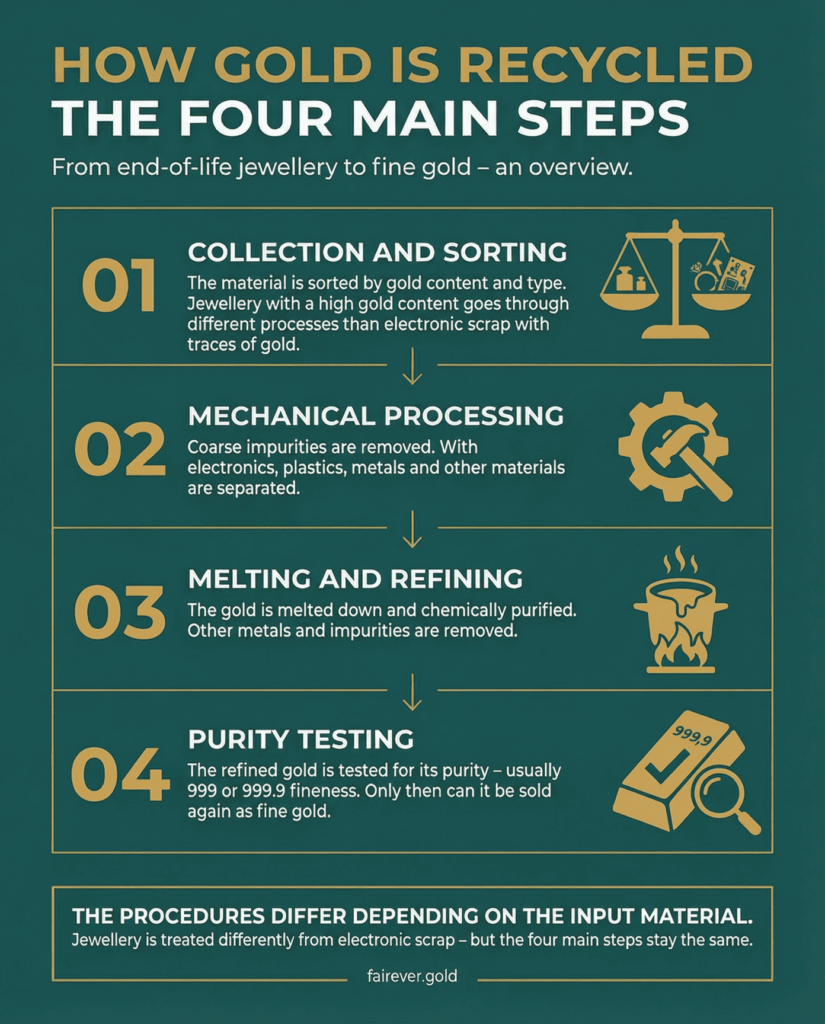
The recycling process runs in several steps. The exact procedures differ depending on the input material – jewellery is treated differently from electronic scrap.
The four main steps:
- Collection and sorting: The material is sorted by gold content and type. Jewellery with a high gold content goes through different processes than electronic scrap with traces of gold.
- Mechanical processing: Coarse impurities are removed. With electronics, plastics, metals and other materials are separated.
- Melting and refining: The gold is melted down and chemically purified. Other metals and impurities are removed in the process.
- Purity testing: The refined gold is tested for its purity – usually 999 or 999.9 fineness. Only then can it be sold again as fine gold.
Is Recycled Gold Really Sustainable?
The most common question. And our honest answer is: no, not in the true sense.
Even Post-Consumer recycled gold isn’t “sustainable” in the sense that it would lead to less gold being mined or help the planet and the people in mining. Gold has always been reused at nearly 100%. The gold would have been recycled anyway. Using recycled gold leads neither to more recycling nor to less mining; globally speaking, it saves no CO₂.
But: Post-Consumer recycled gold is real circular economy. The material has gone through a complete product life and comes back into the loop from end users. Together with waste recycling (e.g. electronic scrap), it’s the only category that really closes the loop.
Pre-Consumer material and Investment gold, on the other hand, aren’t really recycling at all. The gold could have been freshly mined; it changes nothing about the demand for newly extracted gold.
The problems with “conventional” recycled gold:
Many dealers sell recycled gold without indicating the source. The material could come from Dubai, where controls are patchy. It could contain Pre-Consumer scrap. Or it’s melted-down Investment gold that came out of a mine just a few weeks ago.
Without clear categorisation, you don’t know whether your recycled gold really comes from the Post-Consumer loop – or is just called that.
Read more:
- Why conventional recycled gold often isn’t a real solution, which five questions it doesn’t answer and what to look out for → Why “Regular” Recycled Gold is Not a Solution
- The facts about the environmental footprint: why recycled gold isn’t more climate-friendly than newly mined gold → Is Recycled Gold Sustainable?
Recycled Gold vs. Fairly Mined Gold
Recycled gold and fairly mined gold aren’t opposites – they pursue different goals.
Recycled gold (Post-Consumer) closes the loop. It uses material that has already gone through a complete product life. The focus is on circular economy. But it changes nothing about the social and ecological conditions in mining – and it doesn’t lead to less gold being mined either.
Fairly mined gold (Fairtrade, Fairmined) is newly extracted, but under fair conditions. It supports small-scale miners with fair wages, safe working conditions and environmental standards. The focus is on social and ecological impact. This gold is traceable back to the mine. That’s a decisive difference.
Both approaches have their place. Post-Consumer recycled gold is circular economy; fairly mined gold improves the living conditions of (potentially) millions of people in small-scale mining. Recycled gold alone, however, solves neither the social nor the ecological problems of gold mining.
Read more: When which option makes sense, how the two approaches can complement each other and what matters for your buying decision → Recycled Gold vs. Fairly Mined Gold
What to Look Out for When Buying
If you’re buying recycled gold, ask your supplier these questions:
- Is the gold “Post-Consumer” according to the industry definition? If not: ask for the exact category (Pre-Consumer? Investment gold?).
- Where exactly does the gold come from? End-of-life jewellery? Dental gold? Electronic scrap? Vague answers like “from various sources” are a warning sign.
- Is the recycling category certified independently? There are established standards that distinguish between different recycling categories. Independent auditors should verify any claims in this regard.
- Do you explicitly exclude Pre-Consumer and Investment gold? If these categories aren’t explicitly excluded, they may be contained in the material; that’s then not “recycling” in the literal sense of the word.
- Is the supply chain segregated? Is the Post-Consumer gold processed separately from other material? Only segregated processing guarantees real Post-Consumer gold.
A reputable supplier can answer all these questions clearly.
Conclusion: Recycled Gold Isn't Just Recycled Gold
The term “recycled gold” alone says little, and recycled gold isn’t a sustainable solution either. It leads neither to less mining nor does it improve the social or ecological conditions in gold mining.
If you still decide to go for recycled gold, you should at least pay attention to the source: Post-Consumer gold and waste recycling truly close the loop. Pre-Consumer material and Investment gold don’t.
Ask your supplier specifically which category the gold comes from. Only with clear definitions and transparency does recycled gold become real circular economy.